
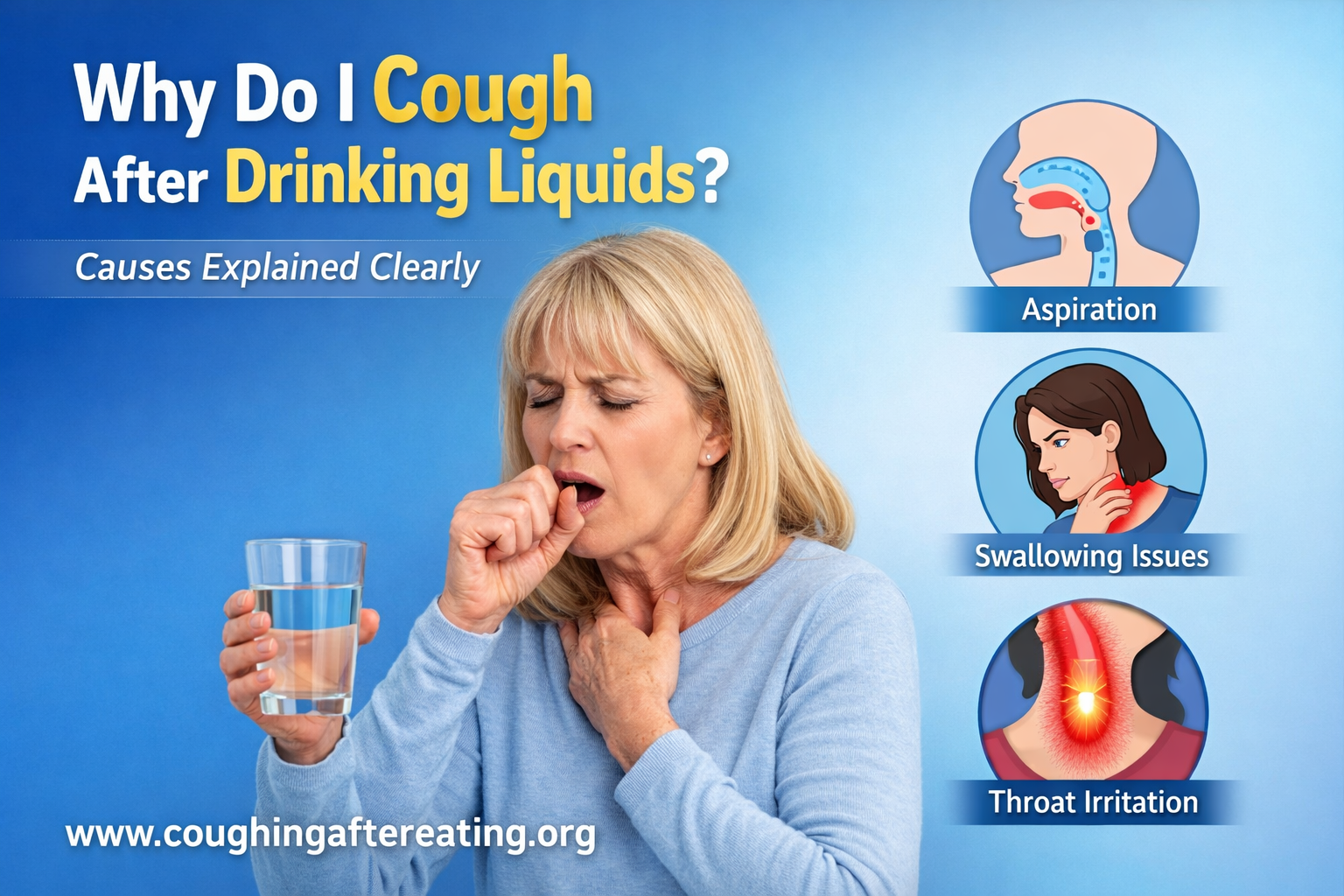
Why do I cough after drinking liquids? Causes explained clearly
Coughing after drinking liquids is usually caused by swallowing coordination issues, airway sensitivity, or irritation from reflux. In some cases, a small amount of liquid briefly enters the airway instead of the food pipe, which triggers a protective cough reflex. This is more likely if coughing happens mainly with thin liquids, fast drinking, cold drinks, or large gulps rather than with solid food.
The symptom can feel surprising because liquids seem as though they should go down easily. In reality, swallowing liquids requires precise timing between the throat and the airway. If that coordination is slightly off, coughing can happen quickly, even in otherwise healthy people.
In most cases, coughing after drinking liquids is mild and not serious. However, if it becomes frequent, repetitive, or more intense over time, it deserves closer attention.
If you want to understand how this fits into the bigger picture, see the coughing after eating causes guide for a complete overview of possible triggers.
Swallowing and airway protection depend on precise timing between the throat muscles and the closure of the airway. Even small disruptions in that timing can trigger coughing without indicating a major disease. Clinically, coughing during or just after drinking is one of the classic signs doctors and speech-language professionals pay attention to when assessing possible swallowing difficulty.
Mechanism: Coughing after drinking liquids happens when fast-moving fluid disrupts normal swallowing timing or triggers a sensitive cough reflex in the throat.
Why liquids can trigger coughing more easily than solid food
Liquids behave very differently from solid food when you swallow. Solid food moves more slowly and gives the body a little more time to coordinate the swallowing process.
Liquids move quickly through the mouth and throat. Because of this speed, the airway must close at exactly the right moment. Even a slight delay can allow a small amount of liquid to irritate the airway, which immediately triggers coughing.
This is why many people notice coughing more with water, tea, or other thin drinks than with solid foods. The faster movement of liquids makes even small coordination issues more noticeable.
If this happens frequently, it may be related to swallowing patterns or mild airway entry. You can explore this further in why food goes down the wrong way and causes coughing.
This pattern overlaps with why do I cough immediately after eating, especially when the cough starts right away.
Common causes of coughing after drinking liquids
Coughing after drinking liquids can have several underlying causes. The symptom may feel similar each time, but the reason behind it can vary from simple coordination issues to irritation or increased airway sensitivity.
The most useful clues usually come from pattern recognition: whether the cough happens during the sip, immediately after swallowing, or later on, and whether it is linked to water, cold drinks, fizzy drinks, or fast drinking.
Pattern clue:
If coughing happens during the sip → swallowing coordination or aspiration
If it happens after the drink → irritation or reflux
Swallowing coordination issues
Swallowing is a complex process involving multiple muscles and nerves working together. When you drink liquids, this coordination has to happen very quickly.
If the timing between swallowing and airway closure is slightly off, liquid can move toward the airway instead of the esophagus. Even a small mismatch can trigger a cough reflex.
This is more likely if the cough starts immediately as you swallow, especially when drinking quickly or while talking. This can happen occasionally in healthy people, particularly when drinking too fast, talking while drinking, or not paying full attention.
However, if it happens frequently, it may suggest a mild swallowing difficulty. Oropharyngeal swallowing problems often cause coughing, choking, or gagging almost immediately after trying to swallow, which is one reason timing matters so much here.
This type of coordination issue is explained in more detail in why food goes down the wrong way and causes coughing after eating.
Aspiration
Aspiration happens when liquid enters the airway instead of going down the food pipe. The body responds immediately by coughing to protect the lungs.
This is more likely if liquids go down the wrong way and trigger sudden coughing during the sip.
In many cases, a brief cough clears the airway and the episode passes quickly. However, repeated episodes may suggest an underlying issue with swallowing coordination.
A wet or gurgly voice after drinking, repeated chest infections, or coughing every time you drink are stronger warning signs that deserve closer attention.
If you notice this pattern often, it is worth understanding it more clearly through why food goes down the wrong way and causes coughing.
Reflux irritation
Reflux does not only happen after solid meals. In some people, drinking liquids can also trigger throat irritation.
This is more likely if the cough feels dry, delayed, or accompanied by throat irritation, throat clearing, or a sour sensation. Clinical guidance, including NHS resources, recognises reflux as a possible contributor to throat irritation and swallowing-related symptoms.
Acid or non-acid reflux can reach the upper airway and make it more sensitive. When that happens, even normal swallowing or drinking can trigger coughing.
This closely overlaps with why GERD causes coughing after eating.
This type of cough is usually dry rather than chesty. If your cough feels more like irritation than choking, it may help to compare it with wet vs dry cough after eating: what it means.
Airway sensitivity
Some people have a more sensitive airway that reacts easily to minor triggers. In these cases, even normal swallowing or slight irritation can trigger coughing, even when nothing has gone structurally wrong.
This overlaps with chronic cough reflex sensitivity and throat irritation.
This is more likely if cold, fizzy, or fast-flowing drinks trigger coughing even when swallowing otherwise seems normal.
The lining of the throat and airway contains receptors designed to respond to irritation. When those receptors become more sensitive, they can overreact to everyday triggers such as liquids passing through the throat.
Cold drinks, fizzy beverages, and rapid drinking can all stimulate the airway more strongly. Reflux can also increase this sensitivity, making coughing more likely even with liquids. Learn more in acid reflux and coughing after eating.
This type of pattern can feel similar to silent reflux coughing after eating, especially when the cough is dry and throat-based.
Airway sensitivity can also be temporary. It may increase after a throat infection, irritation, or repeated coughing episodes, then gradually settle as the airway recovers.
Because airway sensitivity often overlaps with other causes, identifying patterns becomes especially important. If certain drinks or specific situations trigger coughing repeatedly, that repeatability is an important clue.
In some cases, coughing with liquids may also overlap with aspiration when eating and coughing, where fluids enter the airway more easily.
These causes may look similar on the surface, but timing and trigger type usually help separate them. That is why repeated patterns matter more than isolated episodes.
Why this happens even when you feel otherwise healthy
Many people who cough after drinking liquids do not have any obvious illness. That is one reason the symptom can feel confusing.
The key reason is that swallowing coordination is extremely precise. Even small variations in posture, speed of drinking, or attention can affect how liquids move through the throat.
For example, drinking too quickly, tilting the head back, or talking while drinking can increase the chance of coughing. These are not necessarily signs of disease, but they can temporarily disrupt the normal swallowing process.
This is why the symptom may happen occasionally without meaning that something serious is wrong.
If your episodes are occasional, brief, and clearly linked to how you drink, the pattern is usually less concerning than coughing that happens repeatedly no matter how careful you are.
How coughing after drinking liquids differs from other causes
Coughing after drinking liquids often follows a different pattern from coughing triggered by solid food. The speed and flow of liquids make swallowing more sensitive, even when there is no major underlying problem.
Timing gives one of the strongest clues. Coughing during the sip usually suggests a swallowing-related trigger. Coughing immediately after the drink may still reflect airway irritation or minor misdirection. Coughing a little later is more suggestive of reflux or post-swallow throat irritation.
Immediate coughing after swallowing is more consistent with throat-level or oropharyngeal swallowing problems than with slower digestive causes.
Compared with swallowing-error patterns
Unlike why food goes down the wrong way and causes coughing after eating, where coughing is more clearly linked to a swallowing error, liquids can trigger coughing even when swallowing seems mostly normal.
Compared with aspiration when eating why you cough, coughing after drinking liquids does not always mean that liquid has entered the airway. In many cases, it reflects sensitivity or coordination rather than true aspiration.
Compared with reflux-related patterns
It also differs from why GERD causes coughing after eating and silent reflux coughing after eating, where the trigger comes more from reflux after swallowing than from the act of drinking itself.
Compared with immediate cough after meals
Coughing after drinking liquids can overlap with why do I cough immediately after eating, especially when coughing happens right after swallowing. However, liquids often trigger shorter and more specific episodes.
Understanding these differences helps explain why some people cough only with drinks while having no symptoms with solid foods.
If your symptoms do not clearly match one pattern, comparing them with the coughing after eating causes guide can help narrow down the likely cause.
Why coughing after drinking can become repetitive
In some cases, coughing after drinking liquids becomes a repeated pattern rather than an isolated event. Once the throat becomes irritated or sensitive, even small triggers can provoke coughing.
Over time, the body may begin to anticipate the sensation, which can make the cough feel more frequent.
This is similar to the cycle seen in why do I keep clearing my throat after eating, where the response itself can help maintain the irritation.
Trigger type also matters. Thin liquids often cause more difficulty than thicker drinks, while cold or fizzy drinks may trigger coughing through sensitivity rather than true swallowing failure.
Breaking this cycle often means identifying the trigger, reducing irritation, and giving the throat time to settle.
Pattern matters here as well. Immediate coughing during the sip points more toward swallowing coordination or airway entry. Delayed dry coughing points more toward irritation or reflux.
If you can identify which pattern keeps repeating, you are much closer to identifying the actual cause.
When coughing after drinking liquids may be a concern
Occasional coughing after drinking liquids is usually harmless. However, certain patterns may indicate the need for further evaluation.
Persistent coughing with liquids deserves attention because repeated swallowing difficulty or repeated airway irritation should not be ignored, especially if the pattern is becoming more frequent.
These patterns suggest the cough may not be a simple, occasional swallowing issue. Pay attention if you notice:
- Frequent coughing every time you drink
- A sensation of choking or difficulty swallowing
- Coughing that is worsening over time
- Associated breathing difficulty or chest discomfort
- A wet or gurgly voice after swallowing
- Recurrent chest infections, unexplained weight loss, or dehydration
These signs may suggest a more significant swallowing or airway issue.
If you are unsure whether your symptoms are normal or concerning, see when coughing after eating is serious for a clearer understanding of warning signs.
How to reduce coughing after drinking liquids
In many cases, small adjustments can reduce or prevent coughing when drinking.
Helpful changes include:
- Drink slowly and avoid large gulps
- Sit upright while drinking
- Avoid talking while swallowing
- Take smaller sips instead of continuous drinking
- Be cautious with very cold or fizzy drinks if they trigger coughing
These changes improve coordination and reduce the chance of liquid irritating or entering the airway.
If symptoms happen mainly with water or other thin liquids, focus first on sip size and speed. If symptoms happen more with cold or fizzy drinks, airway sensitivity may be playing a bigger role. If symptoms appear after the drink rather than during it, reflux-related irritation becomes more likely.
If symptoms improve with these changes, that is a useful clue that the cause is related to liquid flow, coordination, or sensitivity rather than a more serious structural problem.
If symptoms continue despite these adjustments, it may help to compare patterns such as why do I cough immediately after eating or review the full coughing after eating causes guide to understand the broader picture.
Final takeaway
Coughing after drinking liquids is best understood through patterns. Coughing during the sip points more toward swallowing coordination or minor aspiration. Delayed dry coughing after drinking is more suggestive of irritation or reflux.
Immediate coughing with liquids usually reflects a throat-level swallowing event, while repeated episodes with warning signs deserve closer assessment.
In many cases, the symptom is occasional and harmless. But if coughing becomes frequent, worsens over time, or is associated with choking, wet voice, breathing difficulty, chest infections, or weight loss, it may point to an underlying issue that needs attention.
If you want a complete overview of how different causes connect, return to the coughing after eating causes guide to see the full picture.
Related questions people ask about coughing after drinking liquids
These common questions help clarify typical patterns, triggers, and when coughing after drinking liquids may need attention.
Why do I cough when I drink water but not when I eat?
Liquids move faster than solid food and require more precise coordination during swallowing. Even a small delay in airway closure can allow liquid to irritate the airway and trigger a cough.
Solid food usually moves more slowly, giving the body more time to coordinate the swallowing process.
Is it normal to cough occasionally after drinking liquids?
Yes. Occasional coughing after drinking liquids is common and usually harmless.
It can happen if you drink too quickly, are distracted, or if a small amount of liquid briefly irritates the airway. It becomes more important when the pattern is frequent, worsening, or happening with most drinks.
Why do I cough more with cold or fizzy drinks?
Cold temperatures and carbonation can stimulate the airway and make it more sensitive. Fizzy drinks also release gas, which can increase throat irritation or sensitivity, while cold drinks can provoke a stronger reflex response in people with a sensitive airway.
This is more of a sensitivity pattern than a classic choking pattern in many people.
Can coughing after drinking liquids be a sign of a swallowing problem?
Yes, in some cases. Frequent coughing while drinking may indicate a mild swallowing coordination issue or aspiration.
If this happens regularly or is associated with choking, wet voice, or discomfort, it may need further evaluation.
When should I worry about coughing after drinking liquids?
You should pay closer attention if coughing happens every time you drink, worsens over time, or is associated with choking, breathing difficulty, chest discomfort, repeated chest infections, or unexplained weight loss.
These signs may indicate a more significant underlying issue that needs assessment.