
Aspiration when eating: why you cough immediately after swallowing (and what it means)
Coughing during eating is often a protective reflex when food or liquid enters the airway instead of the esophagus.
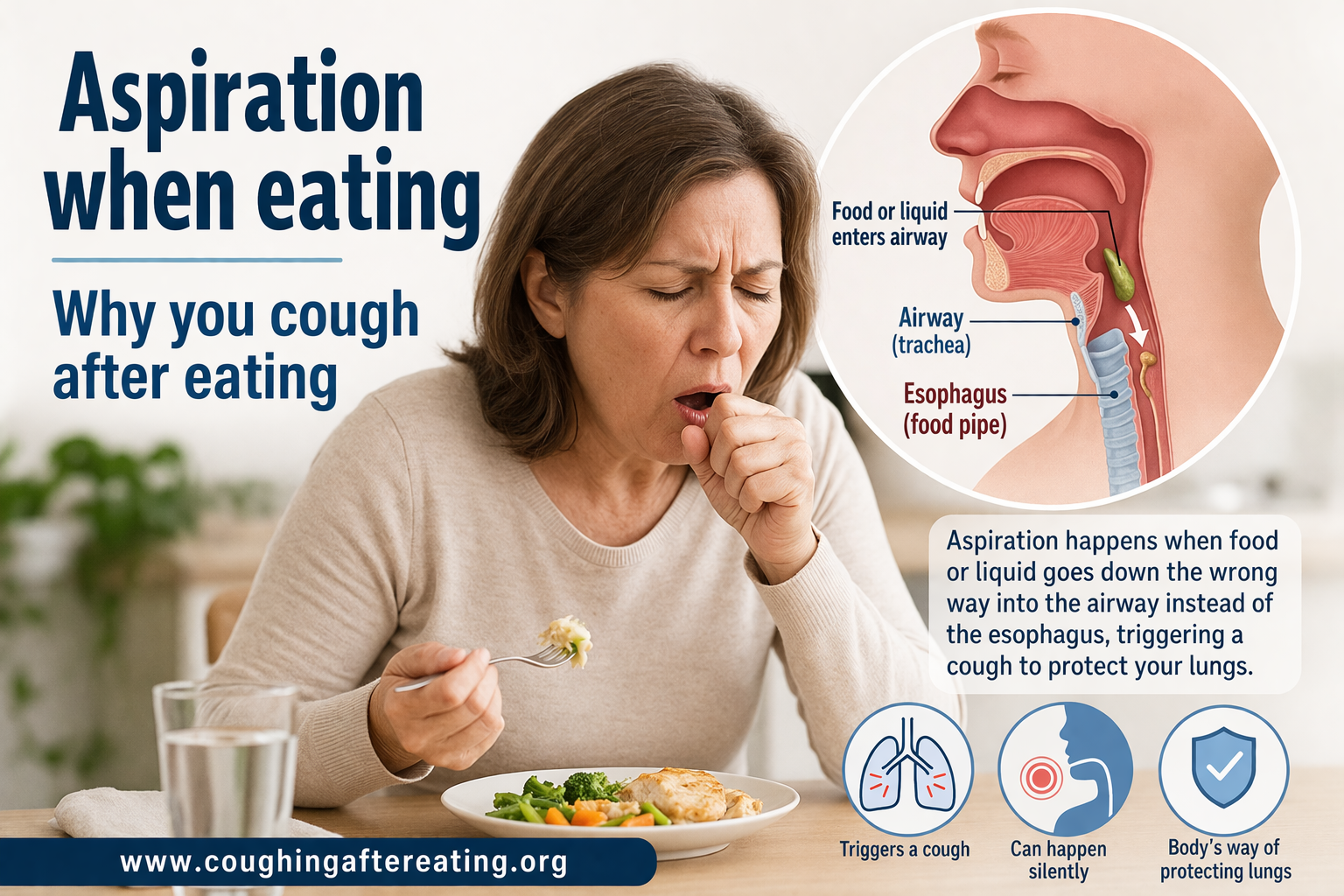
Coughing while eating can feel sudden and uncomfortable, especially when it seems like food or liquid has gone down the wrong way. One of the most common reasons for this is aspiration, which happens when something enters the airway instead of the food pipe.
If you are trying to understand all possible reasons behind this symptom, start with the coughing after eating causes guide.
Mechanism:
Aspiration-related coughing happens when food or liquid enters the airway instead of the esophagus, triggering an immediate protective cough reflex. In clinical practice, immediate coughing during swallowing is one of the strongest indicators of airway involvement rather than reflux.
What is aspiration when eating?
Aspiration occurs when food, liquid, or saliva enters the airway instead of moving safely down the esophagus toward the stomach. It is often linked to swallowing difficulties, or dysphagia, where coordination during swallowing is affected.
This can happen briefly in healthy people or more frequently in those with underlying swallowing or coordination issues.
Normally, swallowing is a well-coordinated process. A small flap called the epiglottis closes over the airway during swallowing, directing food safely away from the lungs.
If this coordination is disrupted, even slightly, small amounts of material can enter the airway and trigger an immediate cough.
Pattern signal:
If coughing happens immediately during swallowing, especially with liquids, aspiration becomes more likely than reflux.
Why aspiration causes coughing after eating
Coughing is not the problem here. It is actually a protective reflex.
When something enters the airway, the body reacts quickly to stop it from reaching the lungs. Sensors in the airway detect the material and trigger a cough to push it back out.
This is why coughing during or immediately after swallowing is often linked to aspiration.
In most cases, this reflex works well and clears the airway quickly. But if aspiration keeps happening, it can lead to irritation, inflammation, or infection over time. Dysphagia resources commonly note that aspiration can contribute to repeated chest infections or pneumonia when it happens regularly.
This pattern becomes more important when coughing happens repeatedly during meals, especially with liquids, choking sensations, or a wet voice afterward. A wet or gurgly voice after eating or drinking is a well-recognised swallowing warning sign and often overlaps with patterns explained in the wet vs dry cough after eating guide.
What happens inside the body during aspiration
During normal swallowing, breathing briefly pauses while food passes into the esophagus and the airway is temporarily sealed off.
With aspiration, this sequence is slightly mistimed or disrupted.
Why material enters the airway
Food or liquid may enter the airway because of small changes in swallowing coordination. This can happen when:
- The airway does not close fully
- Swallowing is delayed or uncoordinated
- Breathing and swallowing overlap
Even minor timing differences can be enough to allow material into the airway, which is why aspiration-related coughing is usually immediate or near-immediate rather than delayed 10 to 30 minutes after eating.
What happens next
Once material enters the airway, the body reacts instantly. The cough reflex activates and attempts to expel the substance before it travels deeper.
If the material is cleared quickly, there may be no lasting effect. But if small amounts keep entering the airway over time, they can irritate the lining or lead to inflammation or infection.
This immediate sequence is one of the strongest clues that aspiration, rather than reflux, may be driving the cough.
Common causes of aspiration while eating
Aspiration can happen for several reasons, ranging from simple habits to underlying medical problems.
Swallowing difficulties
Dysphagia, or difficulty swallowing, is one of the most common causes of aspiration. If you want to understand how this directly relates to symptoms, see dysphagia and coughing after eating for a detailed explanation.
It can happen because of muscle weakness, nerve problems, or structural issues in the throat. People with dysphagia may notice coughing, choking, or a feeling that food is not going down properly. Reflux is also listed by the NHS as one possible cause of swallowing problems, which is one reason symptoms can sometimes overlap.
Liquids going down the wrong way
Thin liquids are especially easy to aspirate because they move quickly and are harder to control during swallowing.
If you notice coughing more often when drinking, that is an important clue. A deeper explanation is available in the why do I cough after drinking liquids guide.
This pattern is more likely to suggest aspiration when coughing starts right as the liquid is swallowed, especially with water, tea, or other thin drinks.
Reflux and airway irritation overlap
Acid reflux can also play a role. When stomach contents flow back toward the throat, they can irritate the airway and make it more sensitive.
This can make coughing during swallowing more likely, even when aspiration itself is minimal.
You can explore this connection further in the why GERD causes coughing after eating guide.
These causes often overlap, which is why pattern recognition matters. Coughing during swallowing, immediately after a bite or sip, or especially with thin liquids is more likely to point toward aspiration than reflux-based coughing.
Signs your coughing may be due to aspiration
Not all coughing after eating is caused by aspiration, but some patterns point strongly toward it.
Common signs include:
- Coughing during or immediately after swallowing
- A choking or wrong-way sensation
- A wet or gurgly voice after eating
- Frequent coughing with liquids
- Repeated episodes with similar foods
This pattern becomes even more suggestive when the cough is triggered by the act of swallowing itself rather than by fullness, heartburn, or delayed throat irritation after the meal.
If your cough feels more chesty or mucus-related, it may help to compare it with wet vs dry cough after eating to better understand the pattern.
How to tell if aspiration is causing your cough
Aspiration-related coughing usually follows a clear and repeatable pattern. It may happen only when drinking liquids, when eating quickly or while distracted, with certain textures like thin fluids, or more often when tired or unwell.
Aspiration is more likely if the cough is immediate, repeatable, and linked to specific swallowing situations such as thin liquids, fast eating, large sips, talking while chewing, or eating when tired.
This kind of repeatable trigger pattern is often more useful than a single isolated episode when trying to work out whether aspiration is the main cause.
If your cough consistently appears under similar conditions, aspiration becomes much more likely.
On the other hand, if coughing occurs randomly or is associated more with heartburn or throat irritation, other causes may also be involved. If your cough happens immediately after swallowing, reviewing the why do I cough immediately after eating guide can help confirm the pattern.
If the timing is immediate and the trigger is swallowing itself, aspiration becomes the leading explanation.
Mild vs repeated aspiration
Not all aspiration is the same. The difference between occasional and repeated patterns is important.
Occasional aspiration
Occasional aspiration can happen to anyone. Drinking too quickly or talking while eating may briefly cause something to go down the wrong way. These episodes are usually harmless and resolve quickly.
Repeated aspiration
Repeated aspiration is different. Frequent coughing during meals, especially with liquids, may suggest problems with swallowing coordination or airway protection.
Over time, repeated aspiration can irritate the airway and should not be ignored.
A one-off episode is common. A cough that keeps returning in the same meal situations is more concerning because it points to an ongoing swallowing-pattern problem rather than a random event.
When aspiration-related coughing becomes serious
Most cases of aspiration are mild, but certain signs deserve closer attention.
Watch for:
- Frequent coughing with most meals
- Difficulty swallowing consistently
- Unexplained weight loss
- Chest infections or recurrent coughing episodes
- Persistent wet or chesty cough
Repeated coughing during meals, especially when paired with wet voice changes, difficulty swallowing, or chest infections, is one of the clearest signs that the pattern needs medical attention.
These signs may suggest that aspiration is happening more regularly or affecting the lungs.
If you notice these warning signs, it is important to understand when to take action. A detailed explanation is available in the when coughing after eating is serious guide, which explains when medical evaluation may be needed.
A cough that repeatedly happens during meals is not just a symptom. It is a pattern that needs evaluation.
How aspiration differs from other causes of coughing after eating
Aspiration-related coughing after eating has a distinct mechanism, even though it can feel similar to other causes at first.
The key difference is that aspiration involves food or liquid physically entering the airway rather than moving correctly into the stomach.
Compared with reflux-related coughing
Unlike why GERD causes coughing after eating or silent reflux coughing after eating, where irritation comes from acid moving upward, aspiration is triggered by material entering the airway. This often leads to a more sudden and forceful cough.
Compared with other immediate-cough patterns
Compared with why do I cough immediately after eating, aspiration is one of the most common reasons for coughing that starts right away. But not all immediate coughing is caused by aspiration. Airway sensitivity and coordination issues can also create the same timing pattern.
Compared with liquid-triggered coughing
It also differs from why do I cough after drinking liquids, where coughing may reflect speed, airway sensitivity, or flow control. Aspiration becomes more likely when liquids repeatedly trigger an immediate cough right at the moment of swallowing.
Aspiration is also more likely to produce the kind of pattern described in the wet vs dry cough after eating guide, often a wet or choking-type cough rather than a dry, irritating one.
Understanding these differences helps you identify when coughing is a protective reflex and when it may point to a swallowing issue that needs attention.
If your symptoms do not clearly match one pattern, comparing them with the coughing after eating causes guide can help narrow things down.
Practical ways to reduce aspiration risk
In many cases, small adjustments can reduce the chance of aspiration.
Helpful strategies include:
- Eat slowly and chew thoroughly
- Avoid talking while eating
- Take smaller bites and sips
- Sit upright during and after meals
- Pay attention while swallowing
These simple changes improve coordination and reduce the chance of food entering the airway.
If these adjustments clearly reduce the coughing, that is a useful sign that the trigger is related to swallowing pace, attention, or coordination rather than a more serious structural issue.
If symptoms continue despite these changes, it may be worth comparing the pattern with the wider explanations in the coughing after eating causes guide.
Final takeaway
Aspiration when eating is a common and often harmless cause of coughing, especially when it happens occasionally. It occurs when food or liquid briefly enters the airway and triggers a protective cough reflex.
However, repeated or patterned coughing during meals may signal an underlying issue that needs attention.
The key to understanding this pattern is timing. Immediate coughing during swallowing, especially with liquids or repeated in the same situations, strongly points toward aspiration rather than reflux or delayed irritation.
If you are unsure whether aspiration is responsible, reviewing all possible triggers in the coughing after eating causes guide can help you connect your symptoms more clearly. If the cough is immediate and repeatable, the airway is usually involved.
Common questions about aspiration and coughing after eating
These questions focus specifically on aspiration-related coughing during eating and how to recognise when it matters. Because aspiration often feels similar to other causes of coughing, understanding these distinctions can help you recognise patterns more clearly and decide whether your symptoms are occasional or part of a repeatable issue.
Can aspiration happen without choking?
Yes. Small amounts of food or liquid can enter the airway without causing obvious choking, but they may still trigger coughing.
Why do I cough more with liquids than food?
Liquids move faster and are harder to control during swallowing, which makes them more likely to enter the airway.
Is aspiration dangerous?
Occasional aspiration is usually harmless. Frequent aspiration is different and can irritate the airway or increase the risk of infection.
Can reflux cause aspiration?
Yes. Reflux can irritate the throat and airway, which may make aspiration more likely during swallowing.
When should I see a doctor?
Medical evaluation is more important when coughing happens frequently during meals, worsens over time, or is associated with difficulty swallowing, weight loss, or chest infections.