
Why food goes down the wrong way and causes coughing after eating
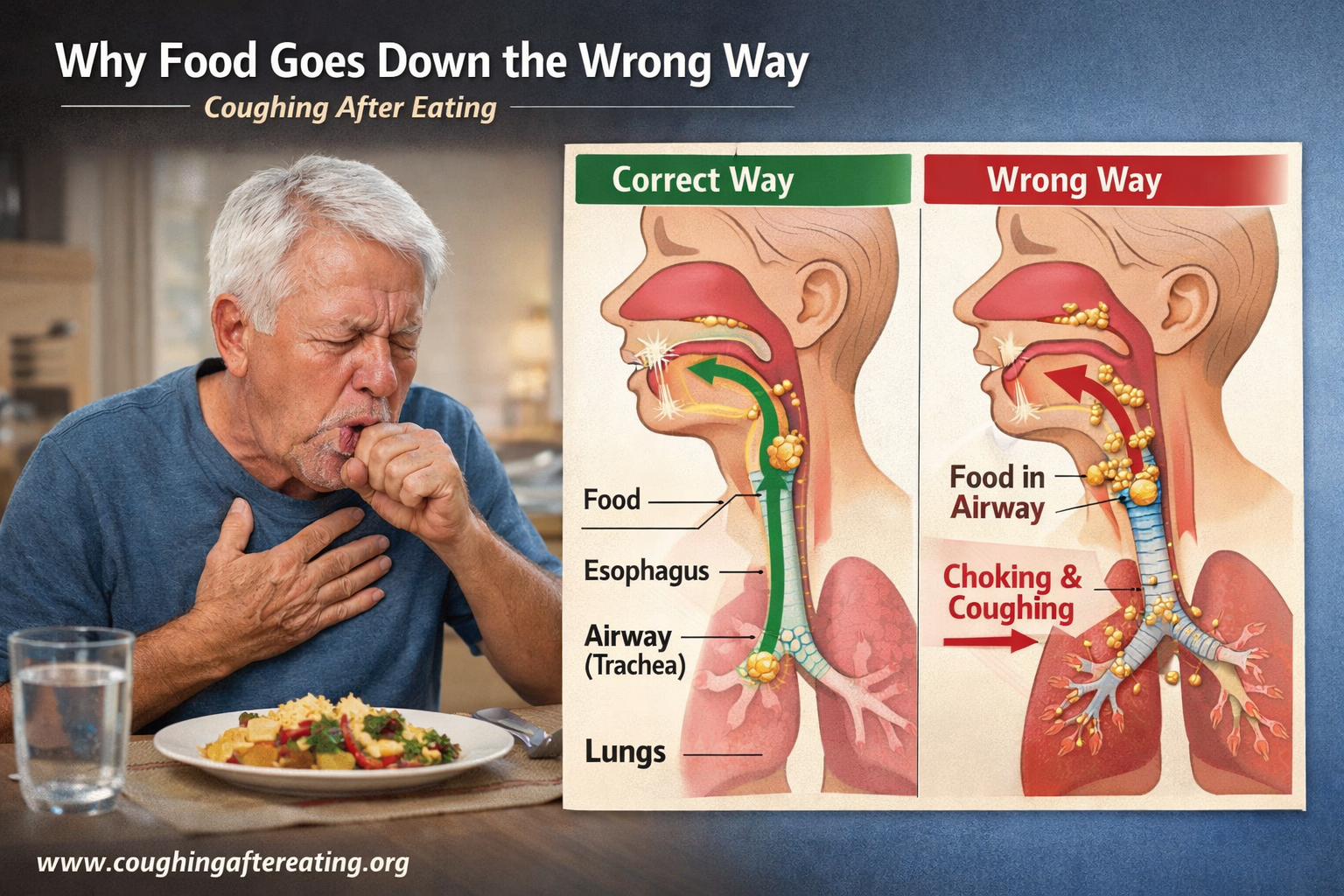
Food going down the wrong way usually happens when swallowing coordination is slightly off, allowing small amounts of food or liquid to enter the airway instead of the esophagus. This triggers an immediate cough reflex as the body tries to protect the lungs. During a normal swallow, the airway briefly closes and breathing pauses for a moment, which is one reason timing matters so much.
In most cases, this is occasional and harmless. But when it happens repeatedly, it can point to an underlying issue with swallowing, airway sensitivity, or coordination between breathing and eating.
Clinicians usually distinguish this pattern from reflux by timing. Coughing during the swallow points more toward airway protection or swallowing coordination, while coughing later after a meal points more toward reflux-related irritation.
If you want to understand how this fits into the bigger picture, see the coughing after eating causes guide, which explains how different conditions can trigger coughing during or after meals.
Mechanism: Coughing happens when food or liquid briefly enters the airway during swallowing, triggering a protective reflex to clear it.
How swallowing normally works
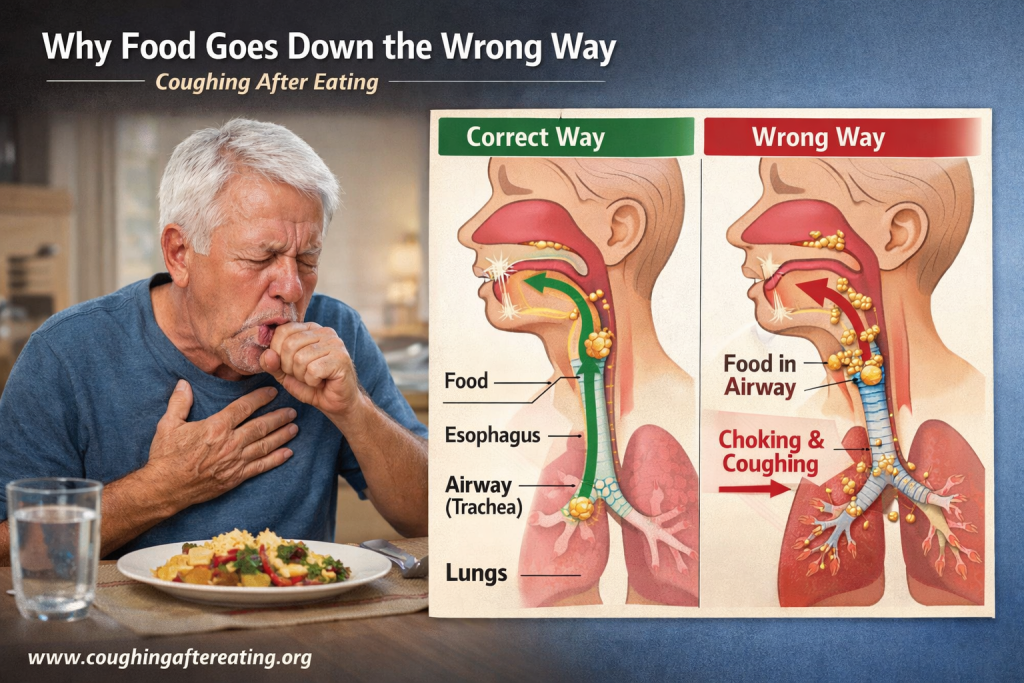
Swallowing is a coordinated process involving the mouth, throat, and esophagus. When you swallow, food is directed away from the airway and into the esophagus through a series of precise muscular actions.
At the same time, the airway briefly closes to prevent food or liquid from entering the lungs. This protective mechanism is fast and automatic, which is why most people can eat and drink without difficulty. Researchers describe swallowing and airway protection as closely timed events involving laryngeal closure and a short pause in breathing.
When everything works smoothly, food passes into the digestive tract without triggering irritation or coughing.
This makes it easier to see why even a small disruption can trigger an immediate cough.
Why food sometimes goes down the wrong way
Food goes down the wrong way when this coordination is slightly disrupted. Even a small delay or mismatch in timing can allow food or liquid to enter the airway instead of the esophagus.
Common situations that trigger it
This can happen for several simple reasons:
- Eating too quickly
- Talking or laughing while eating
- Not chewing food thoroughly
- Drinking rapidly or taking large sips
In these situations, the body reacts immediately. The cough reflex is triggered to clear the airway and prevent food from going further down into the lungs.
This is closely related to aspiration when eating and coughing, where material enters the airway instead of the esophagus.
This is more likely to be a swallowing-coordination issue when the cough is immediate, brief, and clearly linked to a specific bite or sip.
Why repeated episodes matter
Occasional episodes like this are common and usually not a cause for concern. However, when they begin to happen more frequently, it suggests that the swallowing process may not be working as efficiently as it should.
If the same pattern keeps repeating, it is worth paying attention rather than assuming it is random. These repeated patterns matter because timing usually reveals more than the cough alone.
Why swallowing coordination sometimes fails
Swallowing depends on precise timing between breathing and muscle movement. The airway must close at exactly the right moment while food is pushed toward the esophagus.
Timing between breathing and swallowing
The body normally pauses breathing briefly during swallowing. If this pause is mistimed or incomplete, the airway may remain partially open, allowing small particles to enter and trigger coughing.
If this timing is even slightly off, small amounts of food or liquid can enter the airway. This is known as aspiration, even if it is minor and quickly cleared by coughing. In some people, aspiration can even happen without an obvious cough at all, which is one reason repeated meal-related symptoms should not always be dismissed.
Factors that can affect coordination
Several factors can affect this coordination:
- Fatigue or distraction while eating
- Dry mouth or insufficient saliva
- Aging-related changes in swallowing reflexes
- Mild irritation in the throat or airway
In many people, these factors combine subtly, making the airway more vulnerable during meals.
The result is a sudden cough that appears during eating.. This type of irritation can sometimes overlap with throat-based symptoms. For a related pattern, see why do I keep clearing my throat after eating.
Even when the cause seems simple, the pattern still matters. Repeated disruption during swallowing deserves more attention than an isolated event.
How to recognize this pattern
Coughing caused by food going down the wrong way tends to follow a very specific pattern.
This pattern is more likely if coughing starts at the exact moment you swallow, especially with hurried eating, talking, or dry foods. Many people notice it most when eating quickly during conversations or while distracted.
Common signs
Common signs include:
- Coughing starts immediately while eating
- Episodes are brief but sudden
- It is more common with dry or crumbly foods
- It is triggered when eating quickly or talking
- It improves when eating slowly and carefully
This pattern is different from reflux, where coughing usually occurs after eating rather than during the act of swallowing itself.
The strongest clue is timing
If your symptoms happen instantly with swallowing, that strongly points toward a coordination issue. If your symptoms feel less immediate and more irritation-based, it may help to compare this with silent reflux coughing after eating, which follows a different pattern.
The strongest clue remains timing. When food goes down the wrong way, the cough usually happens during the swallow or within seconds, not several minutes later.
Dry, crumbly, or poorly chewed foods often trigger this pattern more than soft foods. Rapid eating, distraction, and talking mid-meal are also common triggers.
If you notice the same timing again and again, that repeatability is one of the strongest clues to the true cause.
If coughing happens during the swallow → think swallowing coordination or airway entry
If coughing happens later → think reflux or irritation
How food going down the wrong way differs from other causes of coughing after eating
When food goes down the wrong way, the resulting cough is usually a short protective reflex rather than an ongoing pattern. That makes it different from many other causes of coughing after eating.
Compared with aspiration-related patterns
Unlike aspiration when eating and coughing causes, which can be more frequent or linked to underlying swallowing problems, occasional food going down the wrong way is usually a one-off event that the body quickly corrects.
Compared with immediate-cough patterns
Compared with why do I cough immediately after eating, this type of coughing is tied more clearly to a specific moment during swallowing rather than a broader pattern that repeats after meals.
Compared with reflux-related patterns
It also differs from why GERD causes coughing after eating or silent reflux coughing after eating, where the trigger develops after digestion begins. In this case, coughing happens during the act of swallowing itself.
Compared with coughing after drinking liquids
Food going down the wrong way can sometimes resemble why do I cough after drinking liquids, especially if the cough is brief and linked to swallowing. However, liquids often trigger coughing because of flow speed and reduced control, while food going down the wrong way is usually tied to a specific swallow in which material briefly enters the airway.
Understanding this distinction helps you recognise when coughing is simply a protective reflex and when it may indicate a deeper issue.
If the pattern is not clear, comparing it with the coughing after eating causes guide can help place it in context.
When occasional coughing is normal
Most people experience occasional coughing while eating at some point, especially when eating too quickly, drinking too fast, talking during meals, or trying new textures and foods.
In these situations, the cough is simply the body doing its job, clearing the airway and restoring normal breathing. If episodes are infrequent, brief, and resolve quickly, they are usually considered normal.
If coughing happens only once in a while and clearly follows a rushed bite or sip, it is much less concerning than coughing that starts repeating across meals.
When it may indicate a problem
Frequent or persistent coughing while eating may suggest an underlying issue with swallowing or airway protection.
Possible contributing factors
Possible contributing factors include:
- Mild swallowing difficulties
- Chronic throat irritation
- Neurological conditions affecting coordination
- Ongoing reflux irritating the throat
In these situations, the airway may not close as effectively, increasing the chance of food entering the wrong pathway.
When repeated episodes deserve attention
An underlying swallowing issue becomes more likely when these episodes happen repeatedly, even when you are eating slowly and carefully.
If episodes are becoming more frequent or noticeable, it is worth paying closer attention to patterns and triggers. In some cases, ongoing swallowing difficulty may be linked to dysphagia and coughing after eating, which explains how coordination issues can develop over time.
Repeated coughing during meals is important because it suggests this may be more than a brief one-off coordination slip.
How to reduce coughing caused by food going down the wrong way
Simple changes in eating habits can often reduce coughing during meals.
Improving pace, posture, and attention can make a noticeable difference.
Helpful strategies include:
- Eat slowly and take smaller bites
- Chew food thoroughly before swallowing
- Avoid talking while eating
- Sit upright during meals
- Take small, controlled sips of liquids
It can also help to focus on the act of eating rather than multitasking. Even mild distraction can interfere with swallowing coordination.
These adjustments improve timing and reduce the chance of food entering the airway.
If these changes clearly reduce the coughing, that is a useful sign that the issue is more likely related to pace, coordination, or meal habits than to a more serious structural problem.
If symptoms continue despite careful eating, it may be worth comparing them with the wider patterns in the coughing after eating causes guide.
When this could be serious
While occasional coughing is normal, certain signs may indicate a more serious issue that needs medical evaluation.
Repeated coughing during meals deserves attention because persistent airway entry of food or liquid can increase the risk of aspiration-related complications over time.
Watch for:
- Frequent choking while eating
- Food repeatedly sticking in the throat
- Coughing with breathlessness
- Unintentional weight loss
- Recurrent chest infections
These symptoms may suggest a swallowing disorder or a higher risk of aspiration that should not be ignored.
If you are unsure whether your pattern is mild or concerning, comparing it with when coughing after eating is serious can help you judge when further attention is needed.
Final takeaway
Food going down the wrong way is usually caused by a brief disruption in swallowing coordination. In most cases, it is harmless and happens occasionally when eating too quickly or without enough focus.
However, if the pattern becomes frequent, happens with both foods and liquids, or keeps occurring despite slower and more careful eating, it may signal an underlying problem with swallowing coordination or airway protection.
The most important clue is timing. Immediate coughing during swallowing usually points more toward a swallowing-pathway problem than reflux developing later after the meal.
If you are unsure what is causing your symptoms, reviewing the full coughing after eating causes guide can help you connect your experience to the right underlying cause.
Common questions about food going down the wrong way and coughing after eating
These common questions help clarify why food sometimes goes down the wrong way and when the pattern deserves closer attention.
Why does food go down the wrong way sometimes?
This usually happens when swallowing coordination is slightly off. Eating too quickly, talking while eating, or not chewing properly can increase the chance of food entering the airway.
Is coughing while eating normal?
Occasional coughing while eating is common and usually reflects a brief coordination slip during swallowing.
However, if it becomes frequent or happens even with careful eating, it may suggest an underlying swallowing or airway issue.
Can reflux cause food to go down the wrong way?
Reflux can irritate the throat and make swallowing feel less efficient, which may increase the chance of coughing during meals.
However, reflux-related coughing usually follows a somewhat different pattern and is less tightly linked to the exact moment of swallowing.
When should I worry about coughing while eating?
You should pay closer attention if coughing happens frequently, is associated with choking, or comes with symptoms such as weight loss, food sticking, or recurrent chest infections.
Repeated episodes deserve more attention than one-off events.