
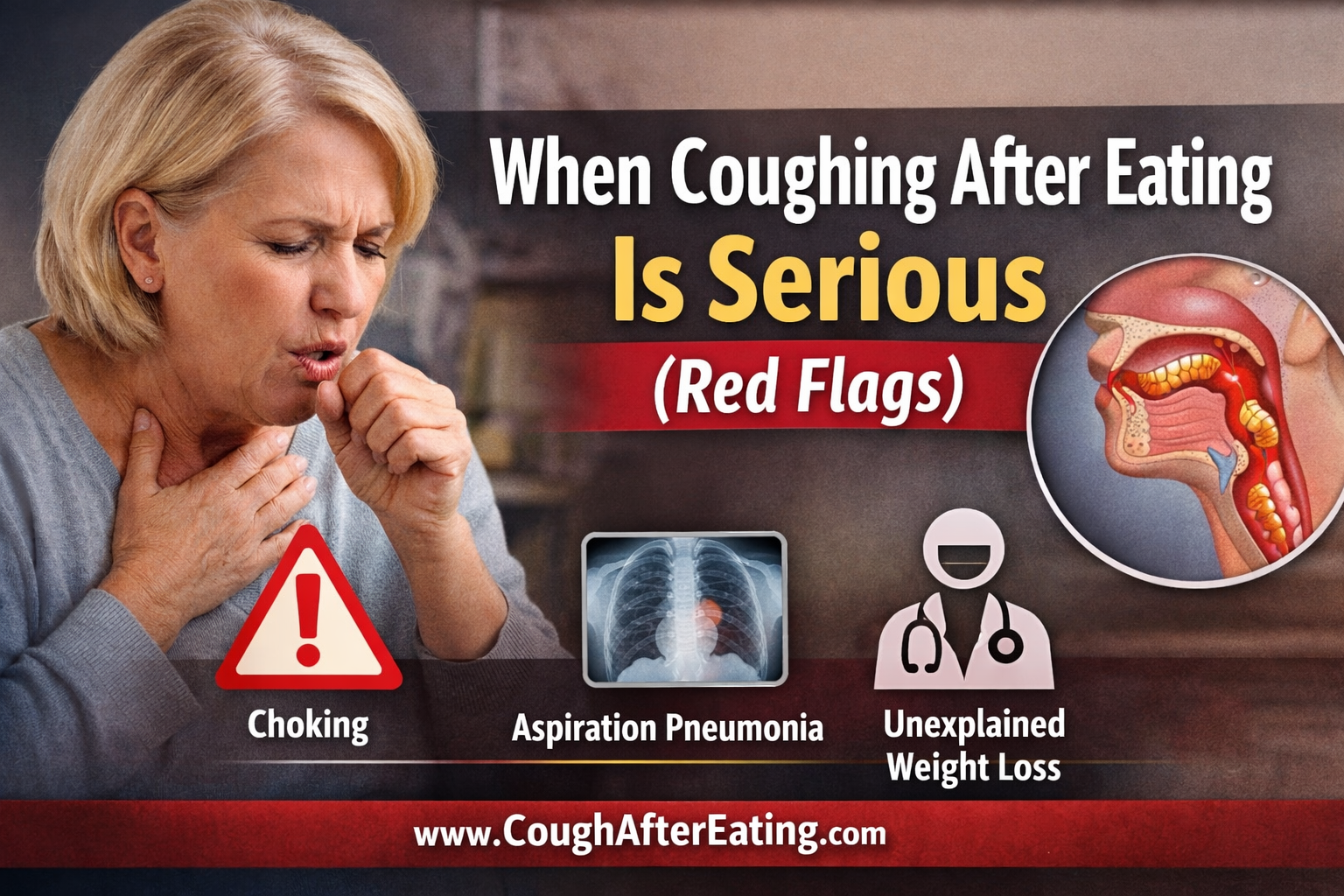
When coughing after eating is serious (red flags to watch)
Coughing after eating is often harmless, but certain patterns can signal a more serious underlying problem. In clinical practice, doctors pay close attention not just to the cough itself, but to its pattern, frequency, and associated symptoms.
The key is to recognise when symptoms are occasional and when they begin to follow a concerning pattern. A brief cough once in a while is very different from coughing that keeps returning, becomes more intense, or starts happening with other symptoms such as choking, pain, or weight loss.
If you are unsure what might be causing your symptoms, reviewing the full coughing after eating causes guide can help you understand how different causes present and how to identify the underlying issue.
When coughing after eating is usually harmless
Before looking at red flags, it helps to understand what is considered normal.
Occasional coughing during or after eating is often caused by simple factors such as minor swallowing mistakes, eating too quickly, talking while eating, or temporary throat irritation. These episodes are usually brief and do not repeat consistently.
A one-time cough is far less concerning than symptoms that return across meals or begin to change how you eat. For example, if you cough once while drinking water or swallowing food and then feel fine, it is usually not a cause for concern.
If your symptoms happen immediately but remain mild, you can explore why do I cough immediately after eating for more clarity.
Red flags: when coughing after eating may be serious
Certain patterns should not be ignored. These warning signs suggest that coughing may be linked to an underlying medical condition rather than a simple irritation.
The most useful clue is pattern recognition. Whether the cough is immediate or delayed, occasional or repetitive, mild or worsening, and whether it appears with choking, mucus, pain, or weight loss all matter.
If you want a broader understanding of how different causes present, see the coughing after eating causes guide.
Frequent or persistent coughing after meals
If you find yourself coughing after most meals, it is no longer random.
Persistent coughing may point to conditions such as reflux, swallowing disorders, or airway sensitivity. What matters most is repetition and progression over time. Symptoms that keep returning after meals usually deserve more attention than isolated episodes.
This becomes more concerning if the coughing happens after most meals, follows a consistent pattern, or is becoming more frequent.
If you are noticing this pattern developing, it may help to explore persistent cough after eating what it means.
Choking or feeling like food is stuck
A sensation of food getting stuck in your throat or chest is a major red flag.
This may indicate difficulty swallowing, narrowing of the esophagus, or poor coordination of swallowing muscles. These issues can increase the risk of food entering the airway instead of the stomach. Doctors often take this symptom seriously because it can point to a swallowing problem rather than simple throat irritation.
This is more likely to need medical attention if the sensation happens repeatedly, swallowing becomes effortful, or you begin avoiding certain foods.
You can explore this further in why food goes down the wrong way and causes coughing after eating.
Coughing with choking, gasping, or breathlessness
If coughing is accompanied by difficulty breathing, it should be taken seriously.
Symptoms such as sudden choking episodes, gasping for air, or chest tightness may suggest aspiration, where food or liquid enters the airway. In some cases, this can irritate the lungs and lead to complications if it keeps happening.
This is especially concerning if episodes are intense, occur with both liquids and solids, or leave you short of breath afterward.
For a deeper understanding, see aspiration when eating and coughing: causes explained.
Wet cough or mucus after eating
A wet or productive cough after meals may indicate airway involvement rather than simple throat irritation.
This can be linked to reflux reaching the throat, mucus buildup, or ongoing airway inflammation. A cough that brings up phlegm or feels chesty after meals may suggest that more than minor irritation is involved.
This pattern becomes more important if the cough happens after most meals, feels heavy or chesty, or improves temporarily after clearing mucus.
If you are unsure how to interpret this, explore wet vs dry cough after eating: what it means.
If your symptoms feel unclear or mixed, reviewing the coughing after eating causes guide can help connect the pattern.
Unexplained weight loss
Losing weight without trying is always a warning sign.
When combined with coughing after eating, it may suggest difficulty swallowing, reduced food intake, or more serious underlying conditions. Sometimes people begin eating less without fully realising it because eating has become uncomfortable or stressful.
This should always be evaluated, especially if eating has become uncomfortable or you are gradually eating less.
Pain when swallowing or eating
Pain during swallowing is not normal and should not be ignored.
It may indicate inflammation, irritation, or structural issues in the esophagus. Pain can also make people avoid eating normally, which can gradually worsen nutrition and quality of life.
This is more likely to be significant if the pain is recurring, worsening, or happens with both food and drinks.
Coughing that worsens at night
If coughing becomes worse after dinner or when lying down, reflux may be involved.
You may notice night-time coughing, throat irritation, or disturbed sleep. This timing matters because reflux-related symptoms often become more noticeable when stomach contents move upward more easily after meals or when lying flat.
This pattern is more likely to be reflux-related if it improves when meals are lighter or earlier.
To understand this pattern better, see why GERD causes coughing after eating.
Chronic throat clearing after eating
Frequent throat clearing after meals can be a subtle but important sign.
It may be linked to silent reflux, postnasal drip and coughing after eating, or ongoing throat irritation. Because throat clearing is milder than a strong cough, many people ignore it at first, even when it is happening regularly.
This becomes more relevant if it happens daily, is associated with a hoarse voice, or worsens after certain foods.
You can explore this further in why do I keep clearing my throat after eating.
These red flags matter because they show that the symptom is no longer occasional or minor. Once coughing becomes repetitive, progressive, or linked to other warning signs, it deserves closer attention.
How serious coughing after eating differs from normal patterns
Most causes of coughing after eating are harmless and occasional. Serious patterns are different because they are not random. They repeat, worsen, or appear alongside other symptoms.
A brief cough after eating too quickly is very different from coughing that happens after most meals. A symptom that becomes predictable is usually more important than one that happens once and disappears.
Timing pattern
Immediate coughing often points toward swallowing coordination or airway irritation, as explained in why do I cough immediately after eating.
Delayed coughing may point more toward reflux or irritation that develops after the meal, as seen in why GERD causes coughing after eating and silent reflux coughing after eating.
Cough type pattern
Pattern also matters in type. A dry tickly cough is different from a wet cough with mucus, explored in wet vs dry cough after eating: what it means.
Throat clearing is different from choking, as discussed in why do I keep clearing my throat after eating.
Pattern progression
The most important shift is when coughing stops being occasional and starts becoming predictable. Once symptoms follow a repeated pattern, especially with warning signs like pain, weight loss, food sticking, or breathlessness, they deserve closer attention.
If you are unsure how your symptoms fit together, reviewing the coughing after eating causes guide can help you see the bigger picture.
What conditions can cause serious coughing after eating
When red flags are present, coughing is often linked to specific medical causes rather than simple irritation.
Reflux-related causes
Acid reflux and GERD can irritate the throat and trigger coughing, especially after meals or at night. Learn more in why GERD causes coughing after eating.
Silent reflux may not cause heartburn but can still lead to cough, throat irritation, and voice changes. See silent reflux coughing after eating.
Swallowing and airway causes
Aspiration occurs when food or liquid enters the airway and can lead to repeated coughing or complications. This is explained in aspiration when eating and coughing: causes explained.
Swallowing disorders affect how food moves through the throat and can cause choking, food sticking, and repeated coughing. See dysphagia and coughing after eating.
Other contributing causes
Food sensitivities may also trigger coughing in some individuals, often alongside throat irritation or mucus production.
These conditions matter because they move the symptom away from simple one-off irritation and toward a pattern that may require proper evaluation.
When to see a doctor
You should take symptoms more seriously when they become consistent rather than occasional.
Seek medical advice if you notice:
- Coughing after most meals
- Choking or breathing difficulty
- Persistent wet cough
- Pain when swallowing
- Unexplained weight loss
- Symptoms lasting more than a few weeks
Persistent coughing after eating is not a diagnosis by itself, but it is a symptom pattern that should not be ignored when it keeps returning.
If any of these warning signs are present, do not rely on self-assessment alone. A proper evaluation is important to rule out more serious conditions.
Why early evaluation matters
Ignoring persistent symptoms can lead to complications.
Aspiration can lead to lung infections. Chronic reflux can damage the esophagus. Swallowing disorders can worsen over time. Problems that are mild at first may become harder to manage if they are left unassessed.
Early evaluation allows simpler and more effective treatment. If your symptoms are becoming more frequent or harder to manage, it is better to investigate early rather than wait.
Final takeaway
Coughing after eating is often harmless, but not always. The key difference is pattern.
Occasional, isolated coughing is usually not a concern. Persistent, worsening, or associated symptoms require attention. The more predictable the pattern becomes, the more important it is to take it seriously.
The most important step is recognising patterns. Immediate coughing, delayed coughing, choking, mucus production, pain, night-time worsening, and weight loss each point toward different underlying causes.
If your symptoms are becoming predictable or changing over time, do not ignore them.
If you are unsure what is causing your symptoms, reviewing the full coughing after eating causes guide can help you identify the underlying issue more clearly.
Common questions about when coughing after eating is serious
These common questions can help clarify when a symptom pattern is mild and when it deserves more attention.
When should I worry about coughing after eating?
You should pay attention if coughing happens frequently, follows a consistent pattern, or is getting worse over time.
This is more likely to be serious if it occurs after most meals, disrupts sleep, or is associated with difficulty swallowing or weight loss.
Is coughing after eating always a problem?
No. Occasional coughing after eating is common and usually harmless.
It becomes more concerning when it is persistent, repetitive, or linked to clear triggers.
What symptoms suggest something serious?
Warning signs include difficulty swallowing, frequent choking, persistent pain, weight loss, or a cough that lasts for weeks.
These patterns suggest an underlying issue rather than a one-time irritation.
Can GERD cause serious coughing after eating?
Yes. GERD can lead to persistent coughing when reflux repeatedly irritates the throat or airway.
This is more likely if coughing is delayed after meals or worsens when lying down. See why GERD causes coughing after eating.
Is immediate coughing dangerous?
Not always. Immediate coughing often happens due to temporary airway irritation during swallowing.
However, frequent episodes may suggest a swallowing issue. See why do I cough immediately after eating.
When does coughing suggest aspiration?
Coughing may suggest aspiration when it happens during swallowing, especially with liquids, and feels like food is going down the wrong way.
Repeated episodes increase concern. Learn more in aspiration when eating and coughing: causes explained.
What should I do if coughing keeps happening?
If coughing keeps returning in the same pattern, it is important to identify the underlying cause.
Reviewing the coughing after eating causes guide can help connect your symptoms to likely triggers such as reflux, swallowing issues, or airway sensitivity.