
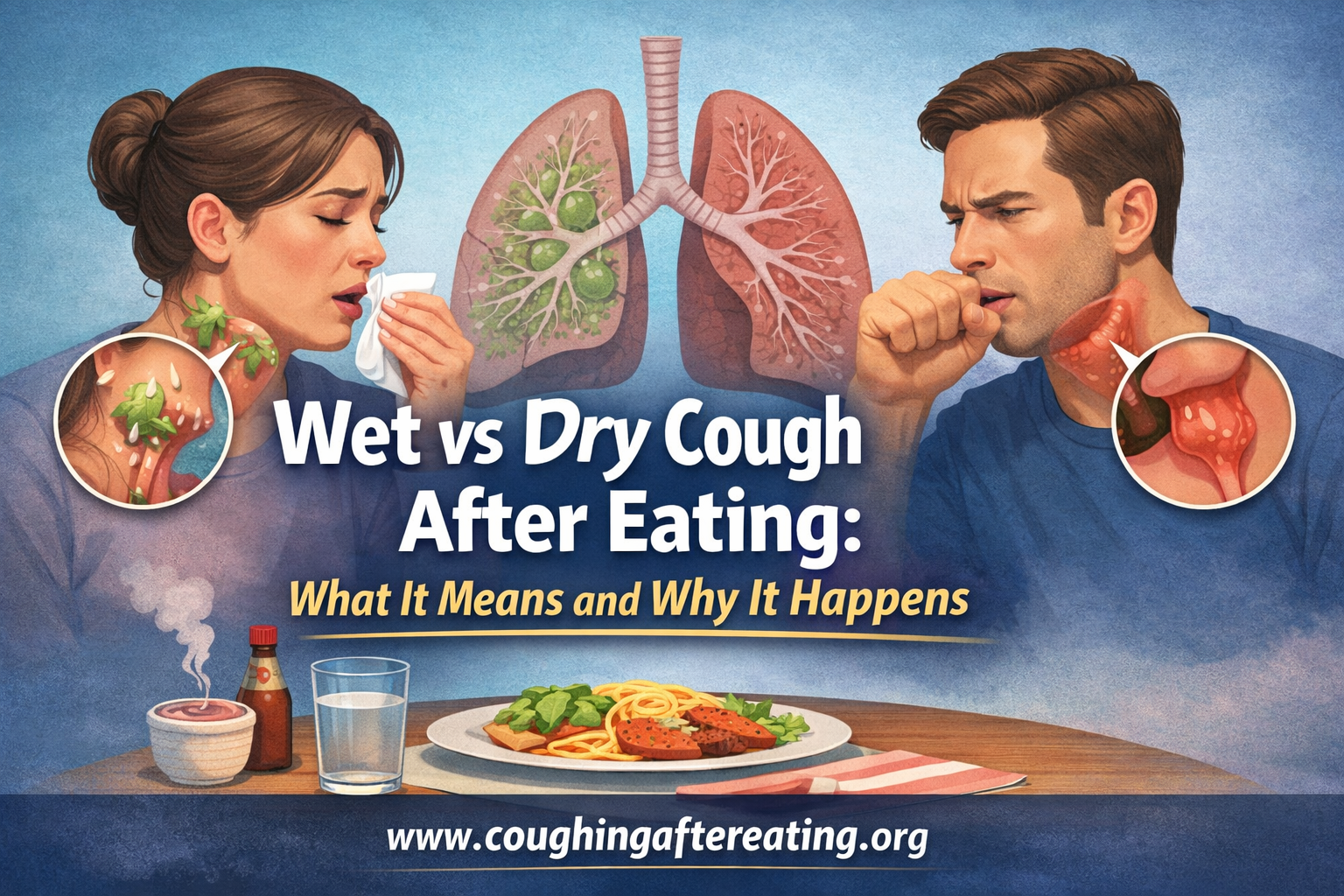
Wet vs dry cough after eating: what it means and why it happens
Coughing after eating can feel confusing, especially when it behaves differently each time. Sometimes it feels chesty with mucus, while other times it is dry and irritating.
Understanding whether your cough is wet or dry can give strong clues about what is happening inside your body. A wet cough usually suggests mucus, fluid, or material is present in the airway, while a dry cough more often points to irritation, reflux, or throat sensitivity.
Both can occur after meals, but they tend to have different triggers and meanings. Doctors do not rely on cough type alone. Timing, swallowing difficulty, mucus, throat irritation, and triggers also help identify the cause. This is why pattern recognition matters.
Mechanism: Coughing after eating happens when the airway reacts either to physical material such as food, liquid, or mucus (wet cough), or to irritation in the throat or esophagus (dry cough).
If the cough is wet and happens during swallowing, think airway involvement.
If the cough is dry and appears after the meal, think irritation or reflux.
This pattern helps distinguish airway involvement from irritation or reflux. In clinical practice, doctors use cough type together with timing and associated symptoms to distinguish airway-related causes from reflux-related causes.
If your symptoms do not clearly fit one pattern, reviewing the coughing after eating causes guide can help you see how different causes connect.
What is a wet cough after eating?
A wet cough, also called a productive cough, involves mucus or phlegm. You may feel something in your chest or throat that needs to be cleared.
After eating, this type of cough often occurs when food or liquids trigger excess mucus or interfere with normal swallowing. In practical terms, a wet cough after meals usually means the airway is reacting to something more physical than simple irritation.
Common features include:
- A chesty or heavy feeling
- Mucus or phlegm coming up
- A gurgling sensation in the throat
- A repeated need to clear the throat
If you recognise these features after meals, it often suggests that something physical is affecting the airway rather than simple irritation.
Why a wet cough happens after eating
A wet cough after meals is usually linked to substances affecting the airway directly. This can happen when food, liquid, or mucus interacts with the throat or airway in a way that triggers a protective cough.
Swallowing-related airway entry
One common reason is swallowing difficulty, where small amounts of food or liquid enter the airway instead of the esophagus. This triggers a protective cough reflex. This mechanism is explained in why food goes down the wrong way and causes coughing after eating.
In some cases, this overlaps with aspiration when eating and coughing, especially if mucus or food particles are involved.
Mucus interaction and throat response
Another possibility is mucus interaction. Postnasal drip and coughing after eating or airway sensitivity can make mucus more noticeable after meals, leading to a productive cough.
This pattern is more likely if coughing happens during eating or immediately after swallowing, especially if you notice gurgling, choking, or a sensation of something going the wrong way.
A wet cough after eating usually suggests that the airway is reacting to something tangible, not just irritation alone.
What is a dry cough after eating?
A dry cough does not produce mucus. It usually feels like irritation, tickling, or a scratchy sensation in the throat.
Dry cough after eating is often linked to irritation rather than mucus, especially in reflux-related patterns. You can explore this further in can acid reflux cause coughing after eating.
This type of cough may feel less dramatic than a wet cough, but it can be persistent and frustrating, especially after certain foods. In many people, the cough feels as though it starts in the throat rather than in the chest.
Common features include:
- No mucus production
- Tickling or burning in the throat
- Repeated coughing without relief
- Clear triggers such as specific foods
If this pattern keeps returning after meals, irritation is often a stronger possibility than blockage or airway entry.
Why a dry cough happens after eating
Dry coughs are usually caused by irritation rather than blockage. That irritation may come from stomach contents, throat sensitivity, or foods that aggravate an already sensitive airway.
Reflux-related irritation
One of the most common causes is reflux, where stomach acid moves upward and irritates the throat or airway. This is explained in detail in why GERD causes coughing after eating.
This pattern is more likely if the cough feels tickly rather than chesty, produces little or no mucus, and appears after meals rather than during swallowing.
Silent reflux and throat sensitivity
In some people, reflux occurs without obvious heartburn. This is known as silent reflux and can still trigger coughing. Learn more in silent reflux coughing after eating.
A dry cough after eating usually points more toward irritation pathways than to physical material entering the airway.
Wet vs dry cough after eating: key differences
A wet cough usually signals that something is physically present in the airway, while a dry cough points more toward irritation.
The most useful way to interpret the difference is through pattern. Immediate wet coughing during swallowing often points toward airway entry or swallowing difficulty. Delayed dry coughing after the meal more often points toward reflux or throat irritation.
Mixed patterns can happen, but timing often helps separate them. If your symptoms are unclear, reviewing the coughing after eating causes guide can help connect these patterns to the underlying cause.
How wet and dry cough patterns differ from other causes
Wet and dry cough describe how a cough feels, not why it happens. This makes them different from cause-based explanations.
Cough type vs reflux cause
For example, why GERD causes coughing after eating and silent reflux coughing after eating explain irritation caused by stomach contents. Wet and dry cough patterns describe the result of that irritation.
A dry cough is more commonly linked to irritation, as seen in can acid reflux cause coughing after eating.
Cough type vs swallowing cause
A wet cough often overlaps with aspiration when eating and coughing, where food or liquid enters the airway.
These patterns also differ from why do I cough immediately after eating, which focuses on timing rather than cough type.
Understanding your cough type helps narrow down possibilities, but it should always be considered alongside timing and associated symptoms.
What your cough type may be telling you
Your cough pattern reflects how your body is reacting to food, swallowing, or digestion. A wet cough suggests that something is affecting the airway directly. A dry cough suggests irritation without obstruction.
Timing adds another important clue. If your cough starts immediately after swallowing, it may point toward swallowing-related issues. This is explored in why do I cough immediately after eating.
In practice, the most useful insight comes from combining clues: wet or dry, when it starts, what triggers it, and what other symptoms appear together. If you notice a consistent pattern, that pattern itself becomes the most valuable signal.
Wet and dry cough can overlap
In some cases, the distinction is not clear-cut. You may experience both types depending on the situation.
Reflux may begin as a dry cough but later lead to throat clearing or mucus sensation. Airway sensitivity can also create mixed patterns.
You may also notice coughing triggered more by liquids than solids. This is explained in why do I cough after drinking liquids.
Looking at patterns across different situations often provides better clarity than focusing on a single episode.
When coughing after eating may be serious
Most cases are mild, but certain signs should not be ignored. Warning signs matter because they can suggest a swallowing problem, repeated airway irritation, or something more than simple reflux.
Warning signs include:
- Frequent choking while eating
- Persistent coughing after most meals
- Shortness of breath
- Unexplained weight loss
- Recurrent chest infections
These signs suggest that the issue may go beyond simple irritation. If your symptoms are frequent or worsening, it is important not to rely only on self-observation.
You can review the broader picture in the coughing after eating causes guide.
How to reduce coughing after eating
Simple adjustments can often reduce both wet and dry cough symptoms. Small changes in how you eat and what you eat can sometimes make a noticeable difference within days.
Eating habits that help
- Eat slowly and chew thoroughly
- Avoid talking while eating
- Sit upright during and after meals
- Take smaller bites
Food-related adjustments
- Avoid spicy, acidic, or oily foods if reflux is suspected
- Reduce dairy temporarily if mucus feels worse
- Stay hydrated to keep mucus thin
Lifestyle changes
- Avoid lying down immediately after eating
- Maintain a healthy weight
- Identify and avoid trigger foods
If symptoms improve with these changes, it is a strong indication that your cough is linked to eating patterns, reflux, or airway sensitivity. If there is little or no improvement, it may be worth exploring other causes.
When to seek medical advice
Occasional coughing after eating is usually not serious. However, persistent or worsening symptoms should be evaluated.
You should consider medical advice if:
- Symptoms last more than a few weeks
- Cough interferes with eating
- You feel food going the wrong way
- There is ongoing chest discomfort
If symptoms follow a repeated pattern rather than random episodes, it is more likely that an underlying cause needs attention.
Final takeaway
Wet and dry coughs after eating may feel similar, but they usually point to different underlying causes. A wet cough often indicates mucus or airway involvement. A dry cough usually suggests irritation, often linked to reflux.
The most important step is recognising patterns. A wet cough during swallowing suggests airway involvement, while a dry cough after eating suggests irritation or reflux.
If your symptoms are unclear or mixed, reviewing the coughing after eating causes guide can help you interpret them more clearly.
Common questions about wet vs dry cough after eating
What is the difference between a wet cough and a dry cough after eating?
A wet cough after eating produces mucus or phlegm and often feels chesty or heavy. A dry cough after eating feels tickly or irritated without mucus. This difference helps indicate whether the airway is reacting to physical material or irritation.
Which is more serious: a wet or dry cough after eating?
Neither is automatically more serious. The concern depends on pattern. Frequent, worsening, or persistent coughing after eating matters more than whether the cough is wet or dry.
Why do I cough up mucus after eating?
Coughing up mucus after eating usually means the airway is reacting to material such as food, liquid, or increased mucus. It can be linked to swallowing issues or throat mucus buildup.
Why is my cough dry after eating?
A dry cough after eating is usually caused by irritation rather than mucus. This is often linked to reflux or throat sensitivity, especially if the cough appears after the meal rather than during swallowing.
Can GERD cause a wet cough after eating?
GERD more commonly causes a dry cough after eating, but it can sometimes lead to mucus production and a wet cough if irritation triggers throat secretions.
Does timing help distinguish wet vs dry cough after eating causes?
Yes. Timing is one of the most important clues.
- Coughing during swallowing is more likely related to airway entry
- Coughing after the meal is more often linked to reflux or irritation
- Ongoing throat clearing suggests mucus involvement
When should I be concerned about wet or dry cough after eating?
You should be concerned if coughing after eating:
- Happens after most meals
- Persists for several weeks
- Becomes more frequent or severe
- Is associated with choking or difficulty swallowing
These patterns may indicate an underlying issue rather than a temporary trigger.
Can one person have both wet and dry cough after eating?
Yes. It is common to experience both wet and dry cough after eating. This usually suggests overlapping causes such as reflux combined with airway sensitivity or mucus buildup.