
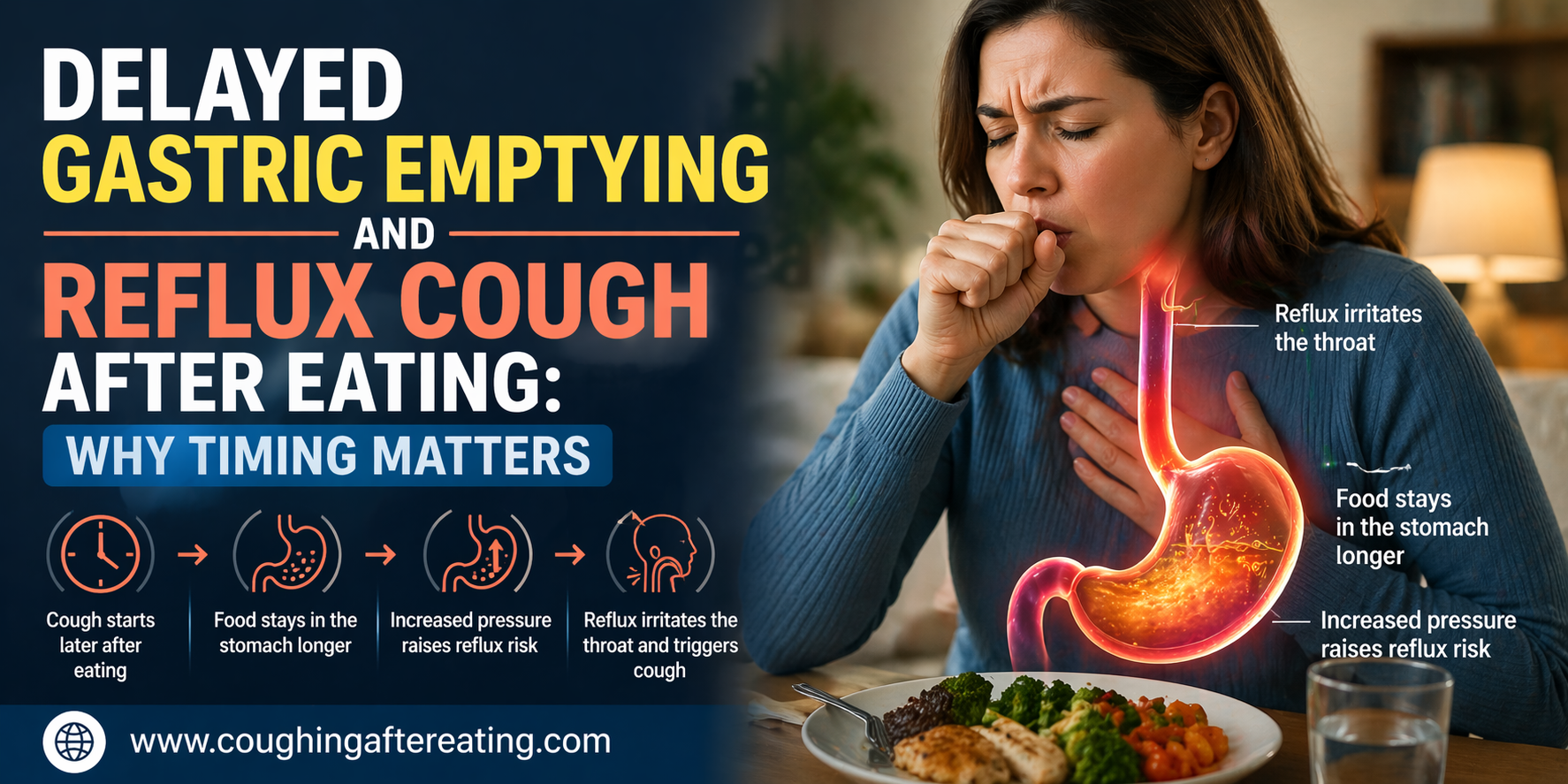
Delayed gastric emptying and reflux cough after eating: why timing matters
Coughing after eating does not always begin immediately. In some people, the cough starts later, after the meal has already finished and digestion is underway. When that delayed pattern keeps repeating, one possible reason is delayed gastric emptying, where the stomach empties more slowly than normal.
This matters because slow stomach emptying can increase pressure and prolong how long food remains in the stomach, which may make reflux more likely after meals. Instead of coughing during swallowing, some people notice that the cough builds gradually, appears 20 to 60 minutes later, or becomes worse after larger or heavier meals.
A cough that begins much later after eating, especially with fullness or bloating, is less likely to be caused by immediate swallowing issues and more likely related to digestion.
If you want to understand how this fits into the bigger picture, see the coughing after eating causes guide.
Mechanism: Delayed gastric emptying can contribute to coughing after meals by keeping stomach contents in place longer, increasing the chance of reflux and throat irritation after eating.
Why delayed gastric emptying can cause coughing after eating
Delayed gastric emptying can cause coughing after eating because food remains in the stomach longer, increasing pressure and making reflux more likely. This reflux can irritate the throat or trigger a cough reflex, especially after meals.
The key difference is timing. Instead of coughing during eating, the cough usually appears later, often 20 to 60 minutes after a meal, particularly after large or heavy foods.
Key signs of delayed gastric emptying cough after eating
These signs help identify when a delayed cough pattern may be linked to digestion rather than swallowing.
- Cough starts later after eating, not during the meal
- Symptoms appear 20 to 60 minutes after food
- Worse after large, fatty, or heavy meals
- Associated with bloating, fullness, or slow digestion
- May worsen when lying down after eating
Quick pattern summary
This quick comparison highlights how timing changes the likely cause.
- Cough during eating or immediately after: More likely swallowing or airway-related
- Cough later after meals (20 to 60 minutes): More likely digestive or reflux-related
- Cough after large or heavy meals: Suggests delayed gastric emptying or reflux buildup
- Cough with bloating or prolonged fullness: Points toward slow digestion contributing to symptoms
This quick pattern check can help you narrow down the likely cause before looking at details.
What delayed gastric emptying means in this context
Delayed gastric emptying means the stomach moves food onward more slowly than expected. Food is still leaving the stomach, but the process is delayed enough to create fullness, pressure, bloating, or a lingering heavy sensation after meals.
That slower movement does not cause coughing directly in the same way a swallowing problem does. Instead, it creates conditions that may make reflux more likely. When the stomach stays full for longer, contents may move upward more easily, especially after large meals, fatty foods, or lying down too soon.
This is why the timing pattern matters so much. A cough that appears later after eating often points away from food going down the wrong way and more toward a digestive trigger that builds after the meal.
If your cough happens within seconds instead, see why do I cough immediately after eating.
Why slow stomach emptying can make reflux worse
When the stomach empties slowly, it remains distended for longer. That prolonged fullness can increase upward pressure and make reflux episodes more likely, particularly in people who already have reflux sensitivity.
Reflux does not always mean obvious heartburn. In some people, the main symptom is throat irritation, throat clearing, hoarseness, or coughing after meals. The digestive delay creates the setup, and the reflux-related irritation triggers the cough response later.
Why the cough is often delayed rather than immediate
A swallowing-related cough usually happens during eating or within seconds of swallowing. By contrast, delayed gastric emptying tends to produce a later pattern because the problem develops after food has already reached the stomach.
That is why people with this pattern often say the meal itself seems fine at first, but the cough begins later, especially if they feel overly full, bloated, or uncomfortable after eating.
Why larger meals often make this pattern more obvious
Meal size often changes the pattern. A small meal may cause little or no trouble, while a large, rich, or heavy meal may lead to a clearer delayed cough. This happens because a larger stomach load takes longer to handle and may increase the chance of reflux during digestion.
This does not prove delayed gastric emptying on its own, but it does make the pattern more suggestive when the timing is consistent.
The main clue in this section is not just that coughing happens after eating, but that it happens later, especially when digestion feels slow or heavy. When that delayed timing repeats in a consistent way, particularly after larger or richer meals, it becomes a stronger signal that the cough may be linked to a digestive buildup pattern rather than an immediate swallowing or airway event.
To see how delayed patterns compare with other timing-based causes, explore why do I cough immediately after eating.
What the symptom pattern usually feels like
The experience is often less dramatic than aspiration or choking. Many people do not describe a sudden coughing fit during the meal. Instead, they notice a delayed irritation pattern that begins after eating and seems connected to fullness, pressure, or reflux.
That delayed pattern can make the cause harder to recognise. People may focus only on the cough and miss the digestive symptoms happening alongside it.
Pattern signal:
A cough that starts later after eating, especially with fullness or bloating, is more likely linked to digestion than swallowing.
Common timing clues
The cough often starts after the meal rather than during it. It may appear 20 to 60 minutes later, or sometimes even later after a heavier meal. In some cases, it becomes more noticeable when sitting back, bending, or lying down after eating.
This delayed timing is one of the most useful clues because it separates this pattern from causes linked to swallowing coordination. If your cough starts right away instead of later, compare this with why do I cough immediately after eating to understand the difference in timing.
Digestive symptoms that may appear alongside the cough
Some people also notice bloating, prolonged fullness, burping, upper abdominal discomfort, nausea, or the feeling that food is just sitting in the stomach. Others mainly notice reflux symptoms, such as throat irritation, sour fluid, chest discomfort, or repeated throat clearing.
Not everyone has every symptom, and some people may have very little heartburn even when reflux is still part of the problem.
Foods and eating habits that may make it more noticeable
Larger meals, high-fat meals, late-night eating, eating quickly, and lying down soon after food can all make this pattern more noticeable. These factors do not automatically mean delayed gastric emptying is present, but they can intensify the digestive conditions that make reflux-related coughing more likely.
This is more likely if your cough starts later rather than immediately, especially after heavy meals, with bloating or prolonged fullness.
The pattern here is gradual rather than abrupt. Instead of a sudden airway event, the body seems to react after the digestive process begins to create reflux or throat irritation.
If your symptoms are more about mucus or throat irritation rather than fullness, see postnasal drip and coughing after eating.
How this differs from other causes of coughing after eating
Delayed gastric emptying can overlap with reflux, which is why this topic needs careful framing. It is not a completely separate mechanism from reflux-related coughing. Rather, it is one reason reflux may become worse or more persistent after meals.
Looking at timing and associated symptoms usually helps separate it from other causes.
Delayed gastric emptying vs food going down the wrong way
If food goes down the wrong way, coughing usually happens during swallowing or immediately afterward. The trigger is sudden and protective, because the airway is reacting right away.
With delayed gastric emptying, the meal may go down normally. The cough appears later, once fullness, reflux, or throat irritation develops. If you are comparing these two patterns, see why food goes down the wrong way and causes coughing after eating.
Delayed gastric emptying vs classic acid reflux after meals
Classic reflux after meals can happen even without clearly delayed stomach emptying. The difference here is that digestive slowness may be part of what keeps the reflux cycle going, especially after larger meals or when symptoms seem tied to prolonged fullness.
In other words, delayed gastric emptying may sit underneath the reflux pattern rather than replace it. For the main reflux explanation, see can acid reflux cause coughing after eating.
Delayed gastric emptying vs throat-based irritation patterns
Some people cough after meals because the throat is already irritated or the cough reflex has become overly sensitive. In those cases, even mild triggers can start coughing.
With delayed gastric emptying, the stronger clue is that the cough follows digestive heaviness and tends to build after meals rather than appearing as a random throat reaction. If that overlap is relevant, see chronic cough reflex sensitivity and throat irritation.
How to recognise a delayed digestive cough pattern
A delayed cough after eating usually follows a different pattern from other common causes. Looking at timing, triggers, and associated symptoms can help separate it from swallowing-related or throat-based causes.
- Delayed after meals (20 to 60 minutes later): More consistent with slow digestion or reflux buildup rather than swallowing problems
- During eating or immediately after swallowing: More likely related to airway protection or food going down the wrong way
- Worse after large or heavy meals: Suggests a digestive load or delayed emptying pattern
- Triggered by liquids or thin fluids: More suggestive of swallowing coordination issues
- Associated with bloating or prolonged fullness: Points toward digestive delay rather than throat-only irritation
- Frequent throat clearing or mucus sensation: May overlap more with upper airway patterns like postnasal drip and coughing after eating
This type of comparison is often how clinicians narrow down the cause. The timing of the cough is usually the most reliable starting point.
The underlying difference is the mechanism. Delayed gastric emptying reflects a digestive buildup pattern rather than an immediate airway response. When the cough consistently appears later and follows a feeling of fullness or slow digestion, it becomes more likely that the trigger is developing after the meal rather than during it.
For a full breakdown of all major causes side by side, return to the coughing after eating causes guide.
When this pattern becomes more important to pay attention to
An occasional delayed cough after a very heavy meal is not unusual by itself. What makes the pattern more important is repetition, especially when the same delayed sequence keeps happening.
If the cough repeatedly follows meals and is paired with fullness, bloating, reflux, or night-time worsening, it becomes more useful to look at the digestive side of the picture.
Repeated post-meal fullness and cough
When the stomach repeatedly feels slow, heavy, or overfull after meals and coughing follows, that combination becomes more meaningful than either symptom alone. The body may be showing a consistent meal-related digestive pattern rather than a random cough.
Worsening symptoms at night or after lying down
If the cough becomes worse after reclining or later in the evening, reflux becomes more likely as part of the explanation. Slow stomach emptying can make this more noticeable because stomach contents remain present for longer.
Symptoms that should not be ignored
A persistent cough, repeated vomiting, significant nausea, unexplained weight loss, trouble swallowing, or symptoms severe enough to limit eating deserve medical assessment rather than self-guessing. These features do not confirm delayed gastric emptying, but they do mean the pattern needs proper evaluation.
If your main concern is whether the symptom is becoming a warning sign, see when coughing after eating is serious.
A recurring delayed pattern matters because it suggests the timing is not random. Once coughing repeatedly follows slow, uncomfortable digestion, the digestive trigger becomes harder to ignore.
If coughing is becoming more frequent regardless of timing, it may help to compare patterns like wet vs dry cough after eating.
What to notice before assuming this is the cause
Delayed gastric emptying is one possible explanation, but it should not be assumed based on one symptom alone. Coughing after eating can come from several pathways, and overlap is common.
The most useful approach is to notice the pattern clearly before jumping to conclusions.
Quick check:
If your cough appears during the meal, think swallowing. If it appears later after the meal, think digestion.
Is delayed gastric emptying causing your cough?
It may be contributing if your cough:
- Does not happen during eating
- Appears later after meals
- Follows a feeling of fullness or bloating
- Gets worse after heavy meals
- Improves with lighter meals or better meal spacing
If the cough happens immediately instead, it is more likely related to swallowing or airway protection.
Questions that help clarify the pattern
Notice whether the cough happens during the meal or later after it. Pay attention to whether larger meals make it worse, whether fullness lasts unusually long, and whether bloating, burping, reflux, or nausea appear alongside the cough.
Also notice whether lying down, bending forward, or eating late changes the severity. These details often make the pattern clearer.
Why timing is more useful than guesswork
People often assume any cough after eating must be reflux, but timing gives better clues than labels do. Immediate coughing points more toward swallowing or airway protection. Delayed coughing points more toward digestive buildup, reflux, or related irritation after the meal.
That timing pattern is often more helpful than trying to name the cause too early.
Why overlap is common
Some people may have reflux and slow digestion together. Others may have reflux plus throat sensitivity. That overlap is one reason coughing after eating can feel confusing.
The goal is not to force every case into one label, but to identify which pattern best matches what keeps happening.
The clearer the timing and symptom pattern, the easier it becomes to distinguish a delayed digestive cause from an immediate swallowing cause.
If your cough is triggered more by drinks than meals, see why do I cough after drinking liquids for a related pattern.
At a glance
Delayed coughing after eating is more often linked to digestion and reflux buildup, while immediate coughing is more often linked to swallowing or airway issues.
- Delayed cough after eating usually points to digestion rather than swallowing
- Slow stomach emptying can increase reflux after meals
- Larger meals often make the pattern more noticeable
- Timing is the most useful clue when comparing causes
Final takeaway
Delayed gastric emptying can help explain why some people do not cough during the meal itself, but begin coughing later as fullness, pressure, and reflux build after eating. The key clue is delayed timing, especially when it happens after larger meals or alongside bloating and prolonged fullness.
If your coughing starts right away, this is less likely to be the main explanation. But if the cough appears later and keeps following the same digestive pattern, delayed gastric emptying may be part of the reflux picture rather than a separate problem.
To compare this with other common causes, return to the coughing after eating causes guide.
Common questions about delayed gastric emptying and reflux cough
These common questions can help clarify how delayed gastric emptying may relate to coughing after meals.
Can delayed gastric emptying cause coughing after eating?
Yes, delayed gastric emptying can contribute to coughing after eating by increasing the likelihood of reflux. When the stomach empties slowly, pressure builds up and stomach contents can move upward, irritating the throat and triggering a cough, often later after meals rather than immediately.
Is delayed gastric emptying the same as reflux?
No. Delayed gastric emptying and reflux are not the same thing, but they can overlap. Slow stomach emptying may make reflux more likely or make post-meal reflux symptoms last longer.
Does this type of cough happen immediately?
Usually not. A cough linked to delayed gastric emptying is more likely to appear later after a meal rather than during swallowing itself.
What symptoms make this pattern more suggestive?
Bloating, prolonged fullness, nausea, burping, reflux symptoms, and worsening after heavy meals or lying down make the pattern more suggestive.
Should I worry about a delayed cough after eating?
An occasional mild episode may not mean much, but repeated coughing after meals, especially with digestive discomfort or other warning signs, is worth discussing with a clinician.
These answers focus on delayed timing patterns, but if your symptoms vary or do not follow a clear pattern, it helps to compare other causes in the coughing after eating causes guide to understand what might be driving your symptoms.