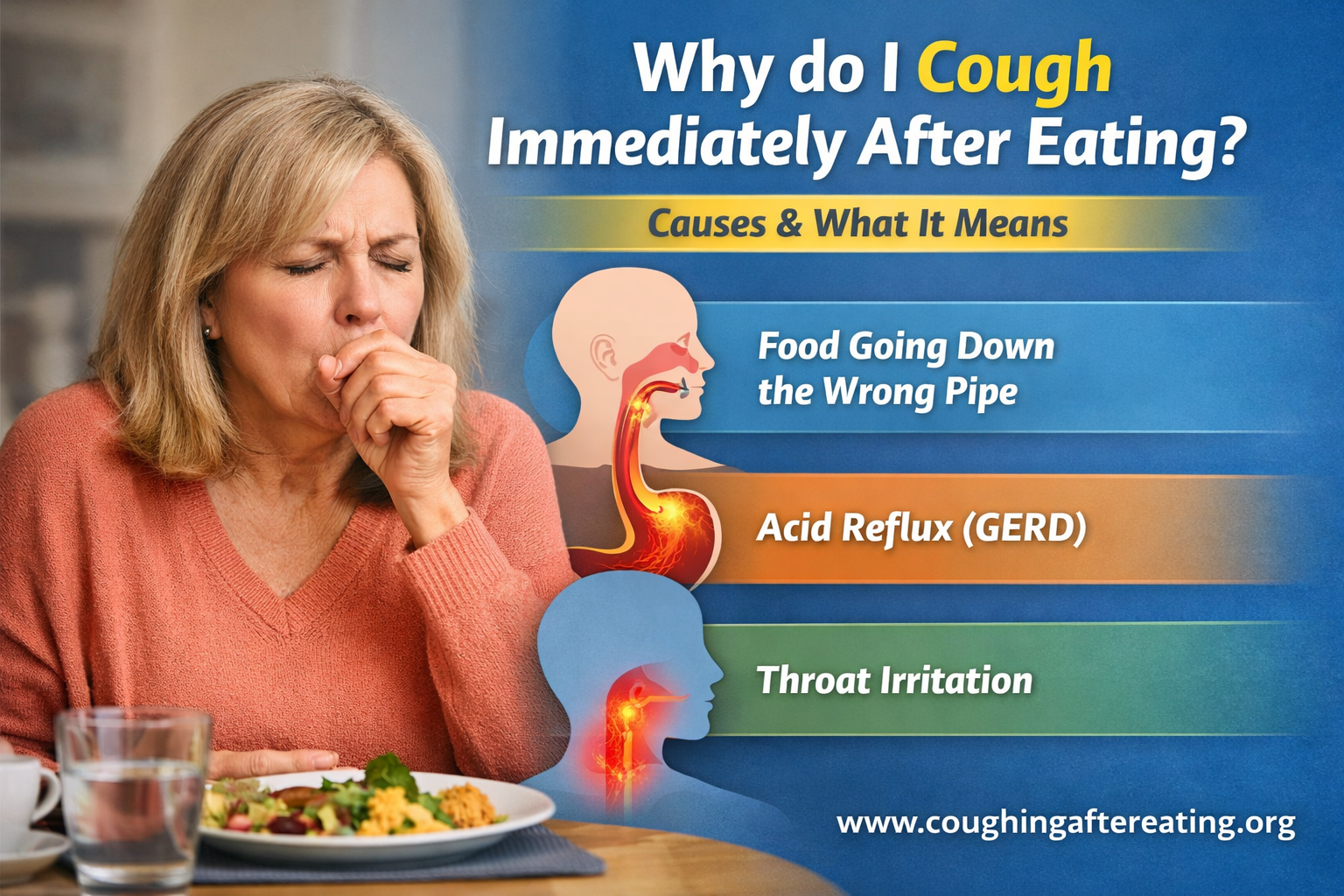
Why do I cough immediately after eating? Causes and what it means
Coughing immediately after eating can feel sudden, uncomfortable, and sometimes even alarming. One moment you’re swallowing food normally, and the next, your body reacts with a cough that seems hard to control.
In many cases, this happens because something interrupts the normal swallowing process or irritates your airway right away. Understanding the cause is important, because an occasional cough is usually harmless, but frequent or persistent coughing may point to an underlying issue.
If you want a broader understanding of all possible triggers, start with coughing after eating causes guide to see how different conditions connect.
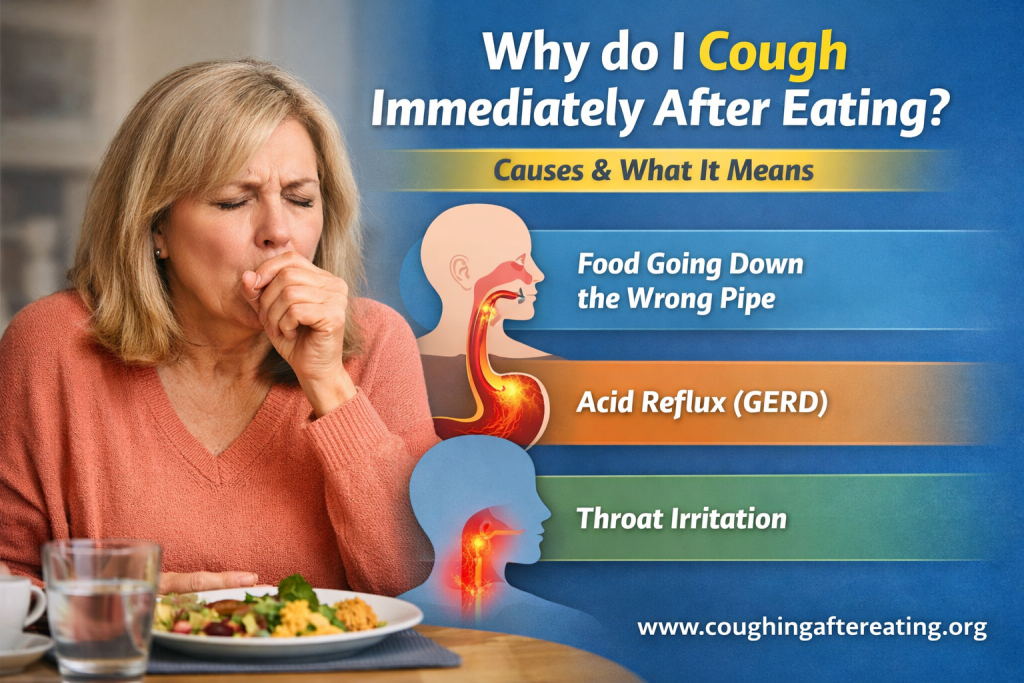
What causes coughing immediately after eating?
Coughing right after eating usually happens when food, liquid, or stomach contents affect the airway or throat almost instantly. Unlike delayed coughing, this type is often linked to mechanical or reflex triggers.
The most common causes include:
- Food going down the wrong pipe (aspiration)
- Swallowing coordination issues
- Acid reflux reaching the throat
- Sudden throat or airway irritation
Each of these acts quickly, which is why the cough happens within seconds of swallowing.
Why the timing matters
The fact that your cough happens immediately after eating is an important clue. It usually points to swallowing-related issues or airway irritation, rather than delayed digestive causes.
Food going down the wrong pipe (aspiration)
One of the most common reasons for immediate coughing is aspiration, which means food or liquid enters the airway instead of the esophagus.
When you swallow, a small flap called the epiglottis is supposed to close over your airway. If this doesn’t happen perfectly, even for a moment, food can slip into the wrong passage.
For more details, please see aspiration when eating and coughing: causes explained,
Why this causes instant coughing
Your body has a built-in defense reflex. The moment something touches the airway, it triggers a cough to push it out.
Signs this is the cause
- Sudden coughing while swallowing
- Feeling like food “went the wrong way”
- Choking sensation
- Watery eyes or throat irritation
This type of coughing is usually brief, but if it happens frequently, it may indicate a swallowing issue.
Swallowing problems (dysphagia)
If coughing immediately after eating happens often, it may be linked to dysphagia, which means difficulty swallowing properly.
This doesn’t always mean food gets stuck. Sometimes, it means the timing of swallowing is slightly off, allowing small amounts of food or liquid to enter the airway.
How dysphagia leads to coughing
Even a minor coordination issue can trigger repeated coughing because the airway is not fully protected during swallowing.
Possible causes of dysphagia
- Muscle weakness in the throat
- Nerve-related conditions
- Aging-related changes
- Structural issues in the esophagus
If coughing is frequent, worsening, or associated with choking, it’s important to explore this further.
Acid reflux (GERD) and immediate coughing
Although reflux or GERD is often associated with symptoms later after eating, it can also trigger coughing immediately in some people.
In conditions like Gastroesophageal Reflux Disease or Laryngopharyngeal Reflux, stomach acid can move upward quickly and irritate the throat.
Why reflux can cause instant coughing
- Acid reaches the throat very quickly after swallowing
- The throat lining becomes sensitive
- Even small amounts of reflux trigger a cough reflex
Signs pointing to reflux-related coughing
- Burning sensation in chest or throat
- Sour taste after eating
- Frequent throat clearing
- Hoarseness
If reflux is suspected, you can explore why GERD causes coughing after eating for a deeper explanation.
Throat irritation and sensitivity
Sometimes, the cause is not a major condition but heightened sensitivity in the throat.
Certain foods can irritate the throat lining immediately, especially if it is already inflamed.
Common triggers
- Spicy foods
- Very hot or cold foods
- Dry or rough textures
- Strong spices
What happens in the body
The throat reacts quickly to irritation by activating the cough reflex, even if nothing has gone into the airway.
This type of coughing is usually mild but can feel repetitive if the throat is already sensitive.
Drinking liquids and immediate coughing
For some people, coughing happens not with solid food, but with liquids.
Thin liquids like water can move quickly and may be harder to control during swallowing.
Why liquids trigger coughing
- Faster flow into the throat
- Less control compared to solid food
- Higher chance of entering the airway
If this sounds familiar, see why do I cough after drinking liquids for a more focused explanation.
When immediate coughing is normal
Occasional coughing right after eating is usually not a cause for concern.
It can happen due to:
- Eating too quickly
- Talking while eating
- Taking large bites
- Temporary throat irritation
In these situations, the cough is simply your body protecting your airway.
When should you be concerned?
While occasional coughing is normal, certain patterns may indicate a deeper issue.
Watch for these signs
- Coughing happens frequently after every meal
- Repeated choking episodes
- Food feels stuck in the throat
- Persistent hoarseness
- Unexplained weight loss
- Chest discomfort or pain
If these symptoms are present, it’s important to seek medical evaluation.
How to reduce coughing immediately after eating
There are several simple ways to reduce coughing episodes during meals. Simple changes can often reduce or prevent coughing episodes. These changes help improve swallowing control and reduce irritation.
Practical steps
- Eat slowly and chew thoroughly
- Avoid talking while swallowing
- Take smaller bites and sips
- Sit upright while eating
- Stay upright for at least 30 minutes after meals
If reflux is involved
- Avoid heavy or spicy meals
- Reduce late-night eating
- Elevate the head slightly after meals
These small adjustments can significantly improve symptoms over time.
How different causes feel (quick comparison)
Understanding the pattern can help identify the cause more clearly.
Aspiration
- Sudden, sharp coughing
- Happens during swallowing
- Feels like choking
Dysphagia
- Repeated coughing with meals
- Difficulty swallowing
- Sensation of food not going down smoothly
Reflux
- Burning or irritation
- May include throat clearing
- Can happen with or without heartburn
Throat sensitivity
- Mild but frequent cough
- Triggered by specific foods
- No choking sensation
The bottom line
Coughing immediately after eating usually happens because something affects the airway or throat right away, most commonly aspiration, swallowing issues, reflux, or irritation.
In many cases, it’s harmless and improves with simple changes in eating habits. However, if it happens frequently or is associated with other symptoms, it’s worth investigating further.
Understanding the pattern of your cough is the first step toward identifying the cause and finding the right solution.
FAQs
Why do I cough right after swallowing food?
Coughing right after swallowing usually happens when food or liquid briefly enters the airway or irritates the throat, triggering a protective reflex.
Is it normal to cough immediately after eating?
Occasional coughing is normal, especially if you eat quickly or talk while eating. Frequent coughing may need evaluation.
Can acid reflux cause immediate coughing?
Yes, in some cases reflux can reach the throat quickly and trigger a cough reflex immediately after eating.