
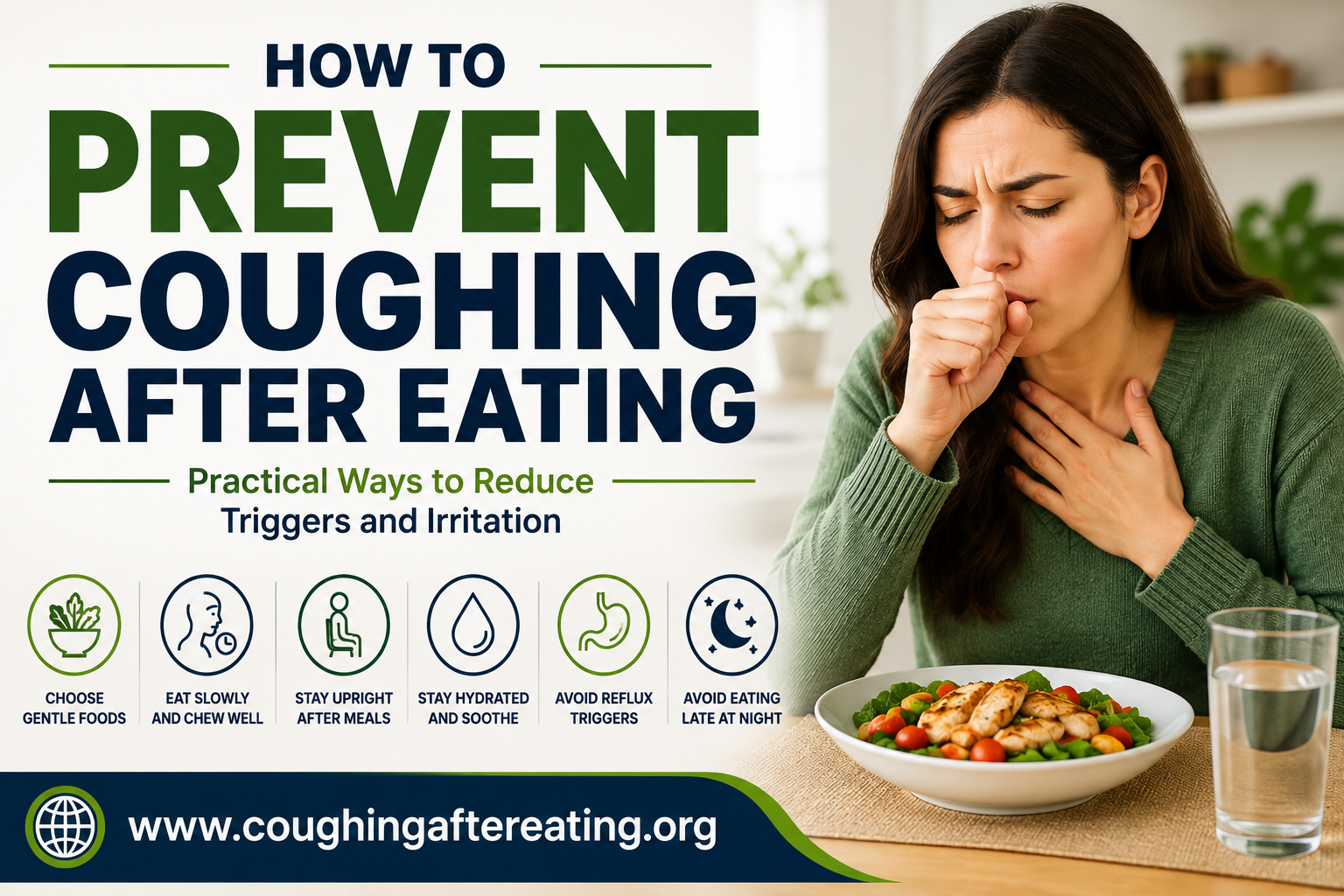
How to prevent coughing after eating: Practical ways to reduce triggers and irritation
Coughing after eating prevention is not always straightforward because the symptom can develop for several different reasons. Some people notice coughing immediately while swallowing food, while others develop symptoms several minutes later as throat irritation, mucus, wheezing, or repeated throat clearing begin to appear. Understanding the broader picture of coughing after eating often becomes the first step toward reducing symptoms successfully.
In many cases, prevention starts with identifying the underlying causes of coughing after eating rather than only trying to suppress the cough itself. Understanding how coughing after eating is diagnosed can often make it easier to recognise which factors may be contributing to symptoms. For some people, symptoms are more closely linked to reflux, throat sensitivity, or swallowing difficulties. For others, the problem may appear more strongly after certain meals, eating habits, or body positions. Many people also begin noticing repeated food triggers for coughing after eating such as spicy foods, fried meals, acidic foods, cold drinks, or very dry foods.
Patterns often provide important clues. Some people cough mainly at night, after large meals, while eating too quickly, or after lying down soon after eating. Others notice symptoms mainly during certain recurring situations, which is why recognising situations that trigger coughing after eating and broader coughing after eating patterns can sometimes help narrow down what may be worsening symptoms.
The symptoms themselves can also vary significantly from person to person. Some people develop a dry cough, while others experience mucus, throat clearing, choking sensations, hoarseness, wheezing, or lingering throat irritation after meals. Recognising these different coughing after eating symptoms may help guide prevention strategies more effectively while making it easier to identify which changes may gradually reduce irritation over time. In some cases, a broader approach to coughing after eating treatment may also be needed when lifestyle adjustments alone are not enough.
This guide explains practical approaches to coughing after eating prevention, including lifestyle measures, dietary adjustments, reflux management, swallowing strategies, and other everyday changes that may help reduce the likelihood of future episodes. It also explains why different prevention strategies may be appropriate for different people and how identifying recurring triggers can help reduce symptoms over time.
Practical ways to help prevent coughing after eating, including recognising triggers, improving meal habits, reducing reflux irritation, and identifying recurring symptom patterns.
At a glance: practical ways to prevent coughing after eating
Practical prevention often starts with small, consistent changes.
- Eat more slowly
- Take smaller bites
- Chew thoroughly
- Avoid very large meals
- Stay upright after eating
- Identify trigger foods
- Reduce reflux triggers
- Sip drinks slowly
- Keep a food and symptom diary
- Watch for recurring patterns
- Manage throat irritation
- Seek help for persistent or worsening symptoms.
Prevention often starts with understanding coughing after eating patterns
Understanding why coughing begins after meals is often the first step toward preventing it more effectively. Although many people focus mainly on stopping the cough itself, the timing, pattern, and associated symptoms can sometimes provide important clues about what may actually be triggering the irritation.
Different causes often need different prevention strategies
Not every episode of coughing after eating develops for the same reason, which is why prevention methods that help one person may not help another. In some people, symptoms are linked more closely to reflux irritation, while in others the cough may develop from swallowing difficulties, throat sensitivity, mucus, or irritation triggered during eating itself.
For example, people with acid reflux cough after eating may notice worsening symptoms after large meals, spicy foods, fried foods, or lying down too soon after eating. In these situations, reducing reflux triggers and changing meal timing may help more than simply trying to suppress the cough. Some people also begin wondering whether reflux can cause coughing after eating even when heartburn is mild or absent, especially if the cough appears several minutes after meals rather than immediately during swallowing.
Other people experience symptoms that overlap more closely with swallowing difficulties, including food sticking in throat after eating, particularly if coughing begins while food or liquids are being swallowed. In these cases, prevention may focus more on eating slowly, taking smaller bites, improving swallowing habits, and identifying foods that are harder to swallow comfortably.
Pattern signal
The most effective prevention strategy often depends on whether symptoms are linked mainly to reflux, swallowing difficulties, throat irritation, food triggers, eating habits, or recurring situations.
Timing patterns can help identify what to avoid
The timing of coughing after meals can sometimes reveal more than the cough itself. Some people develop symptoms immediately while eating, while others notice irritation several minutes later or mainly during certain times of the day. Recognising these patterns can often make prevention strategies more targeted and practical.
For example, people who experience coughing after eating at night may notice worsening symptoms after late evening meals, large portions, alcohol, spicy foods, or lying down too soon after eating. In these situations, prevention may focus more heavily on meal timing, reflux reduction, and avoiding foods that seem to worsen nighttime irritation.
The type of symptoms that appear can also provide clues. Some people mainly develop a dry cough after eating, especially when throat irritation, reflux, or sensitivity is involved. Others may notice chest tightness, noisy breathing, or wheezing after meals, leading them to wonder why do I wheeze after eating in the first place. These differing patterns can sometimes help narrow down whether irritation is developing more in the throat, airways, or digestive tract.
Symptom pattern recognition guide
| Pattern | Prevention focus |
|---|---|
| Immediate cough while eating | Swallowing habits |
| Dry foods trigger symptoms | Chewing, moisture, and swallowing control |
| Large meals trigger symptoms | Portion control |
| Night-time symptoms | Reflux prevention |
| Lying down triggers symptoms | Meal timing and posture |
| Cold drinks trigger symptoms | Temperature sensitivity |
| Multiple triggers | Broader cause investigation |
Because coughing after eating can develop from several different underlying mechanisms, prevention usually works best when coughing after eating patterns are recognised first. This is also why some people eventually need more targeted treatment when symptoms become more frequent or develop into a more persistent cough after eating over time.
Simple eating habits that may help prevent coughing after eating
For many people, prevention begins with relatively small changes in the way meals are eaten rather than with medication alone. Eating speed, portion size, posture, swallowing habits, and meal timing can all influence how much irritation develops during or after eating. Some people gradually notice that simple adjustments help reduce throat irritation, reflux symptoms, choking sensations, or repeated coughing episodes after meals.
Many practical tips to reduce coughing after eating focus on reducing unnecessary irritation while making swallowing feel smoother and more controlled. In some cases, prevention may involve eating slowly to prevent coughing after eating, choosing smaller meals for coughing after eating, developing better swallowing habits for coughing after eating, or recognising eating situations that make symptoms more likely.
Eating more slowly and chewing food properly
Eating too quickly can sometimes increase the chances of irritation developing during meals, particularly if swallowing becomes rushed or poorly coordinated. Large bites, incomplete chewing, and rapid swallowing may make food feel harder to control comfortably, especially in people who already experience throat sensitivity, reflux, or swallowing related irritation after eating.
Many people only begin recognising that symptoms become worse during hurried meals, distracted eating, or situations where food is swallowed before it has been chewed properly. In some cases, eating quickly may also increase air swallowing, reflux symptoms, throat irritation, or coughing triggered during swallowing itself.
For this reason, eating slowly to prevent coughing after eating is often one of the simplest prevention strategies to try first. Taking smaller bites, chewing food thoroughly, and pausing between mouthfuls may all help reduce irritation in some people and make swallowing feel more comfortable during meals.
Avoiding very large meals
Large meals can sometimes place more pressure on the stomach and digestive system, increasing the chances of reflux, throat irritation, bloating, or coughing developing after eating. Some people notice that symptoms become much more frequent after heavy meals even when smaller portions cause little or no irritation.
Choosing smaller meals for coughing after eating prevention can therefore become an important part of prevention. In some people, overeating may increase reflux irritation or make swallowing feel less comfortable, particularly if meals are eaten quickly or followed by lying down soon afterward. Larger meals may also delay stomach emptying, which can sometimes worsen irritation later in the evening.
Certain foods may increase these effects even further. People often notice worsening symptoms after meals that are greasy, heavily seasoned, acidic, or difficult to digest, particularly when eaten in large quantities. Identifying foods to avoid with acid reflux cough may also help reduce recurring coughing episodes after meals.
Taking smaller bites and swallowing carefully
For some people, coughing begins mainly during swallowing itself rather than several minutes later. In these situations, food or liquid may feel harder to control comfortably in the mouth or throat, especially when eating quickly, taking very large bites, or swallowing before food has been chewed properly.
Developing better swallowing habits for coughing after eating may help reduce these problems, particularly if coughing appears repeatedly with certain food textures or during hurried meals. Dry foods, mixed textures, large mouthfuls, and distracted eating may all increase the chances of irritation or poorly coordinated swallowing in some individuals.
Taking smaller bites and slowing down during meals may help reduce this type of irritation in some cases. Chewing thoroughly, pausing between mouthfuls, and swallowing carefully before speaking or drinking again can sometimes make eating feel more controlled and comfortable. These adjustments may become especially important for people who experience food sticking in the throat after eating, particularly when symptoms occur frequently or worsen over time.
Remaining upright after meals
Body position after eating can sometimes play a surprisingly important role in whether coughing develops later. Many people notice that symptoms become worse after reclining on a sofa, bending forward repeatedly, or going to bed too soon after finishing a meal. In some cases, irritation may not begin immediately during eating but instead appear gradually once stomach contents begin moving upward more easily.
This is one reason people often begin wondering why do I cough when I lie down after eating, especially when symptoms appear mainly during the evening or nighttime. Lying flat shortly after meals may increase reflux irritation in some individuals, particularly after large meals or foods that already trigger digestive discomfort.
Remaining upright for a period after meals, avoiding late heavy dinners, and reducing reclining immediately after eating may sometimes help reduce reflux related throat irritation and delayed coughing episodes after meals.
Avoiding talking or laughing while swallowing
Some people notice that coughing develops more easily when eating becomes rushed, distracted, or poorly coordinated. Talking while chewing, laughing suddenly during swallowing, or trying to eat too quickly during conversations may sometimes increase irritation in the throat or make swallowing feel less controlled.
These kinds of patterns are often overlooked because the food itself may not always be the main problem. Instead, symptoms may develop more strongly during certain recurring situations that trigger coughing after eating, particularly when attention shifts away from chewing and swallowing properly. Social meals, hurried eating, multitasking, and distracted conversations can sometimes make coughing episodes more likely in susceptible individuals.
In many cases, prevention does not always require dramatic changes. Slowing down during meals, finishing swallowing before speaking again, reducing distractions, and allowing eating to remain calm and unhurried can sometimes help reduce irritation. Over time, these small adjustments may help reduce repeated throat irritation or coughing triggered during meals.
These kinds of changes are often most effective when they become consistent routines rather than occasional fixes. Over time, people frequently begin recognising coughing after eating patterns, including meal timing, trigger foods, meal size, and situations that repeatedly worsen symptoms, allowing them to make practical adjustments that help reduce recurring coughing episodes after eating.
Explore related prevention strategies
- eating slowly to prevent coughing after eating
- better swallowing habits to prevent coughing after eating
- smaller meals for coughing after eating prevention
- managing eating situations to prevent coughing after eating
Avoid foods that commonly make coughing after eating worse
Certain foods appear to trigger coughing more consistently than others, particularly in people who already experience reflux, throat sensitivity, mucus, or swallowing related irritation after meals. In some cases, the problem is not simply the food itself but the way particular foods interact with digestion, saliva production, throat irritation, or reflux after eating.
Many people eventually begin recognising repeated foods that trigger coughing after eating, especially after noticing symptoms following spicy meals, fried foods, acidic foods, cold drinks, dairy products, or dry foods that feel difficult to swallow comfortably. Identifying these patterns can sometimes make prevention strategies far more effective than relying only on general cough remedies or temporary cough relief.
Reducing hot, spicy, or heavily seasoned foods that may trigger coughing
Hot, spicy, or heavily seasoned foods can sometimes increase throat irritation, reflux symptoms, or coughing after meals, particularly in people who already experience digestive sensitivity or irritation after eating. Strong spices may stimulate irritation in the throat or airways in some individuals, while heavily seasoned meals can sometimes worsen reflux related symptoms later after eating.
Many people first notice a pattern through repeated episodes after spicy meals. Understanding spicy foods and coughing after eating prevention may help explain why symptoms become worse after very hot curries, chilli heavy meals, fried spicy snacks, or acidic sauces. In some cases, the irritation may appear immediately during eating, while others develop delayed throat clearing, reflux, mucus, or coughing later in the evening.
Prevention does not always require avoiding all spices completely. Some people benefit simply from reducing spice intensity, avoiding very oily spicy meals, eating smaller portions, or identifying particular ingredients that seem to worsen symptoms repeatedly. Over time, many people gradually recognise their own tolerance levels rather than removing every seasoned food entirely.
Avoiding very dry or crumbly foods that may irritate the throat
Very dry, rough, or crumbly foods can sometimes make swallowing feel less comfortable, particularly in people who already experience throat sensitivity or swallowing related irritation after meals. Crackers, dry bread, crisps, dry rice dishes, crumbly biscuits, and similar foods may occasionally feel harder to swallow smoothly without additional fluids or careful chewing.
Some people begin noticing repeated irritation after certain textures seem to linger in the throat or feel difficult to clear comfortably. This is one reason people begin noticing food sticking in throat after eating, especially when coughing develops mainly during swallowing rather than several minutes later.
In some cases, prevention may involve taking smaller bites, chewing more thoroughly, adding moisture to dry foods, sipping fluids carefully, or slowing down during meals. Developing better swallowing habits to prevent coughing after eating may become especially helpful when symptoms worsen with dry or difficult textures.
Reducing fried and greasy meals that may worsen coughing after eating
Fried and greasy meals can sometimes increase coughing after eating, particularly in people who already experience reflux, throat irritation, bloating, or digestive discomfort after meals. Heavy oily foods may slow digestion in some individuals and increase the chances of reflux irritation developing later, especially after large portions or late evening meals.
Many people begin recognising a pattern of cough after eating fried foods after meals such as fried snacks, takeaway foods, fast food, oily curries, chips, or deep fried desserts. In some cases, symptoms may not appear immediately during eating but instead develop gradually afterward as throat irritation, mucus, reflux, or delayed coughing begins to increase.
These patterns also lead many people to wonder whether acid reflux can cause coughing after eating, particularly when symptoms become worse after greasy meals or while lying down later. Prevention may sometimes involve reducing very oily foods, eating smaller portions, avoiding heavy late meals, and paying closer attention to which fried foods repeatedly worsen symptoms over time.
Reducing acidic foods and drinks that may worsen reflux related coughing
Acidic foods and drinks can sometimes increase throat irritation or reflux symptoms after meals, particularly in people who already experience digestive sensitivity or delayed coughing after eating. Tomatoes, citrus fruits, vinegar heavy foods, fizzy drinks, coffee, and certain fruit juices may irritate the throat more easily in some individuals, especially when consumed in large amounts or late in the evening.
Many people who experience acid reflux cough after eating begin noticing that symptoms become worse after acidic meals or drinks, particularly when reflux irritation rises into the throat after eating. In some cases, the cough may appear gradually rather than immediately, often alongside throat clearing, hoarseness, mucus, or a burning sensation.
Prevention does not always require removing every acidic food completely. Some people benefit more from reducing portion sizes, avoiding combining multiple acidic foods together, limiting acidic drinks late in the day, or paying closer attention to individual tolerance levels. Over time, identifying foods more likely to cause reflux after eating may help reduce repeated throat irritation and delayed coughing episodes after meals.
Reducing very cold foods or beverages that may trigger coughing
Very cold foods or drinks can sometimes trigger throat irritation or coughing in certain people, particularly when the throat already feels sensitive or inflamed after eating. Ice cold water, chilled fizzy drinks, ice cream, frozen desserts, or very cold smoothies may occasionally trigger irritation more suddenly in some individuals than room temperature foods or drinks.
Some people begin noticing repeated episodes of cough after eating cold foods, especially when symptoms appear immediately after swallowing cold drinks or frozen foods. In other cases, the irritation may feel more like throat tightness, throat clearing, or a sudden urge to cough after exposure to cold temperatures in the throat.
These patterns are also one reason people often wonder why some people cough after cold drinks while others experience no symptoms at all. Prevention may sometimes involve avoiding extremely cold temperatures, sipping drinks more slowly, allowing chilled foods to warm slightly before eating, or paying closer attention to whether cold foods repeatedly worsen irritation after meals.
Reducing foods that may increase mucus or throat irritation after eating
Some foods appear to increase throat irritation, mucus, or repeated throat clearing more noticeably in certain people after meals. Although reactions vary significantly between individuals, some people report worsening symptoms after dairy products, creamy foods, very sugary desserts, heavily processed foods, or meals that already trigger reflux irritation.
People who experience recurring mucus after eating often describe sensations such as throat coating, repeated swallowing, throat clearing, postnasal irritation, or a lingering urge to cough after meals. In some cases, the irritation may feel worse after foods that already increase reflux or digestive discomfort. Some individuals also notice repeated cough after eating dairy products, particularly after milk based drinks, cheese heavy meals, creamy desserts, or cold dairy products. However, these patterns are highly individual, and not everyone experiences worsening symptoms from dairy foods.
Prevention may sometimes involve reducing foods that repeatedly worsen mucus or throat irritation while increasing foods and drinks that feel gentler on the throat. Over time, some people begin identifying foods that soothe the throat after eating, especially softer meals, warm fluids, less acidic foods, and meals that cause less irritation during swallowing.
Because trigger foods can vary significantly from person to person, prevention often depends more on recognising personal patterns than on avoiding one universal list of foods. Over time, learning how to identify food triggers for coughing may help reduce irritation while making meals feel more comfortable and predictable.
Explore food-related prevention strategies
spicy foods and coughing after eating prevention
fried foods and coughing after eating prevention
dairy and coughing after eating prevention
food choices and coughing after eating prevention
Drinking habits that may reduce coughing after meals
The way liquids are consumed during meals can sometimes influence how much coughing or throat irritation develops afterward. Some people notice symptoms mainly after drinking very quickly, swallowing large amounts of liquid at once, or consuming drinks that already irritate the throat or worsen reflux after eating.
In some cases, prevention may involve making relatively small adjustments to drinking habits rather than avoiding liquids entirely. Certain people also begin exploring how to prevent coughing after drinking liquids, particularly when symptoms appear during swallowing or immediately after drinking. Choosing gentler drinks and identifying best drinks for throat irritation after eating may sometimes help reduce irritation while making swallowing feel more comfortable.
Sipping fluids slowly during meals
Drinking too quickly during meals can sometimes increase coughing or throat irritation, particularly in people who already experience swallowing sensitivity or irritation after eating. Large rapid swallows may occasionally make liquids feel harder to control comfortably, especially when eating quickly, talking while swallowing, or drinking very cold beverages.
For some people, relatively small adjustments such as sipping fluids more slowly, taking smaller mouthfuls, and pausing briefly between swallows may help meals feel more comfortable overall. These kinds of changes are often part of broader approaches people explore while learning how to reduce coughing after eating naturally, especially when symptoms appear mainly during meals rather than long afterward.
In some cases, prevention may also involve paying closer attention to the type and temperature of drinks consumed during meals. Over time, people who experience repeated irritation during swallowing often begin identifying practical strategies for how to stop coughing after eating, particularly once they recognise which drinking habits repeatedly worsen symptoms.
Avoiding large amounts of liquid while swallowing food
Some people notice that coughing becomes more likely when large amounts of liquid are swallowed together with food, particularly if eating already feels rushed or poorly coordinated. Rapid swallowing of food and liquids together may occasionally make it harder to control swallowing comfortably, especially in people who already experience throat sensitivity or irritation during meals.
These patterns can become more noticeable in individuals with recurring difficulty swallowing and coughing after eating, particularly when symptoms develop during swallowing itself rather than several minutes later. In some cases, drinking too much liquid while chewing may increase coughing, throat clearing, choking sensations, or the feeling that swallowing is becoming less controlled.
Prevention may sometimes involve slowing down during meals, swallowing food fully before drinking again, taking smaller sips, and avoiding hurried eating. These adjustments may become especially important for people who experience repeated choking sensations or a recurring choking cough after eating, particularly when symptoms worsen with certain food textures or meal situations.
Watching for drinks that trigger reflux or throat irritation
Certain drinks can sometimes worsen reflux irritation or make coughing after meals more noticeable, particularly in people who already experience throat sensitivity or delayed coughing after eating. Fizzy drinks, coffee, alcohol, acidic juices, very cold beverages, and heavily caffeinated drinks may occasionally increase irritation in some individuals, especially when consumed in large amounts or alongside heavy meals.
Many people who experience acid reflux cough after eating begin recognising that symptoms become worse after particular drinks rather than after food alone. In some cases, the irritation may develop gradually after meals and appear alongside throat clearing, hoarseness, mucus, chest discomfort, or a lingering urge to cough.
These patterns are also one reason people often begin wondering whether acid reflux can cause coughing after eating, particularly when symptoms appear mainly after certain drinks or while reclining later in the day. Prevention may sometimes involve reducing drinks that repeatedly worsen reflux, avoiding large quantities during meals, and paying closer attention to which beverages consistently increase throat irritation over time.
Because reactions to foods and drinks can vary significantly between individuals, prevention often depends on recognising personal patterns over time. Gradually adjusting drinking habits, temperature, portion size, and drink choices may help reduce repeated throat irritation or coughing episodes after meals in some people.
Pattern signal
If coughing happens mainly while drinking rather than eating, swallowing coordination may be more important than food choice.
Preventing reflux related coughing after eating
Reflux is one of the more common reasons some people develop coughing after eating, particularly when irritation rises upward from the stomach into the throat after eating. In many cases, the cough does not begin immediately during swallowing but instead appears gradually several minutes later alongside throat clearing, hoarseness, mucus, chest burning, or a lingering urge to cough.
For some individuals, reducing reflux irritation becomes one of the most important parts of how to prevent reflux related coughing after eating, especially when symptoms become worse after large meals, spicy foods, greasy foods, acidic drinks, or lying down too soon after eating. Recognising reflux as one of the possible causes of coughing after eating may sometimes help make prevention strategies more targeted and effective.
Avoiding lying down after meals
Lying down too soon after eating can sometimes make reflux irritation more likely, particularly in people who already experience delayed coughing, throat clearing, or chest discomfort after meals. When the body becomes fully reclined shortly after eating, stomach contents may move upward more easily in some individuals, increasing irritation in the throat or upper airways.
This is one reason many people begin wondering why do I cough when I lie down after eating, especially when symptoms appear mainly during the evening or after bedtime. In some cases, the irritation may develop gradually and become more noticeable several minutes after meals rather than immediately during swallowing itself.
Prevention may sometimes involve remaining upright for a period after eating, avoiding heavy late evening meals, and reducing foods that repeatedly worsen reflux symptoms. For people who continue experiencing nighttime irritation, adjusting sleeping posture or identifying the best sleep position for reflux related cough may also help reduce repeated coughing episodes during the night.
Reducing late evening eating
Late evening meals can sometimes increase coughing after eating, particularly in people who already experience reflux irritation or delayed throat symptoms after meals. Large dinners eaten shortly before bedtime may increase the chances of stomach contents moving upward later in the evening, especially when lying down soon afterward.
Many people only begin recognising how late night eating affects coughing after noticing repeated nighttime throat clearing, reflux irritation, mucus, hoarseness, or coughing developing several hours after dinner. In some cases, symptoms may become more noticeable overnight or during the early morning rather than immediately after eating itself.
Prevention may sometimes involve eating dinner earlier, reducing heavy late evening meals, avoiding lying down too quickly after eating, and paying closer attention to foods that repeatedly worsen nighttime irritation. These adjustments may become particularly helpful for people who experience recurring coughing after eating at night, especially when symptoms appear mainly during the evening or after going to bed.
Identifying reflux trigger foods
Certain foods appear to worsen reflux irritation more consistently than others, particularly in people who already experience delayed coughing, throat clearing, hoarseness, or chest discomfort after meals. Spicy foods, greasy meals, acidic foods, fizzy drinks, chocolate, caffeine, alcohol, and large heavy meals may all increase irritation in some individuals, although triggers can vary significantly from person to person.
Many people only begin recognising repeated foods that trigger coughing after eating after observing the same symptoms returning following particular meals or ingredients. In some cases, the irritation may not appear immediately during eating but instead develop gradually later in the evening as reflux irritation increases in the throat.
Prevention may sometimes become easier once recurring food patterns are recognised more clearly. Keeping a simple food diary for coughing after eating may help some people identify which meals, ingredients, portion sizes, or eating situations repeatedly worsen symptoms over time.
Managing meal size and meal timing
Meal size and meal timing can sometimes influence how much coughing or reflux irritation develops after eating. Large meals may place more pressure on the stomach and increase the chances of delayed throat irritation, particularly when meals are eaten quickly or followed by lying down soon afterward.
For some people, prevention may involve eating smaller portions more comfortably throughout the day rather than consuming one or two very heavy meals. These kinds of adjustments often become part of broader meal habits that help prevent coughing after eating, especially in people who notice worsening symptoms after overeating or late evening meals.
Over time, many individuals also begin recognising certain daily habits that may help prevent coughing after eating, such as eating dinner earlier, avoiding rushed meals, remaining upright after eating, and paying closer attention to recurring reflux triggers or nighttime symptoms.
Because reflux related coughing can develop gradually over time, prevention often depends on recognising repeated triggers and patterns rather than focusing only on the cough itself. Meal timing, food choices, body position, and portion size may all influence how much irritation develops after eating in people who are sensitive to reflux related symptoms.
Explore reflux prevention strategies
acid reflux and coughing after eating prevention
silent reflux and coughing after eating prevention
reflux triggers and coughing after eating prevention
meal timing and coughing after eating prevention
Ways to reduce throat irritation and sensitivity
For some people, coughing after eating is linked less to the food itself and more to ongoing irritation or sensitivity developing in the throat after meals. Reflux, repeated throat clearing, dry air, allergies, mucus, smoking, strong smells, or repeated coughing itself may all gradually increase throat irritation over time in certain individuals.
Many people who experience recurring clearing throat after eating notice that irritation can become self perpetuating, especially when coughing, throat clearing, and sensitivity begin repeatedly triggering one another after meals. In these situations, prevention may sometimes focus more on calming irritation and reducing unnecessary throat stimulation rather than only changing foods.
Keeping the throat hydrated
Dryness in the throat can sometimes make irritation feel worse after eating, particularly in people who already experience reflux, repeated coughing, throat clearing, or sensitivity during swallowing. When the throat becomes dry or irritated, coughing may sometimes trigger even more irritation, creating a cycle that becomes difficult to break.
For some individuals, prevention may involve relatively simple adjustments such as drinking fluids regularly throughout the day, avoiding excessive throat drying, reducing very irritating foods, and choosing meals that feel easier to swallow comfortably. These kinds of changes are often part of broader efforts focused on how to keep the throat hydrated, especially when coughing or throat clearing occurs repeatedly after meals.
Some people also notice that softer foods, warm liquids, soups, porridges, herbal teas, and gentler meals feel more soothing during periods of irritation. Over time, identifying best foods to eat when coughing after meals may help reduce unnecessary throat discomfort while making swallowing feel more comfortable overall.
Reducing repeated throat clearing
Repeated throat clearing can sometimes make irritation worse over time, particularly in people who already experience coughing, mucus, reflux, or throat sensitivity after meals. Although throat clearing may temporarily feel relieving, frequent clearing can continue irritating the throat and trigger even more coughing or discomfort afterward.
Many people who experience recurring clearing throat after eating notice that the irritation gradually becomes repetitive, especially when throat clearing starts happening automatically throughout the day. In some cases, mucus, dryness, reflux, or lingering throat sensations may create a constant urge to clear the throat even when little mucus is actually present.
Understanding why throat clearing can make coughing worse may therefore become an important part of prevention. For some people, reducing unnecessary throat clearing, keeping the throat hydrated, managing reflux irritation, and avoiding repeated coughing cycles may gradually help calm throat sensitivity over time.
Avoiding smoke and strong irritants around meals
Smoke, strong smells, chemical fumes, air fresheners, incense, perfumes, and other airborne irritants can sometimes make coughing after eating more noticeable, particularly in people who already experience throat sensitivity or reflux irritation. In some cases, the throat may already feel mildly inflamed after meals, making it more reactive to additional irritation from the surrounding environment.
For some individuals, these exposures may contribute to a lingering dry cough after eating, especially when the throat feels scratchy, irritated, or sensitive following meals. Strong irritants may occasionally worsen coughing even further when combined with reflux symptoms, repeated throat clearing, or dry indoor air.
Prevention may sometimes involve reducing smoke exposure, improving ventilation, avoiding strong irritants during meals, and paying closer attention to environments that repeatedly worsen symptoms. These adjustments may become particularly important for people who experience a more persistent cough after eating, especially when irritation continues beyond mealtimes or becomes more noticeable over time.
Because throat sensitivity can develop gradually, improvement may also take time and consistency. Over time, identifying practical ways to reduce throat irritation after meals may help make coughing episodes feel less frequent, less intense, and easier to manage overall.
Explore throat-related prevention strategies
throat hydration and coughing after eating prevention
throat clearing and coughing after eating prevention
throat irritation and coughing after eating prevention
dry throat and coughing after eating prevention
Preventing swallowing related coughing after eating
For some people, coughing after eating develops mainly during swallowing itself rather than several minutes later. In these situations, food or liquids may feel harder to control comfortably in the mouth or throat, especially during rushed meals, distracted eating, or when certain textures feel difficult to swallow smoothly.
People experiencing recurring difficulty swallowing and coughing after eating may notice symptoms such as coughing while swallowing, choking sensations, throat discomfort, repeated throat clearing, or the feeling that food is not moving down comfortably. In some cases, these symptoms remain mild and occasional, while in others they gradually become more noticeable over time.
Pattern signal
Repeated coughing during swallowing deserves different prevention strategies from coughing that begins several minutes after meals.
Recognising swallowing related signs that may worsen coughing after eating
Some people notice that coughing develops mainly during swallowing itself rather than several minutes after meals. In these situations, food or liquids may occasionally feel harder to control comfortably in the mouth or throat, particularly during rushed eating, distracted meals, or when certain food textures feel difficult to swallow smoothly.
People experiencing these patterns sometimes begin wondering why some foods stick in the throat, especially when dry, crumbly, or mixed texture foods repeatedly trigger coughing, throat discomfort, or the feeling that swallowing is becoming less coordinated. In some cases, irritation may also appear alongside throat clearing, repeated swallowing, choking sensations, or discomfort while eating.
Some individuals additionally notice increased mucus after eating, particularly when throat irritation or repeated coughing develops during meals. These sensations may occasionally make swallowing feel even more uncomfortable and contribute to repeated throat clearing or coughing afterward.
Recognising these swallowing related patterns early may sometimes help make prevention strategies more effective. Eating slowly, chewing thoroughly, avoiding rushed meals, and paying closer attention to foods or situations that repeatedly worsen symptoms may help reduce irritation during swallowing in some people.
Seek medical advice if
- swallowing becomes difficult
- food repeatedly sticks in the throat
- choking becomes frequent
- symptoms worsen over time
- unexplained weight loss occurs
- recurrent chest infections develop
- wheezing becomes persistent
Repeated coughing during swallowing often responds best to careful attention to eating habits, food textures, and swallowing patterns. Recognising these signs early may help guide more effective prevention strategies while making it easier to identify when further assessment may be appropriate.
Prevention strategies for recurring coughing after eating
Recurring coughing after eating often becomes easier to manage once repeated patterns start becoming clearer. In many cases, prevention depends less on finding one single cause and more on gradually recognising which foods, situations, meal habits, or symptoms repeatedly seem to worsen irritation over time.
Some people notice patterns linked to reflux, swallowing difficulties, meal timing, stress, cold drinks, or particular food textures, while others develop symptoms mainly during certain eating situations. In these cases, practical approaches focused on observation, consistency, and small lifestyle adjustments may sometimes help people learn how to reduce coughing after eating naturally without relying only on temporary symptom relief.
Keeping a food and symptom diary
Many people only begin recognising meaningful patterns after tracking symptoms consistently for a period of time. Because coughing after eating can develop from several overlapping triggers, it is often difficult to identify the exact cause from memory alone, especially when symptoms vary from day to day.
Keeping a simple diary of meals, drinks, symptoms, timing, and eating situations may sometimes help reveal recurring foods that trigger coughing after eating more clearly over time. Some people begin noticing patterns linked to spicy foods, greasy meals, acidic drinks, cold beverages, rushed eating, late evening meals, or particular swallowing situations that repeatedly worsen irritation.
A diary does not need to be complicated to become useful. Recording what was eaten, when symptoms appeared, how long they lasted, and whether coughing developed during or after swallowing may already provide helpful clues. Over time, this process may gradually help people learn how to identify food triggers for coughing while making prevention strategies feel more targeted and practical overall.
Looking for repeated timing patterns
The timing of coughing after meals can sometimes provide important clues about what may be contributing to the irritation. Some people cough immediately while swallowing, while others notice symptoms several minutes later or mainly during the evening or nighttime. Recognising these repeated patterns may sometimes help make prevention strategies more targeted and easier to apply consistently.
Many people begin identifying recurring coughing after eating patterns only after paying closer attention to when symptoms appear rather than focusing on the cough alone. In some cases, irritation may develop mainly after large meals, late evening eating, spicy foods, cold drinks, rushed swallowing, or lying down too soon after eating.
The timing and type of symptoms may also vary significantly between individuals. Some people experience dry coughing, while others develop throat clearing, mucus, hoarseness, wheezing, or delayed irritation after meals. Paying attention to these recurring coughing after eating symptoms may sometimes help reveal whether reflux, swallowing irritation, throat sensitivity, or another trigger is more likely contributing to the problem.
Identifying recurring situations that trigger coughing after eating
For some people, coughing after meals becomes worse mainly during certain situations rather than after specific foods alone. Rushed eating, talking while swallowing, eating very quickly, lying down after meals, late evening eating, stress, cold environments, or distracted meals may all occasionally increase irritation in susceptible individuals.
Many people only begin recognising repeated situations that trigger coughing after eating after observing that symptoms appear more consistently in particular environments or eating habits rather than after one single ingredient. In some cases, the cough may develop mainly during social meals, hurried lunches, large restaurant meals, or situations where swallowing becomes rushed or less coordinated.
Recognising these recurring patterns may sometimes make prevention strategies much more practical and personalised. Over time, many individuals living with coughing after eating gradually discover that relatively small behavioural adjustments, calmer eating habits, and better awareness of recurring triggers may help reduce irritation while making symptoms feel more manageable overall.
Because coughing after eating can develop from several overlapping triggers, prevention often works best when patterns are recognised gradually rather than rushed. Over time, tools such as a simple food diary for coughing after eating may help make recurring triggers easier to identify while supporting more targeted and sustainable prevention strategies.
When recurring coughing after eating may need extra attention
Although coughing after eating is often linked to irritation, reflux, swallowing habits, or trigger foods, recurring symptoms should not always be ignored when they become more frequent, more intense, or noticeably harder to manage over time. In some people, repeated coughing may gradually begin interfering with eating comfort, sleep, social meals, or daily activities.
Certain patterns may occasionally suggest that additional evaluation could be helpful, particularly when symptoms repeatedly worsen despite prevention efforts or begin appearing alongside other concerning changes. Recognising warning signs linked to coughing after eating may sometimes help people decide when symptoms may need closer medical attention rather than continued self management alone.
Recognising recurring symptoms that may need further attention
Although coughing after eating is often linked to irritation, reflux, swallowing habits, or trigger foods, some recurring symptoms may occasionally suggest that further evaluation could be helpful. In many cases, the pattern itself becomes more important than one isolated coughing episode, particularly when symptoms gradually become more frequent, more intense, or harder to manage over time.
Some people begin noticing wheezing, chest tightness, shortness of breath, repeated choking sensations, worsening reflux, or coughing that continues long after meals have finished. These patterns sometimes lead people to wonder why do I wheeze after eating, especially when symptoms repeatedly appear after certain foods, drinks, or meal situations.
Ongoing symptoms may also become concerning when a persistent cough after eating continues despite avoiding trigger foods, changing meal habits, or reducing reflux irritation. In some cases, repeated coughing may gradually begin interfering with sleep, eating comfort, social meals, or daily activities.
Recognising these recurring patterns does not necessarily mean that a serious condition is present. However, persistent or worsening symptoms may sometimes benefit from further medical assessment, particularly when prevention strategies are no longer helping sufficiently or swallowing begins feeling progressively more difficult over time.
When recurring symptoms may benefit from further evaluation
For many people, coughing after eating improves gradually once trigger foods, meal habits, reflux irritation, or swallowing patterns become easier to recognise and manage. However, some individuals continue experiencing symptoms despite making repeated prevention related changes over time.
Recurring coughing may sometimes benefit from further evaluation when symptoms continue worsening, begin interfering with eating comfort or sleep, or become increasingly difficult to manage with routine adjustments alone. In some cases, persistent irritation may gradually point toward underlying reflux, swallowing difficulties, airway sensitivity, or other contributing causes of coughing after eating that require more targeted assessment.
Certain groups of people may also benefit from earlier attention to recurring symptoms, particularly when swallowing becomes less coordinated or coughing develops more frequently during meals. Prevention strategies may occasionally need additional support in situations involving ageing, ongoing reflux irritation, repeated choking sensations, or increasing swallowing discomfort. This is one reason some people begin exploring approaches related to preventing coughing after eating in older adults, especially when symptoms become more noticeable over time.
Seeking further evaluation does not necessarily mean that a serious condition is present. In many cases, it simply helps clarify which factors may be contributing most strongly to recurring symptoms and whether additional support, dietary adjustments, reflux management, or swallowing related guidance may help reduce irritation more effectively.
Most cases of coughing after eating are not caused by serious illness, but persistent or worsening symptoms may still benefit from further assessment when prevention strategies are no longer helping sufficiently. Understanding when coughing after eating needs medical help may sometimes help prevent ongoing irritation, worsening swallowing difficulties, or recurring symptoms from becoming more disruptive over time.
Frequently asked questions about preventing coughing after eating
Many people searching for ways to reduce coughing after meals often have very specific practical questions related to reflux, swallowing, food triggers, throat irritation, meal timing, and recurring symptom patterns. This FAQ section helps reinforce key prevention strategies while addressing common situations people frequently experience in everyday life.
These questions also help expand practical guidance around coughing after eating prevention without repeating the main article structure excessively. In many cases, the answers focus on recognising recurring triggers, improving meal habits, reducing irritation, and understanding when symptoms may benefit from additional medical attention.
How can I reduce coughing after eating naturally?
Many people gradually reduce coughing after meals by focusing on smaller practical changes rather than one single solution. Eating slowly to prevent coughing after eating, choosing smaller meals for coughing after eating prevention, improving swallowing habits, and meal timing and coughing after eating prevention may all help reduce irritation in some individuals.
Some people also notice that consistent routines make the biggest difference. Paying attention to recurring triggers, choosing better food choices for coughing after eating prevention, and recognising eating situations that repeatedly worsen symptoms may gradually make coughing feel less frequent and easier to manage overall.
Can food choices help prevent coughing after eating?
Yes, food choices and coughing after eating prevention are closely linked for many people, although the foods that worsen symptoms can vary. Some individuals notice more irritation after spicy foods, greasy meals, acidic drinks, very cold foods, dairy products, or dry crumbly foods, while others have different triggers.
Rather than removing many foods at once, it is often more useful to observe recurring patterns gradually. Making better food choices for coughing after eating prevention may help reduce repeated irritation over time, especially when changes are based on personal triggers rather than avoiding large numbers of foods unnecessarily.
Does eating slowly help reduce coughing after meals?
Yes, eating more slowly may help reduce coughing in some people, particularly when symptoms worsen during rushed meals or swallowing. Many people begin exploring how slower eating helps prevent coughing after eating after noticing that large bites, rapid swallowing, distracted eating, or talking while chewing seem to increase irritation during meals.
Taking smaller bites, chewing thoroughly, and pausing between mouthfuls may help swallowing feel more controlled and comfortable overall. Eating slowly to prevent coughing after eating is one of the simplest adjustments that may help reduce repeated irritation during meals.
Can changing meal timing help prevent coughing after eating?
For some people, meal timing can influence how much irritation develops after eating, particularly when symptoms become worse late in the evening or after lying down soon following meals. Many individuals begin recognising how meal timing affects coughing after eating prevention once they notice more throat irritation, reflux, or nighttime symptoms after heavy evening meals.
Eating earlier, avoiding very large late dinners, and remaining upright after meals may sometimes help reduce irritation over time. Managing meal timing for coughing after eating prevention is often particularly helpful for people who are sensitive to reflux related symptoms.
Can smaller meals help reduce coughing after eating?
For some people, very large meals may increase reflux irritation, bloating, throat discomfort, or delayed coughing after eating. This is one reason many individuals begin exploring how portion control helps prevent coughing after eating, particularly when symptoms become worse after heavy meals or late evening eating.
Choosing smaller meals for coughing after eating prevention may sometimes help reduce irritation and make digestion feel easier overall. These adjustments are often particularly helpful for people who notice that reflux related symptoms become worse after larger meals.
Can drinking habits affect coughing after eating?
Yes, drinking habits can sometimes influence how much irritation develops during or after meals. Drinking very quickly, swallowing large amounts at once, or consuming very cold or irritating beverages may occasionally worsen coughing in some individuals. Drinking habits for coughing after eating prevention may help reduce irritation during meals.
Some people also notice that gentler drinks, slower sipping, and avoiding beverages that repeatedly worsen reflux or throat irritation may help meals feel more comfortable overall. Managing drinks for coughing after eating prevention may sometimes help reduce repeated irritation after meals.
How can I reduce reflux related coughing after meals?
Reducing reflux related coughing often involves lowering irritation that develops after eating rather than only trying to suppress the cough itself. Many people exploring acid reflux prevention for coughing after eating notice improvement after avoiding heavy late meals, reducing trigger foods, remaining upright after eating, and improving meal timing habits.
Some individuals also begin recognising patterns linked to spicy foods, greasy meals, acidic drinks, or lying down too soon after eating. Managing reflux triggers for coughing after eating prevention may help make prevention strategies more targeted and sustainable over time.
Can throat irritation make coughing after eating worse?
Yes, ongoing throat irritation can sometimes make coughing after meals feel more frequent or more sensitive over time. Reflux, repeated coughing, dryness, smoke exposure, or repeated throat clearing may all gradually increase irritation in some people. This is one reason many individuals begin exploring how to reduce throat irritation after meals while trying to manage recurring symptoms.
Some people also notice that repeated clearing throat after eating may continue irritating the throat further, creating a cycle of irritation and coughing. Keeping the throat hydrated, reducing repeated throat clearing, and avoiding unnecessary irritation may sometimes help symptoms feel more manageable over time.
What can help if coughing after eating happens mostly at night?
Some people notice that coughing becomes worse during the evening or after going to bed, particularly when reflux irritation increases after late meals or lying down too soon after eating. Recognising patterns linked to coughing after eating at night may sometimes help make prevention strategies more targeted and practical.
Eating earlier, avoiding heavy late evening meals, remaining upright after eating, and adjusting sleeping posture may sometimes help reduce nighttime irritation. Some people also explore the best sleep position for reflux related cough while trying to reduce repeated coughing during the night.
Can keeping a food diary help identify coughing triggers?
Yes, keeping a simple food diary for coughing after eating may sometimes help reveal patterns that are difficult to notice from memory alone. Recording meals, drinks, symptoms, timing, and eating situations may gradually make recurring triggers easier to recognise over time.
Some people begin noticing repeated irritation after specific foods, late meals, rushed eating, cold drinks, or certain swallowing situations. This process may help people learn how to identify food triggers for coughing while making prevention strategies feel more targeted and sustainable overall.
How long does it take coughing after eating prevention strategies to start helping?
Improvement can vary depending on what is contributing most strongly to the irritation. Some people notice changes fairly quickly after adjusting meal habits, trigger foods, reflux management, or swallowing routines, while others improve more gradually over time. Many approaches such as eating slowly to prevent coughing after eating, managing reflux triggers for coughing after eating prevention, or developing better swallowing habits to prevent coughing after eating work best when applied consistently rather than occasionally.
Because coughing after meals can develop from several overlapping triggers, prevention often involves a gradual process of recognising patterns and reducing repeated irritation. People often find that small, consistent adjustments become more helpful over time than dramatic short-term changes.
When should I consider getting coughing after eating checked by a doctor?
Although many cases improve with prevention strategies and lifestyle adjustments, persistent or worsening symptoms may sometimes benefit from further assessment. Some people begin exploring when to seek help for coughing after eating when symptoms become more frequent, interfere with eating or sleep, or continue despite repeated prevention related changes.
Certain warning signs with coughing after eating may include repeated choking sensations, worsening swallowing difficulties, ongoing wheezing, unexplained weight loss, recurrent chest infections, or coughing that continues becoming more severe over time. Seeking further evaluation may help clarify whether reflux, swallowing difficulties, throat irritation, or another issue may be contributing to the symptoms.
These frequently asked questions are intended to support practical prevention and long-term symptom management rather than replace individual medical assessment. Because coughing after eating can develop from several overlapping triggers, prevention often works best when people gradually recognise their own recurring patterns, meal habits, trigger foods, reflux symptoms, swallowing difficulties, and situations that repeatedly worsen irritation over time.
For many individuals, relatively small consistent adjustments may gradually make symptoms easier to manage and less disruptive during daily life. Over time, combining practical lifestyle changes, awareness of recurring triggers, and sustainable coughing after eating prevention strategies may help reduce irritation after meals while making eating feel more comfortable and predictable overall.
Explore related coughing after eating guides
Prevention strategies
- coughing after eating prevention slower eating
- coughing after eating prevention swallowing habits
- coughing after eating prevention portion control
- eating situations for coughing after eating prevention
Understanding coughing after eating
Key takeaway
Preventing coughing after eating often depends less on finding one universal solution and more on recognising the specific factors that repeatedly worsen irritation over time. For some people, symptoms are linked more closely to reflux, while others notice stronger connections with swallowing habits, food textures, meal timing, throat sensitivity, or recurring foods that trigger coughing after eating.
In many cases, relatively small adjustments such as eating more slowly, reducing heavy meals, avoiding certain trigger foods, remaining upright after eating, and improving swallowing habits may gradually help reduce irritation after meals. Prevention usually becomes more effective once people begin understanding the causes of coughing after eating, recognising the symptoms of coughing after eating, identifying the situations that trigger coughing after eating, recognising coughing after eating patterns, and understanding how coughing after eating is diagnosed.
Over time, many individuals gradually discover that prevention works best when it is tailored to their own recurring triggers and symptom patterns. Although improvement may sometimes take patience and consistency, many cases of recurring irritation can become more manageable through targeted prevention strategies alongside appropriate treatment for coughing after eating when needed.
Explore related guides
To better understand why coughing develops after eating, you may also find these guides helpful: