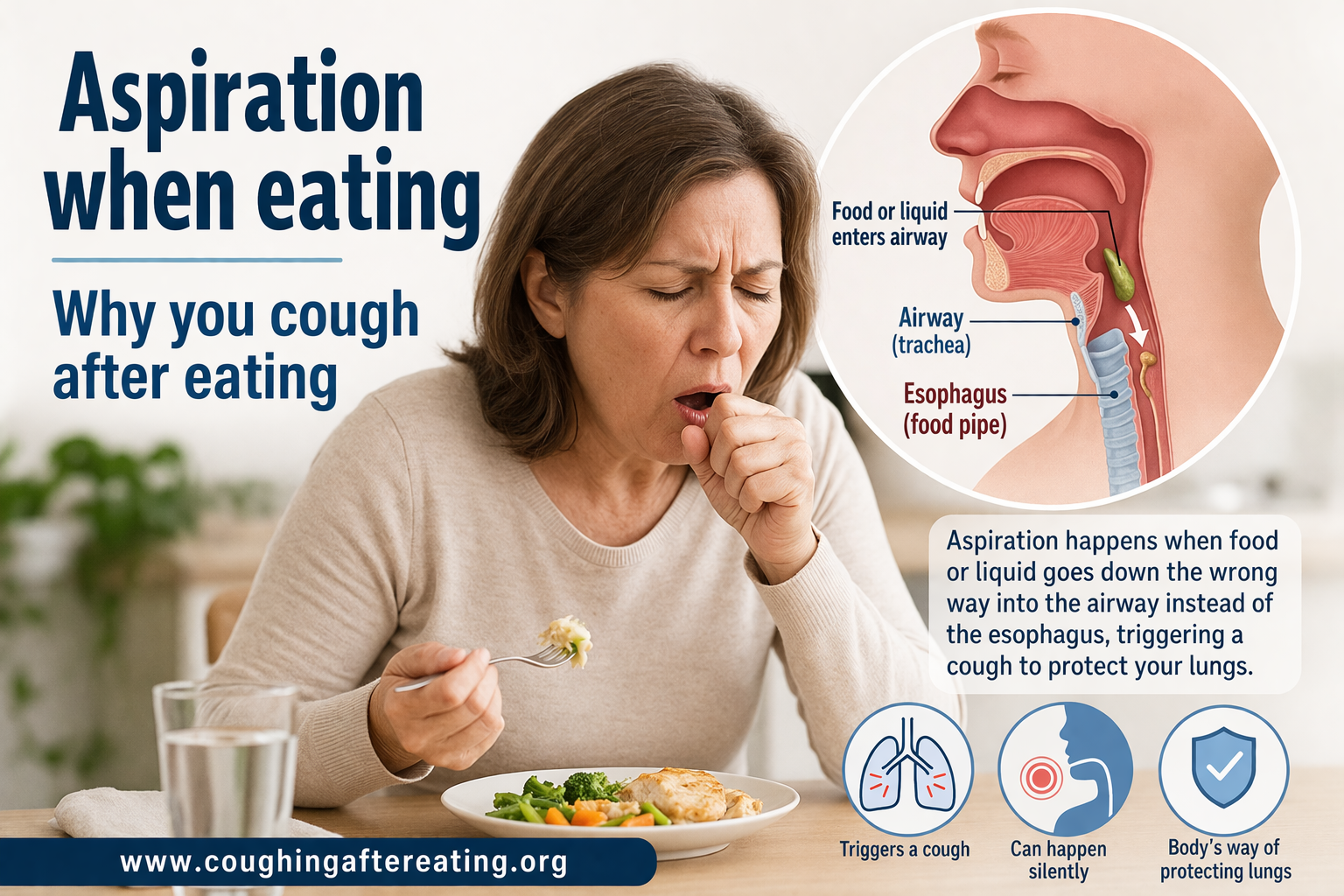
Aspiration when eating: why you cough after eating
Coughing while eating can feel sudden and uncomfortable, especially when it seems like food has “gone down the wrong way.” In many cases, this is due to aspiration, where food or liquid enters the airway instead of the esophagus.
If you are trying to understand all possible reasons behind this symptom, start with this coughing after eating causes guide, which explains how different conditions can trigger coughing during or after meals.
What is aspiration when eating?
Aspiration happens when food, drink, or saliva enters the airway (trachea) instead of going down the food pipe (esophagus). The body reacts quickly by triggering a cough reflex to protect the lungs.
This is actually a protective mechanism. Coughing helps push the material out before it can reach deeper into the lungs.
In occasional cases, this can happen to anyone. But when it occurs frequently, it may point to an underlying issue with swallowing or coordination.
Why aspiration causes coughing after eating
When food enters the airway, the body immediately detects it as a threat. The airway lining is very sensitive, and even small particles can trigger a strong cough.
This is why coughing often happens:
- Immediately after swallowing
- During eating
- Right after drinking liquids
The cough is not random. It is a reflex designed to clear the airway quickly and prevent complications like infection.
If this happens regularly, it may overlap with other causes explained in this why do I cough immediately after eating guide.
What happens in the body during aspiration
To understand why coughing is so immediate, it helps to look at how swallowing normally works. When you swallow, a small flap called the epiglottis closes over the airway, guiding food safely into the esophagus.
During aspiration, this coordination briefly fails. The airway remains partially open, allowing food or liquid to enter the wrong passage.
The body responds within seconds. Nerves in the airway detect the presence of foreign material and trigger a forceful cough reflex to expel it.
In healthy individuals, this reflex is very effective. However, if the reflex is weak or delayed, small amounts of material can remain in the airway, increasing the risk of irritation or infection over time.
Common causes of aspiration when eating
Aspiration is not always just “bad luck while eating.” There are specific reasons why it happens more often in some people.
Swallowing difficulties (dysphagia)
When the muscles involved in swallowing are weak or uncoordinated, food may not move properly into the esophagus. This increases the chance of food entering the airway instead.
Eating too quickly or talking while eating
Rushing meals or speaking while swallowing can disrupt the normal coordination between breathing and swallowing. This makes it easier for food to go the wrong way.
Thin liquids like water
Liquids move quickly and can be harder to control during swallowing. This is why some people cough more when drinking than when eating solid food.
You may notice patterns similar to those explained in this why do I cough after drinking liquids post.
Neurological or age-related changes
Conditions that affect muscle control or nerve function can interfere with safe swallowing. Even mild age-related changes can slow reflexes and increase aspiration risk.
Throat sensitivity changes due to reflux
In some cases, irritation in the throat can affect how well the airway closes during swallowing. This overlaps with conditions like silent reflux (LPR) and coughing after eating, where throat function is subtly affected.
How aspiration-related coughing feels
People often describe aspiration-related coughing in very specific ways. Understanding these sensations can help distinguish it from other causes.
You may notice:
- A sudden cough right after swallowing
- A choking or “wrong way” feeling
- Brief difficulty catching your breath
- A tickling or irritation in the throat
- Relief after coughing clears the airway
These episodes are usually short but can feel intense. In many cases, they resolve quickly once the airway is cleared.
Signs that aspiration may be happening regularly
Occasional coughing while eating is common. However, repeated symptoms may suggest a pattern that needs attention.
Look for:
- Coughing during most meals
- Frequent throat clearing after eating
- A wet or gurgly voice after swallowing
- Coughing triggered by liquids more than solids
- Needing to swallow multiple times to clear food
These signs may develop gradually and are sometimes easy to overlook at first.
When aspiration-related coughing becomes serious
Occasional episodes are usually not a concern. However, repeated aspiration can lead to complications if not addressed.
Watch for:
- Frequent coughing with most meals
- Difficulty swallowing solid or liquid foods
- Unintentional weight loss
- Recurrent chest infections
- Persistent wet cough
If these symptoms are present, it is important to seek medical evaluation.
How aspiration is different from other causes of coughing after eating
Not all coughing after eating is due to aspiration. Recognizing the pattern can help you understand what is more likely.
Aspiration-related coughing is typically:
- Immediate or happens during swallowing
- Linked to a clear “wrong way” sensation
- Triggered by specific textures like liquids
Other causes behave differently. For example, reflux-related coughing may occur later, and throat irritation from postnasal drip may cause ongoing throat clearing rather than sudden coughing.
Understanding these differences helps narrow down the likely cause more accurately.
Simple ways to reduce aspiration while eating
In many cases, small adjustments can significantly reduce the risk of aspiration.
Helpful changes include:
- Eating slowly and chewing thoroughly
- Sitting upright while eating
- Avoiding talking while swallowing
- Taking smaller bites and sips
- Pausing between mouthfuls
These habits improve coordination and give the body more time to manage swallowing safely.
Foods and situations that increase aspiration risk
Certain foods and situations can make aspiration more likely, especially if swallowing coordination is already slightly affected.
Higher-risk situations include:
- Drinking thin liquids quickly
- Eating dry or crumbly foods
- Mixing talking and eating
- Eating while distracted
- Lying down soon after eating
Being aware of these triggers can help reduce episodes and improve comfort during meals.
Key takeaway
Aspiration when eating happens when food or liquid enters the airway instead of the esophagus, triggering a protective cough reflex.
Occasional episodes are common and usually harmless. However, frequent coughing during meals may indicate an underlying swallowing or coordination issue that deserves attention.
Recognizing the pattern early and making simple adjustments can often reduce symptoms and improve eating comfort.