
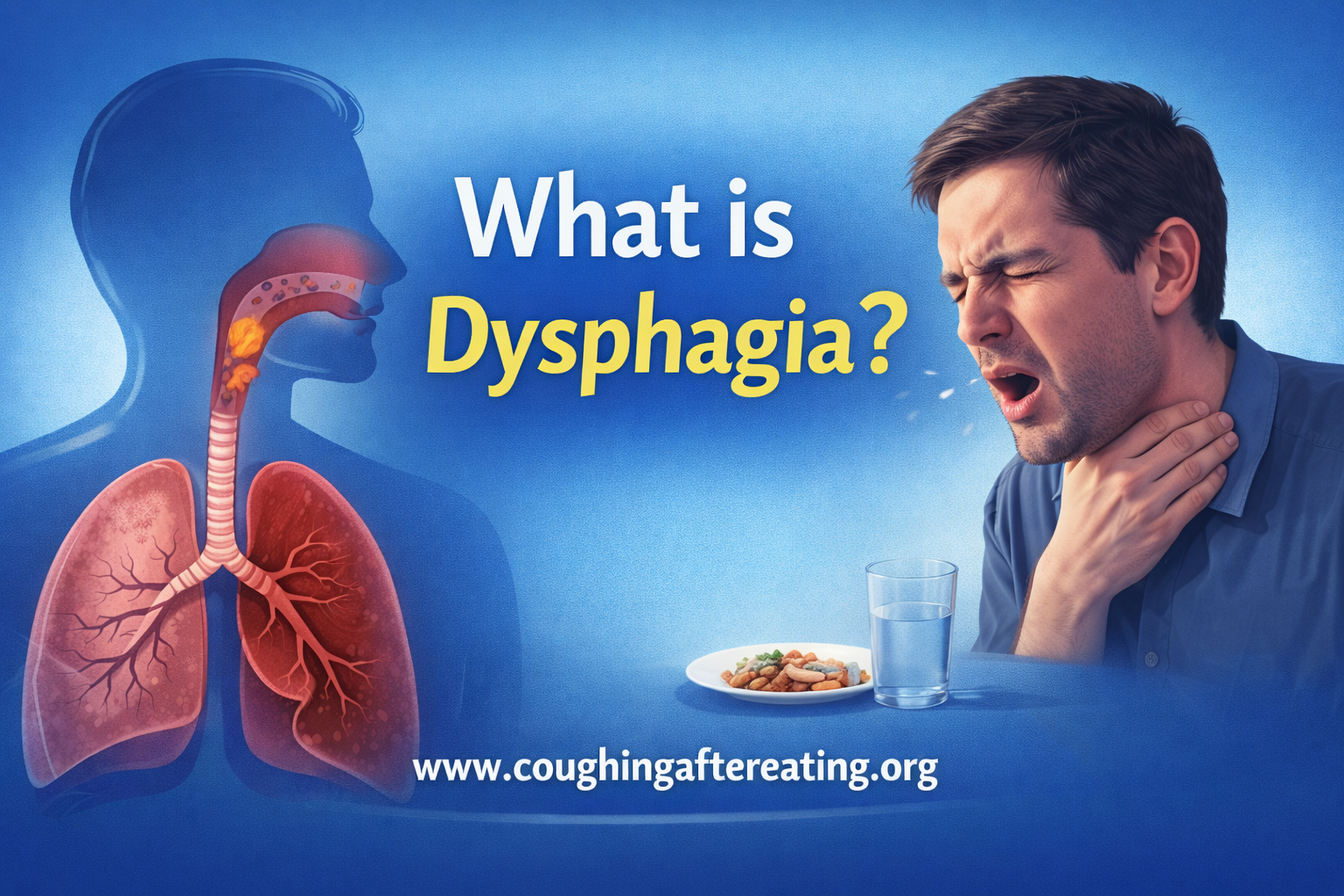
What is dysphagia? Meaning, types, causes, and when it is serious
Dysphagia means difficulty swallowing, but it is more than just a passing problem with eating. It is a sign that the normal swallowing process is not working smoothly, which can affect how food or liquids move from the mouth into the stomach.
Some people notice it as food feeling stuck, needing extra effort to swallow, or occasional coughing during meals. In other cases, it may be subtle at first and become more noticeable over time. Dysphagia can involve the mouth, throat, or esophagus, and the underlying cause can range from mild coordination issues to more complex structural or neurological problems.
Understanding what dysphagia means, how it happens, and when it becomes important to address can help you recognise patterns early and decide when further evaluation is needed. If your symptoms are part of a broader pattern, see the coughing after eating causes guide to understand how dysphagia fits into the bigger picture.
What is dysphagia and what does it mean?
Dysphagia is a term derived from Greek, where “dys” means difficulty or disordered and “phagia” means eating or swallowing. In simple terms, dysphagia refers to difficulty in swallowing.
In medical usage, dysphagia can describe a symptom, a clinical finding, or a condition where moving food or liquids from the mouth into the stomach becomes difficult. This can involve problems in the mouth, throat, or esophagus. It is often described differently depending on where the difficulty occurs and how it presents.
Dysphagia is not a disease by itself but a sign that something in the swallowing process is not working as it should. Looking at how the symptom appears over time often gives important clues about the underlying cause.
How swallowing normally works (mechanism)
Swallowing is a coordinated process involving multiple structures working together in sequence. It happens quickly and usually without conscious effort, even though several muscles and reflexes are involved.
- The mouth prepares and moves food backward
- The throat directs food downward
- The airway briefly closes to protect the lungs
- The esophagus carries food into the stomach
Each step needs to occur at the right time and in the correct sequence. Dysphagia occurs when this coordination is disrupted, making it harder for food or liquids to move safely toward the stomach. Even small disruptions in timing, strength, or coordination can affect swallowing efficiency and lead to noticeable symptoms.
Dysphagia vs other swallowing-related conditions
Dysphagia should not be confused with other conditions that affect swallowing in different ways. While they may feel similar, they involve different underlying mechanisms.
- Odynophagia – painful swallowing
- Globus sensation – feeling of a lump in the throat without obstruction
Dysphagia involves actual difficulty moving food or liquids, whereas these conditions are more related to discomfort or sensation. Distinguishing between them helps guide the next steps in evaluation.
When dysphagia is linked to coughing during eating
In some cases, dysphagia may present as coughing during meals or immediately after swallowing. This usually reflects a brief lapse in airway protection during the swallowing process.
This pattern is often more noticeable in certain situations where the timing of swallowing is slightly disrupted.
- Thin liquids
- Fast eating
- Poor swallowing coordination
- Fatigue or distraction during meals
These factors can affect how smoothly swallowing occurs and may increase the chance of food or liquid briefly entering the airway. When this happens repeatedly, it becomes more noticeable as a pattern.
If this matches your symptoms, see dysphagia and coughing after eating for a focused explanation of how swallowing problems trigger coughing.
Understanding dysphagia at a basic level helps you recognise when swallowing difficulty is occasional and when it may indicate a deeper issue. The key is not just the presence of difficulty, but the pattern, timing, and consistency of symptoms over time.
What happens if dysphagia is not treated?
Dysphagia is sometimes overlooked, especially when symptoms are mild or intermittent. However, persistent swallowing difficulty can lead to complications over time if it is not recognised and managed early.
A person with dysphagia may notice several changes in how eating feels or functions in daily life.
- Difficulty swallowing
- Food feeling stuck in the throat or chest
- Coughing during or after eating
- Needing extra effort or time to swallow
These symptoms often begin gradually and may be easy to ignore at first. Over time, they may become more consistent or start interfering with normal eating habits.
Risk of aspiration and lung complications
One of the most important risks of untreated dysphagia is aspiration. This happens when food or liquid enters the airway instead of the esophagus, even briefly.
- Irritation of the airway
- Repeated coughing episodes
- Aspiration pneumonia (lung infection)
Repeated aspiration can gradually irritate the lungs and increase the risk of infection. In some cases, this may happen without obvious symptoms at first.
Nutritional and hydration impact
Dysphagia can also affect how much a person is able to eat or drink comfortably. This impact may not be obvious initially but can build up over time.
- Reduced food intake
- Avoidance of certain textures
- Dehydration
- Malnutrition
People may unconsciously adjust their eating habits to avoid discomfort, which can gradually reduce overall nutrition. This makes it important to recognise patterns early rather than waiting for more severe effects.
Silent aspiration and why it matters
Normally, when food enters the airway, the body triggers a cough reflex to clear it. However, some people do not cough or show obvious signs.
- Delayed diagnosis
- Increased risk of lung complications
- Symptoms going unnoticed for long periods
This is known as silent aspiration and can be more difficult to detect. Because there are no clear warning signs, it often requires closer attention to subtle patterns.
Even when symptoms seem mild, untreated dysphagia can gradually affect both airway safety and overall health. Recognising early patterns helps prevent more serious complications and allows for timely evaluation.
When dysphagia becomes serious
Not all swallowing difficulty requires urgent medical attention, but certain patterns should not be ignored. The context and progression of symptoms often matter more than a single episode.
Dysphagia needs closer evaluation when it is persistent, worsening, or associated with other concerning changes.
Red flag symptoms to watch for
Certain symptoms suggest that dysphagia may be more than a minor or temporary issue.
- Frequent choking during meals
- Food consistently feeling stuck
- Unexplained weight loss
- Repeated coughing during or after eating
- Difficulty swallowing both solids and liquids
- Pain while swallowing
These patterns often indicate that swallowing is not just uncomfortable but potentially unsafe. Recognising these signs early can help prevent complications.
If you are unsure how serious your symptoms are, see when coughing after eating is serious.
Why timing and pattern matter
The way dysphagia presents can offer important diagnostic clues. Observing when and how symptoms occur often helps narrow down the possible cause.
- Difficulty during swallowing often points to throat coordination issues
- Difficulty after swallowing may suggest esophageal causes
- Symptoms with liquids versus solids can help differentiate patterns
Doctors use these patterns along with medical history and tests to better understand what is happening. This makes consistent observation of symptoms very useful.
When dysphagia follows a consistent or worsening pattern, it is important to look beyond the symptom itself and identify the underlying cause early. This improves both safety and long-term outcomes.
What are the different types of dysphagia?
Dysphagia is commonly classified based on where the swallowing problem occurs. This classification helps distinguish whether the issue begins early in the swallowing process or later as food moves toward the stomach.
Each type has its own pattern of symptoms and underlying causes, which helps guide evaluation.
Oropharyngeal dysphagia
Oropharyngeal dysphagia is related to problems in the mouth or throat and affects the early phase of swallowing.
- Weak or uncoordinated muscles
- Nerve-related issues
- Difficulty initiating swallowing
People with this type may feel that swallowing does not start properly or that food does not move smoothly from the mouth into the throat. It is also more closely associated with coughing during swallowing.
Esophageal dysphagia
Esophageal dysphagia occurs when food has difficulty passing through the esophagus toward the stomach.
- Narrowing of the esophagus
- Inflammation
- Motility problems
This type is often experienced as a sensation of food getting stuck after swallowing rather than difficulty starting the swallow. The location and timing of the sensation can help differentiate it from other types.
Neuromuscular-related dysphagia
Some cases are linked to broader neuromuscular conditions that affect coordination of swallowing muscles. These conditions can influence both strength and timing.
- Reduced muscle strength
- Disrupted coordination
- Difficulty synchronising breathing and swallowing
Symptoms may vary depending on how these factors are affected. In some cases, swallowing may feel inconsistent or unpredictable.
Functional dysphagia
Functional dysphagia is diagnosed when swallowing difficulty is present but no clear structural or physical cause is identified. This can be challenging to evaluate because routine tests may appear normal.
- No visible structural abnormality
- Symptoms still clearly present
- May involve subtle coordination or sensory changes
Even without a clear physical cause, the symptoms are real and can affect daily eating. This type often requires a different approach to management.
Classifying dysphagia based on location and cause helps narrow down the reason behind swallowing difficulty and supports more targeted evaluation and management. It also helps explain why symptoms can vary from person to person.
Final takeaway
Dysphagia is not a single condition but a symptom that can arise from different causes affecting the swallowing process. Understanding where and how swallowing is disrupted helps guide diagnosis and treatment.
If your symptoms involve coughing during or after meals, return to the coughing after eating causes guide to see how dysphagia fits into the bigger picture.
Common questions about dysphagia
These common questions help clarify what dysphagia means and how it relates to everyday symptoms. They also address concerns people often have when they first notice swallowing difficulty.
Can dysphagia cause coughing after eating?
Yes, dysphagia can lead to coughing during or after eating, especially when swallowing coordination is affected. This happens when food or liquid does not move safely and may briefly enter the airway.
Is dysphagia always serious?
Not always. Mild or occasional swallowing difficulty can happen without a serious cause. However, persistent or worsening dysphagia should always be evaluated to rule out underlying issues.
What is the difference between dysphagia and choking?
Dysphagia refers to difficulty swallowing, while choking is a sudden blockage of the airway. Dysphagia can increase the risk of choking, but they are not the same and do not always occur together.
When should I see a doctor for dysphagia?
You should seek medical advice if dysphagia is frequent, worsening, or associated with weight loss, choking, or repeated coughing during meals. These patterns suggest the need for further evaluation.
Can dysphagia come and go?
Yes, dysphagia can be intermittent in some cases, especially in early stages or when linked to certain foods, stress, or mild coordination issues. However, recurring patterns should still be monitored.
Does dysphagia only affect older adults?
No. While dysphagia is more common with age, it can affect people of all ages depending on the underlying cause. The presentation may vary based on the reason behind it.
These answers cover the most common concerns about dysphagia, but individual patterns can vary. Paying attention to how and when symptoms occur can help you better understand what might be causing them.