Why Coughing After Eating Happens: A Complete, Practical Guide
Many people arrive at coughingaftereating.org feeling confused and frustrated. Some are told it’s “just acid reflux,” while others hear nothing is wrong at all. In reality, coughing after eating can have multiple overlapping causes, involving digestion, swallowing, and airway protection.
This guide brings those causes together in one place, helping you understand patterns, not just isolated symptoms.
Common Causes of Coughing After Eating
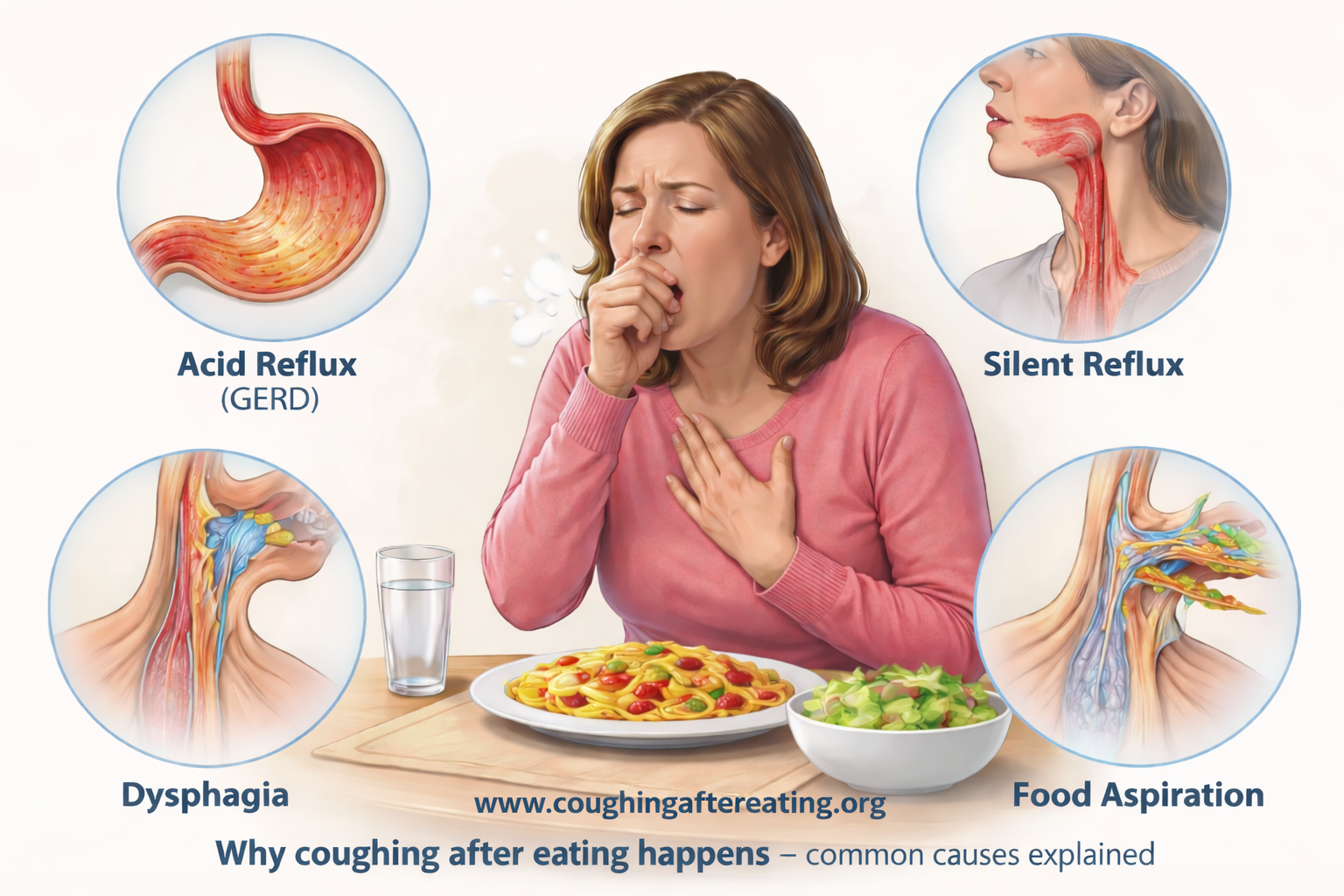
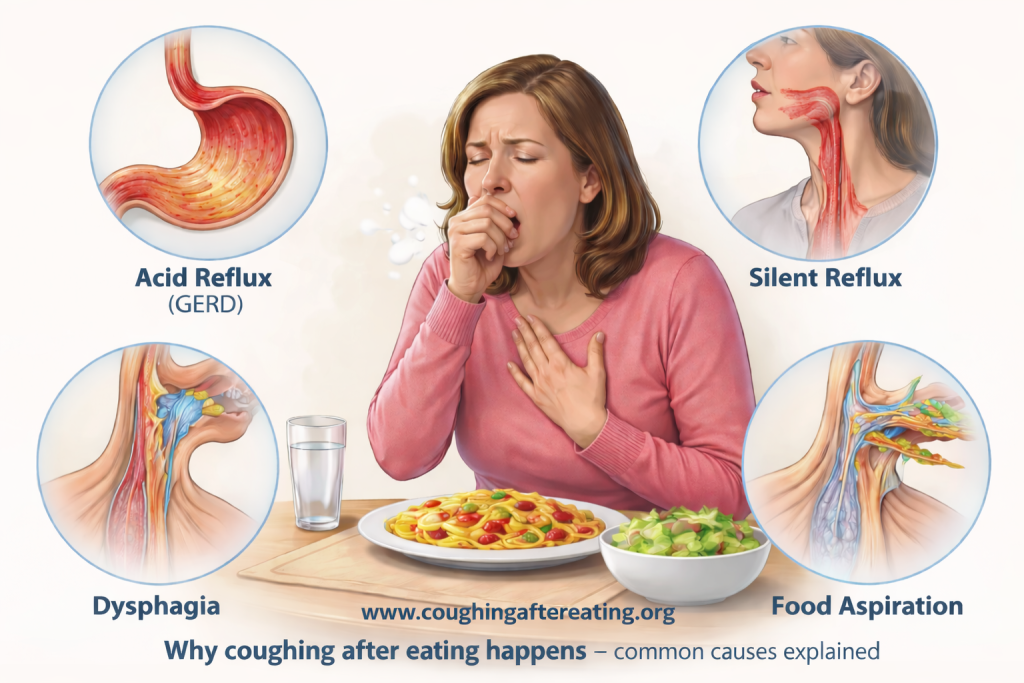
Coughing after eating can occur for several different reasons, and the cause is not always obvious. In adults, the most common triggers include acid reflux (GERD), where stomach contents irritate the throat; silent reflux, which may cause cough without heartburn; dysphagia, or difficulty swallowing that allows small amounts of food or liquid to enter the airway; and food aspiration, where material accidentally travels toward the lungs. Less commonly, food sensitivities, postnasal drip, or underlying respiratory conditions can contribute. Identifying the pattern, timing, and associated symptoms is key to understanding why the cough happens and choosing the right next step.
Acid Reflux (GERD)
Acid reflux occurs when stomach contents move upward into the esophagus after meals. Acid irritation near the throat can activate the cough reflex.
Learn more: Acid Reflux and Coughing After Eating
External medical reference: Mayo Clinic – GERD symptoms
Silent Reflux (LPR)
Silent reflux affects the throat and voice box and often occurs without heartburn, which is why it frequently goes undiagnosed.
Read: Silent Reflux and Chronic Cough After Meals
External reference: Cleveland Clinic – Laryngopharyngeal Reflux
Food Aspiration
Aspiration happens when food or liquid enters the airway instead of the esophagus. The body responds immediately by coughing to protect the lungs.
Related: Aspiration and Coughing While Eating
External reference: American Lung Association – Aspiration
Dysphagia (Swallowing Disorders)
Swallowing difficulties can cause food to linger or misdirect, triggering coughing shortly after swallowing.
See: Swallowing Problems and Coughing After Eating
External reference: Johns Hopkins Medicine – Dysphagia
Food Sensitivities and Mucus Response
Some foods increase mucus production or throat irritation, which may trigger coughing even without reflux or aspiration.
Also read: Foods That Trigger Coughing After Meals
When Coughing After Eating Should Not Be Ignored
Seek medical evaluation if coughing after meals:
- Happens daily or nearly daily
- Is associated with choking or breathing difficulty
- Leads to repeated chest infections
- Occurs alongside unexplained weight loss
External guidance: NHS – Chronic cough symptoms
Practical Steps That May Help
Eating Habits
- Eat slowly and chew thoroughly
- Take small bites
- Avoid talking while chewing
Reflux-friendly adjustments
- Avoid lying down after meals
- Reduce acidic, spicy, and fatty foods
- Elevate head during sleep if nighttime cough occurs
- Helpful guide: Lifestyle Changes for Coughing After Eating
Final Thoughts
Coughing after eating is not a single condition—it is a symptom with multiple possible causes. Understanding whether your cough is related to reflux, swallowing mechanics, or airway protection is essential for effective treatment.
If symptoms persist, professional evaluation can prevent long-term throat or lung complications.
FAQ: Coughing After Eating
1) Why do I cough immediately after eating?
Immediate coughing is often triggered when food or liquid irritates the airway. This can happen if you swallow too quickly, if small amounts “go the wrong way” (aspiration), or if swallowing coordination is off.
2) Can acid reflux cause coughing after meals?
Yes. GERD can irritate the esophagus and throat after eating, which may trigger coughing—especially after large, fatty, or spicy meals or when lying down soon after eating.
3) What is silent reflux (LPR), and can it cause coughing after eating?
Silent reflux (LPR) can reach the throat and voice box and may cause coughing after meals even without heartburn. Throat clearing, hoarseness, and a “lump in throat” sensation are common clues.
4) When should I worry about coughing after eating?
Seek medical advice if coughing after meals is frequent, causes choking, comes with trouble swallowing, leads to repeated chest infections, or persists for weeks.
5) How can I reduce coughing after eating at home?
Try eating slowly, taking smaller bites, staying upright after meals, avoiding trigger foods (spicy/acidic/fatty), and not eating close to bedtime. If symptoms continue, an evaluation can help identify the cause.
6) Could coughing after eating be a swallowing problem (dysphagia)?
Yes. Dysphagia can cause coughing during or after swallowing, a sensation of food sticking, or needing extra effort to swallow. A clinician can assess this with swallowing tests if needed.