
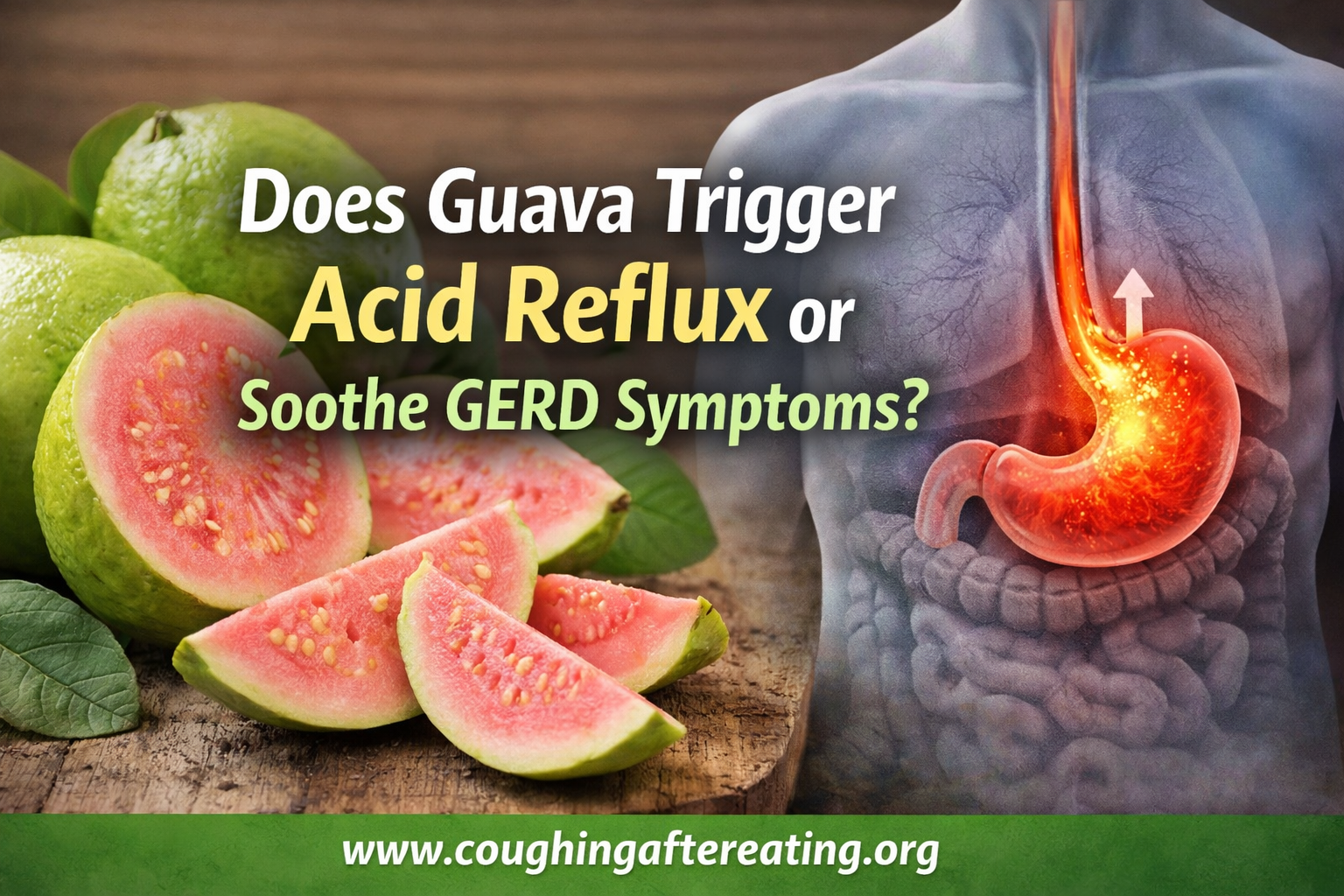
Does Guava Trigger Acid Reflux or Soothe GERD Symptoms?
Guava is widely considered a healthy fruit, but if you struggle with acid reflux, you may hesitate before eating it. Many people researching guava and acid reflux want to know whether this fruit worsens GERD symptoms or actually supports digestion. The truth is that guava can either soothe or trigger symptoms depending on ripeness, portion size, timing, and individual sensitivity.
For a broader understanding of reflux-related throat symptoms, you may also want to review this complete guide on why coughing after eating happens, especially if coughing is one of your main concerns.
For some people, ripe guava reduces bloating and supports bowel regularity. For others, especially those prone to reflux after eating, it may trigger heartburn, throat irritation, or even acid reflux cough. Understanding how guava interacts with digestion helps you make an informed decision rather than avoiding it unnecessarily.
Guava and acid reflux: why reactions differ
Acid reflux occurs when stomach contents move upward into the esophagus due to weakness in the lower esophageal sphincter. GERD is the chronic form of this condition.
Symptoms commonly include:
- Burning in the chest
- Sour taste in the mouth
- Throat irritation
- Chronic cough
- Regurgitation
Some individuals experience silent reflux (LPR), which affects the throat more than the chest and often causes hoarseness, throat clearing, and irritation without obvious heartburn. In these cases, acid reaches the throat without classic heartburn. Symptoms may include hoarseness, throat clearing, and coughing after meals.
Because reflux depends heavily on stomach pressure and digestion speed, food choices directly influence symptom patterns.
Why guava may soothe GERD symptoms
For many individuals, ripe guava supports digestive balance.
First, guava contains significant dietary fiber. Fiber improves bowel regularity and may lower abdominal pressure. Reduced pressure decreases the upward force pushing stomach acid toward the esophagus.
Second, guava contains antioxidants and plant compounds that support tissue health. Chronic reflux irritates the esophageal lining. A diet rich in protective nutrients may support recovery over time.
Third, guava is moderately acidic but not as acidic as citrus fruits. When comparing guava and acid reflux triggers, guava is often better tolerated than oranges or grapefruits.
Some people also report less bloating when eating small portions of ripe guava. Less bloating means less stomach distension, which can reduce reflux episodes.
In these situations, guava supports smoother digestion rather than aggravating symptoms.
Why guava may trigger acid reflux
Despite its benefits, guava is not universally safe for everyone with GERD.
Large amounts of fiber can slow gastric emptying in certain individuals. When food remains in the stomach longer, acid exposure increases.
Unripe guava is more difficult to digest. It is firmer, slightly more acidic, and may increase bloating or heaviness.
Portion size also matters. Even healthy foods can provoke reflux when eaten in excess. A distended stomach increases pressure against the lower esophageal sphincter.
For people researching guava and acid reflux tolerance, the two biggest variables are ripeness and quantity.
Individuals with throat-focused symptoms may also find that guava’s seeds irritate already inflamed tissue, especially in cases of silent reflux.
Reflux-related throat irritation is also discussed in this overview of coughing after eating in adults, particularly when symptoms appear after specific foods.
Can guava cause coughing after eating?
Guava does not directly cause cough. However, if it triggers reflux, coughing may follow.
When acid reaches the throat or vocal cords, irritation develops. This irritation may lead to coughing after eating or persistent throat clearing. This pattern is often described as acid reflux cough.
People with LPR may notice:
- Hoarseness
- Dry cough
- Frequent throat clearing
- A lump sensation in the throat
If coughing appears consistently after eating guava, reflux is the likely mechanism rather than allergy.
If you are unsure whether reflux is the cause of your symptoms, it may help to explore why some people cough after eating, as coughing is not always directly linked to acidity alone.
Guava and nighttime reflux
Reflux often worsens at night.
When you lie down, gravity no longer helps keep stomach contents in place. If guava slows digestion or increases stomach volume, symptoms may appear during sleep.
Nighttime reflux may cause:
- Coughing after eating at night
- Morning throat irritation
- Sour taste upon waking
Eating guava earlier in the day and remaining upright for at least two to three hours after meals can reduce risk.
If symptoms tend to worsen in the evening, you may find it useful to read about why coughing after eating at night is common, since timing and body position often influence reflux severity.
Is guava better than citrus for GERD?
Compared to citrus fruits, guava is generally milder.
Citrus fruits contain high levels of citric acid, a well-known reflux trigger. Guava contains natural acids but in lower concentrations.
However, acidity alone does not determine tolerance. Digestion speed, total meal size, and personal sensitivity are often more important.
If you are comparing fruits and reflux triggers, you may also find it helpful to read Are Kiwis Bad for Acid Reflux? to understand how different fruits affect digestion.
How to eat guava safely with GERD
If you want to include guava in your diet, use a cautious approach.
Choose fully ripe fruit. Start with small portions. Avoid consuming it close to bedtime. Pairing guava with other foods may reduce irritation in highly sensitive individuals.
Remain upright after eating. Remove seeds if they aggravate your throat.
If you are uncertain about guava and acid reflux tolerance, introduce it gradually and monitor your response.
Who should avoid guava?
You may need to limit guava if:
- You have severe or uncontrolled GERD
- You experience clear symptom flare-ups after fibrous fruits
- You have delayed gastric emptying
- You have active throat inflammation
Persistent reflux symptoms require medical evaluation.
The bottom line on guava and acid reflux
Guava can either soothe or trigger GERD symptoms depending on individual tolerance.
Ripe guava eaten in moderate portions may support digestion and reduce bloating. However, unripe fruit, excessive portions, or late-night consumption may worsen symptoms in sensitive individuals.
There is no universal answer for guava and acid reflux. The key is moderation, timing, and awareness of your body’s signals.
When to see a doctor
Occasional reflux is common. However, you should seek medical advice if symptoms:
- Occur frequently
- Cause persistent cough
- Lead to difficulty swallowing
- Disrupt sleep regularly
- Continue despite dietary adjustments
GERD and LPR are manageable conditions, but they require proper diagnosis and care when persistent.
FAQ
Does guava worsen GERD?
Guava can worsen GERD if eaten unripe, in large portions, or close to bedtime. Ripe fruit in small amounts is often better tolerated.
Is guava acidic?
Guava contains natural acids but is less acidic than citrus fruits. Its effect depends more on portion size and digestion speed than acidity alone.
Can guava trigger reflux cough?
Guava does not directly cause cough. However, if it triggers acid reflux, throat irritation may lead to coughing after eating, especially in people with silent reflux.
Final note
Guava is neither a guaranteed trigger nor a guaranteed remedy. It sits somewhere in between. If eaten mindfully, it may support digestion. If eaten carelessly or in excess, it may provoke symptoms.
Listen to your body. Introduce new foods slowly. Pay attention to timing and portion size.
Managing acid reflux is not about fear. It is about awareness and balance.