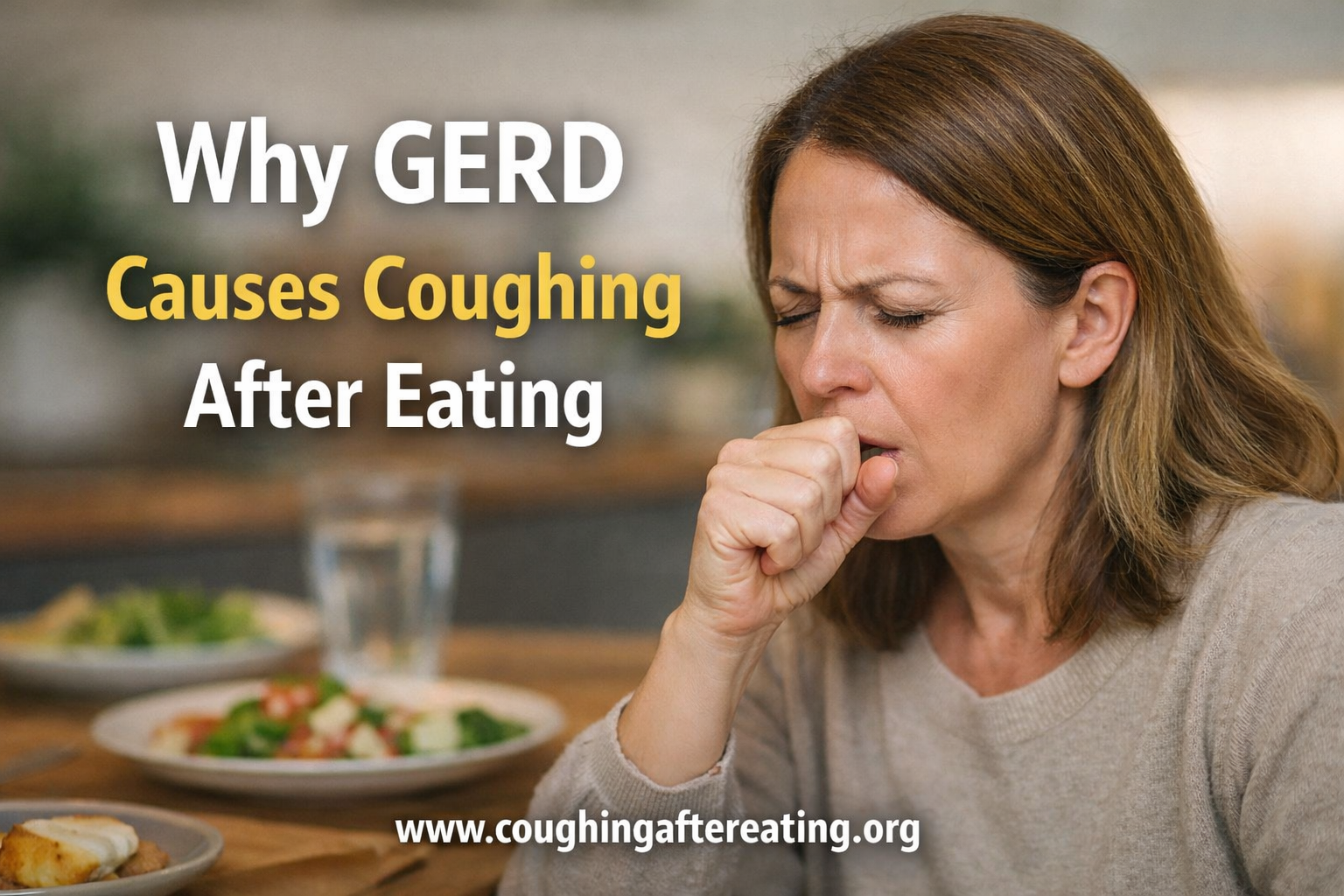
Why GERD causes coughing after eating
Gastroesophageal reflux disease (GERD) is one of the most common medical reasons for coughing after eating. It occurs when stomach acid repeatedly flows back into the esophagus, irritating not just the digestive tract but also the throat and airway.
This irritation can trigger a cough reflex soon after eating, especially when reflux episodes become frequent or more intense over time. In many cases, people do not immediately connect their cough to digestion, which is why GERD-related coughing is often overlooked.
If you are unsure whether reflux is the cause, start here: can acid reflux cause coughing after eating.
What is GERD and how is it different from occasional acid reflux?
GERD is a chronic form of acid reflux. While occasional reflux can happen after a heavy or late meal, GERD involves repeated episodes that can begin to affect daily life and surrounding tissues.
The difference lies not just in frequency, but also in how the body responds over time. With repeated exposure to acid, the esophagus and throat become more sensitive, making symptoms like coughing after eating more likely.
- Occasional acid reflux → happens sometimes and usually resolves on its own
- GERD → occurs regularly and is more likely to cause ongoing irritation
In GERD, the lower esophageal sphincter (LES) does not function properly, allowing acid to move upward more frequently than it should.
Why GERD causes coughing after eating
GERD-related coughing develops through a combination of irritation, sensitivity, and nerve responses. These mechanisms are especially active after eating, when digestion increases pressure in the stomach.
Understanding these pathways helps explain why coughing after eating appears consistently rather than randomly throughout the day.
1. Direct acid irritation
After eating, the stomach produces acid to help digest food. If reflux occurs, some of this acid can travel upward and irritate the lining of the esophagus or throat.
This repeated irritation gradually increases sensitivity, so even mild reflux can trigger coughing after eating.
- Acid exposure → irritates throat lining
- Repeated exposure → increases sensitivity over time
2. Vagus nerve reflex
Not all reflux-related coughing involves acid reaching the throat. In many cases, the trigger is neurological rather than direct contact.
The esophagus and lungs are connected through the vagus nerve. When acid irritates the esophagus, it can stimulate this nerve and trigger coughing indirectly.
- Acid in esophagus → stimulates vagus nerve
- Nerve signal → activates cough reflex
This explains why some people experience coughing after eating even without a strong sensation of reflux.
3. Increased reflux after eating
Reflux is naturally more likely after eating because of how digestion changes pressure inside the stomach.
As the stomach fills and processes food, internal pressure rises, and the LES is more likely to relax. This creates the ideal conditions for acid to move upward.
- Full stomach → higher internal pressure
- Relaxed LES → easier acid movement upward
This is why GERD-related coughing is strongly linked to eating.
When GERD-related coughing typically occurs
The timing of symptoms provides one of the clearest clues that GERD is involved. Unlike random coughing, reflux-related symptoms tend to follow predictable patterns.
These patterns are closely tied to digestion and body position, which influence how easily acid can move upward.
- After eating → triggered by digestive activity
- When lying down → gravity no longer limits reflux
- At night after eating → prolonged exposure increases irritation
When coughing follows these patterns consistently, GERD becomes a strong possibility.
Common symptoms linked to GERD-related coughing
Coughing rarely occurs on its own. It is usually part of a broader set of symptoms involving both the digestive system and the throat.
Recognizing this combination makes it easier to identify reflux as the underlying cause of coughing after eating.
Typical GERD symptoms
These symptoms are more directly linked to acid affecting the esophagus:
- Heartburn (burning sensation in the chest)
- Regurgitation (acid or food coming back up)
- Sour taste in the mouth
These signs often appear after eating or when lying down.
Throat and airway symptoms
In many people, throat-related symptoms become more noticeable than heartburn, especially with repeated reflux.
- Chronic cough
- Hoarseness
- Frequent throat clearing
- Irritation after eating
This overlap is why GERD is sometimes mistaken for a respiratory issue.
GERD vs silent reflux (LPR)
Not all reflux presents in the same way. While GERD primarily affects the esophagus, silent reflux, also known as LPR, tends to affect the throat and voice box more directly.
This difference explains why some people experience coughing after eating without typical digestive symptoms.
- GERD → heartburn and chest discomfort are common
- LPR → cough and throat irritation without heartburn
Understanding this distinction helps avoid misdiagnosis and delayed treatment.
Who is more likely to develop GERD-related coughing?
Certain habits and physical factors increase the likelihood of reflux and related coughing after eating. These factors either increase pressure within the stomach or weaken the natural barrier that prevents acid from moving upward.
When these conditions persist, reflux becomes more frequent and symptoms more noticeable.
- Eating large or heavy meals
- Lying down soon after eating
- Being overweight
- Frequent intake of fatty or spicy foods
- Weak LES → allows acid to escape upward
- Increased stomach pressure → pushes acid into the esophagus
You can read more about this in weak lower esophageal sphincter and coughing after meals.
How to recognize GERD as the cause of your cough
Because coughing can have multiple causes, identifying patterns is essential. GERD-related cough tends to follow consistent triggers and timing, especially around eating.
Looking at these patterns over time provides stronger clues than focusing on a single symptom.
Common signs linked to GERD-related cough
These signs often appear together and repeat consistently:
- Cough starts after eating
- Symptoms worsen with specific foods
- Cough is worse when lying down
- Relief occurs with reflux treatment
Simple self-check pattern
A simple self-check can help you identify whether reflux is likely contributing to your cough.
- Does the cough happen after most meals?
- Does it improve when you eat lighter or earlier?
- Does it worsen when lying down or at night?
If the answer is yes to most of these, GERD is likely involved.
How to reduce GERD-related coughing after eating
Managing GERD involves a combination of dietary adjustments, daily habits, and long-term lifestyle changes. Small, consistent improvements often lead to meaningful relief.
Rather than relying on a single fix, it is the combination of these changes that reduces reflux and, in turn, coughing after eating.
Eating habits
Start by improving how and how much you eat:
- Eat smaller portions
- Avoid overeating
- Chew food thoroughly
After eating habits
What you do after eating is just as important as what you eat:
- Stay upright for at least 2–3 hours
- Avoid lying down immediately
- Take a gentle walk after eating
Dietary changes
Certain foods can trigger or worsen reflux, especially when consumed regularly:
- Reduce fatty, spicy, and acidic foods
- Limit caffeine and fizzy drinks
- Identify personal trigger foods
Lifestyle adjustments
Long-term habits influence how frequently reflux occurs:
- Maintain a healthy weight
- Elevate the head while sleeping
- Avoid tight clothing around the abdomen
For a complete strategy, see how to prevent coughing after eating.
When should you see a doctor?
While GERD is common, persistent symptoms should not be ignored. Ongoing irritation can lead to complications if left unmanaged.
If coughing after eating becomes frequent, worsens over time, or does not respond to lifestyle changes, it is important to seek medical advice.
- Cough is persistent or worsening
- Difficulty swallowing is present
- Unexplained weight loss occurs
- Symptoms do not improve with changes
Doctors may recommend tests such as pH monitoring or endoscopy to confirm the diagnosis and guide treatment.
FAQs
Can GERD cause coughing after eating without heartburn?
Yes, this is common in silent reflux, where throat symptoms occur without typical heartburn.
Why does GERD cough get worse after eating at night?
- Lying down → allows acid to travel upward
- Reduced gravity → reflux becomes easier
Is GERD-related cough after eating dry or productive?
It is usually a dry cough, although throat irritation may sometimes produce mucus.
Conclusion
GERD causes coughing after eating through a combination of acid irritation, nerve reflexes, and increased reflux during digestion. Because these mechanisms are closely tied to eating patterns and body position, symptoms often follow a predictable rhythm.
Recognizing these patterns early allows you to take targeted steps to manage reflux effectively. With the right combination of dietary adjustments, lifestyle changes, and medical guidance when needed, GERD-related coughing can be significantly reduced.