What Is Laryngopharyngeal Reflux (LPR)? A Complete Guide to Silent Reflux
Laryngopharyngeal reflux (LPR) is a form of acid reflux that affects the throat and voice box rather than the chest. Unlike classic gastroesophageal reflux disease (GERD), LPR often occurs without heartburn. For this reason, it is commonly called “silent reflux.”
Many people with chronic cough, throat clearing, hoarseness, or a sensation of mucus in the throat may actually be experiencing LPR — even if they never feel burning in the chest.
Understanding LPR is important because it is one of the most overlooked causes of coughing after eating, nighttime cough, and persistent throat irritation.
What Is Laryngopharyngeal Reflux?
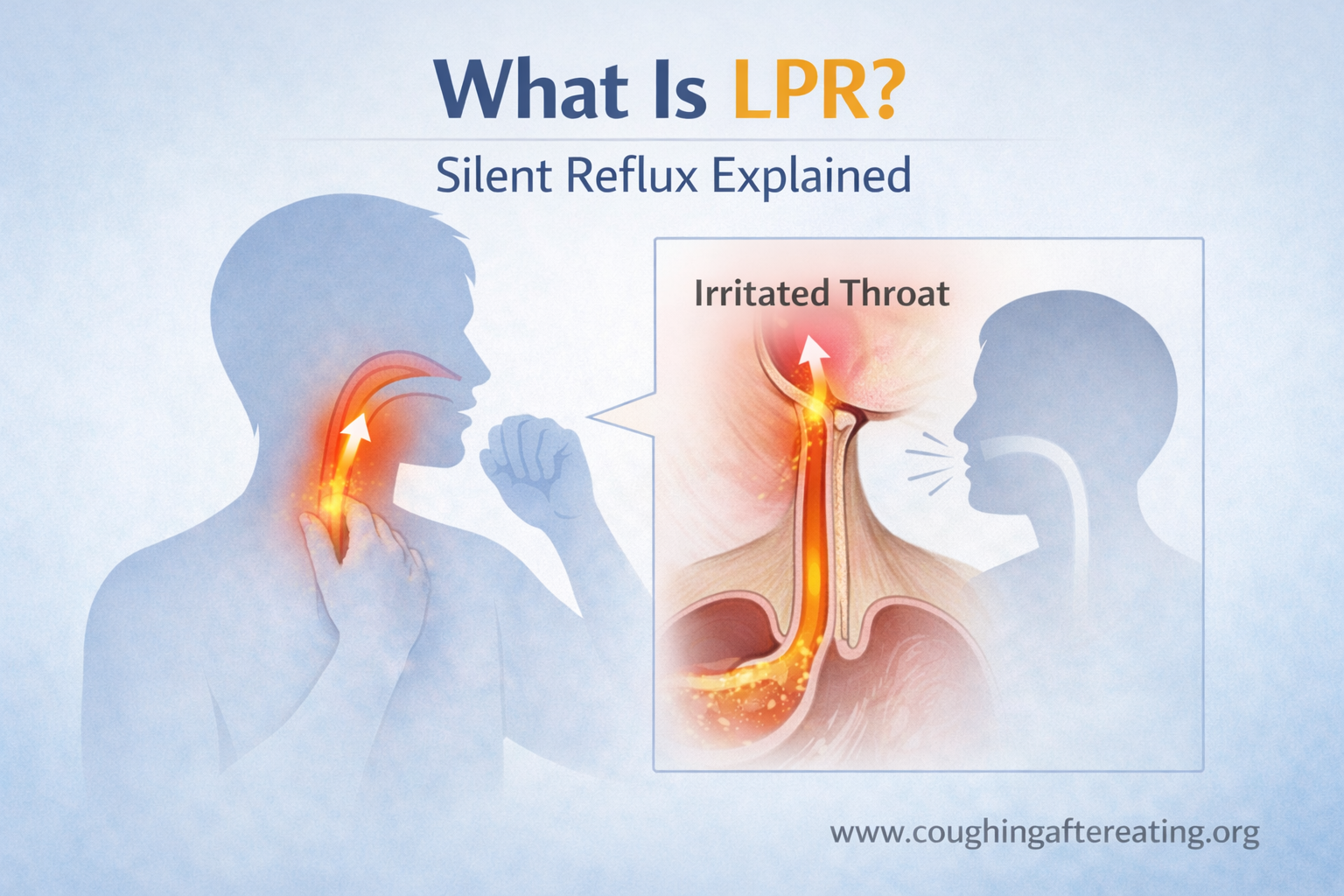
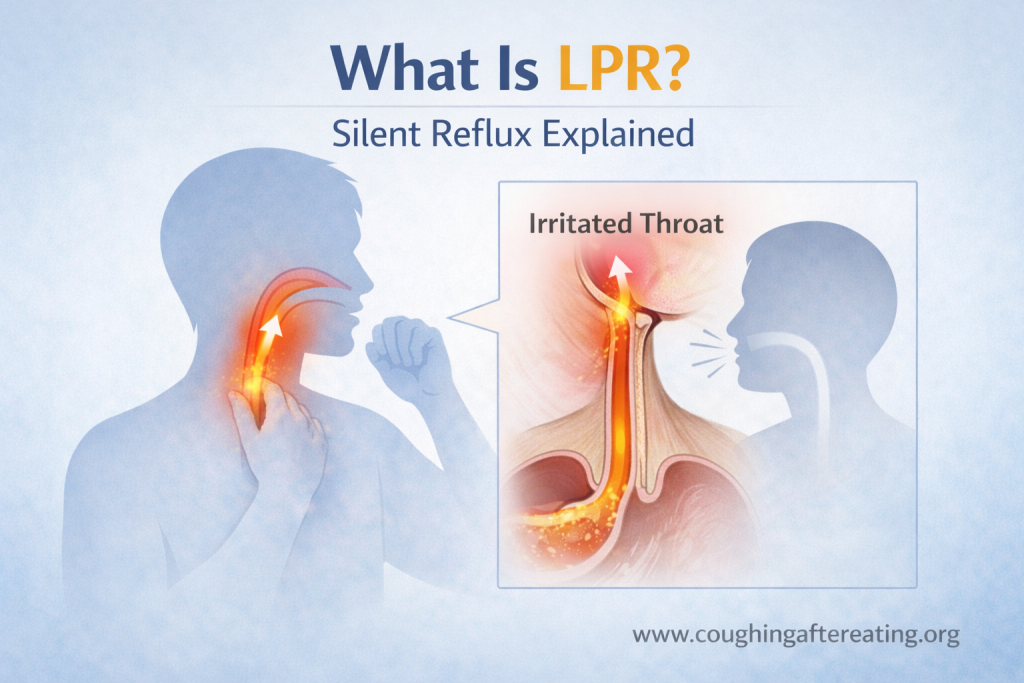
Laryngopharyngeal reflux occurs when stomach contents travel upward beyond the esophagus and reach the throat (pharynx) and voice box (larynx).
In typical GERD, acid mainly irritates the lower esophagus. In LPR, the refluxed material reaches higher structures that are much more sensitive. Even small amounts of acid, pepsin, or digestive enzymes can cause significant irritation.
Because the throat is not designed to handle stomach contents, symptoms can occur even without large acid exposure.
Why Is LPR Called “Silent Reflux”?
LPR is often called silent reflux because:
- Heartburn is absent in many cases
- Symptoms feel unrelated to the stomach
- Patients may not realize reflux is the cause
Instead of chest burning, people experience:
- Chronic dry cough
- Frequent throat clearing
- Hoarseness
- A lump-in-the-throat sensation
- Post-meal coughing
This disconnect between stomach symptoms and throat symptoms is why LPR is frequently missed.
Common Symptoms of LPR
LPR symptoms can vary, but common ones include:
- Coughing after eating
- Cough that worsens at night
- Chronic throat clearing
- Hoarse or weak voice
- Feeling of mucus stuck in the throat
- Sensation of a lump in the throat (globus sensation)
- Bitter taste in the mouth
- Difficulty swallowing (in some cases)
Some people notice symptoms mostly after meals. Others experience worsening symptoms when lying down.
How LPR Causes Coughing After Eating
Coughing after eating is one of the most common complaints in LPR.
After a meal:
- The stomach becomes full.
- Pressure inside the abdomen increases.
- If the lower esophageal sphincter (LES) is weak, contents may reflux upward.
- The reflux reaches the throat and irritates sensitive tissues.
- The body triggers a cough reflex to protect the airway.
In many cases, this type of irritation is described as an acid reflux cough, even when classic heartburn is not present.
Unlike choking, this cough is usually dry and repetitive rather than explosive.
Certain foods may worsen this effect, especially:
- Acidic fruits
- Spicy foods
- Large meals
- Fatty foods
- Late-night meals
Some fruits that seem healthy can still aggravate symptoms — especially when considering kiwis and acid reflux.
LPR vs GERD – What’s the Difference?
Although related, LPR and GERD are not identical.
GERD primarily affects the esophagus and typically causes heartburn and chest discomfort.
LPR primarily affects the throat and voice box and often causes cough, hoarseness, and throat irritation without heartburn.
Some patients have both conditions, but many with LPR do not report classic GERD symptoms.
Why LPR Symptoms Are Worse at Night
Nighttime coughing after eating is common in LPR. Many patients notice coughing after eating at night, especially when lying down soon after dinner.
This happens because:
- Gravity no longer helps keep stomach contents down
- Saliva production decreases at night
- Swallowing frequency drops during sleep
- The throat becomes more sensitive in dry air
If someone eats dinner late and lies down soon after, reflux is more likely to reach the throat.
This is why elevating the upper body during sleep can significantly reduce symptoms.
What Causes LPR?
Several factors can contribute to LPR:
- Weak lower esophageal sphincter
- Increased abdominal pressure
- Overeating
- Obesity
- Delayed stomach emptying
- Hiatal hernia
- Smoking
- High-fat diets
- Stress
Even people who appear otherwise healthy can develop LPR if eating habits and posture promote reflux.
How Is LPR Diagnosed?
Diagnosis is often based on symptoms and medical history.
Doctors may use:
- Flexible laryngoscopy to examine the throat
- Empirical trial of reflux medication
- pH monitoring in some cases
Because LPR symptoms overlap with allergies, asthma, or postnasal drip, careful evaluation is important.
Treatment Options for LPR
Treatment usually combines lifestyle adjustments and, in some cases, medication.
Lifestyle Changes
- Eat smaller meals
- Avoid lying down for 2–3 hours after eating
- Elevate the head of the bed
- Reduce trigger foods
- Maintain a healthy weight
- Avoid tight clothing around the abdomen
Dietary Adjustments
Many people benefit from:
- Reducing acidic foods
- Limiting caffeine
- Avoiding late-night eating
- Choosing low-fat meals
Medications
Doctors may prescribe:
- Proton pump inhibitors (PPIs)
- H2 blockers
- Alginates
However, lifestyle changes are often essential for long-term improvement.
How Long Does It Take to Improve?
Unlike classic heartburn, LPR symptoms may take longer to improve.
Throat tissues heal more slowly than the esophagus. Many patients require several weeks of consistent lifestyle changes before noticing meaningful improvement.
Consistency is key.
When to See a Doctor
Seek medical evaluation if symptoms:
- Persist for several weeks
- Cause difficulty swallowing
- Lead to unexplained weight loss
- Include coughing up blood
- Are associated with repeated chest infections
Persistent throat symptoms should never be ignored.
Final Thoughts
Laryngopharyngeal reflux is a common but frequently misunderstood condition. Because it often occurs without heartburn, many people do not connect their chronic cough or throat irritation to reflux.
If you experience coughing after eating, nighttime cough, or persistent throat clearing, LPR may be worth discussing with your doctor.
Early recognition and simple lifestyle changes can significantly improve quality of life and reduce chronic irritation.