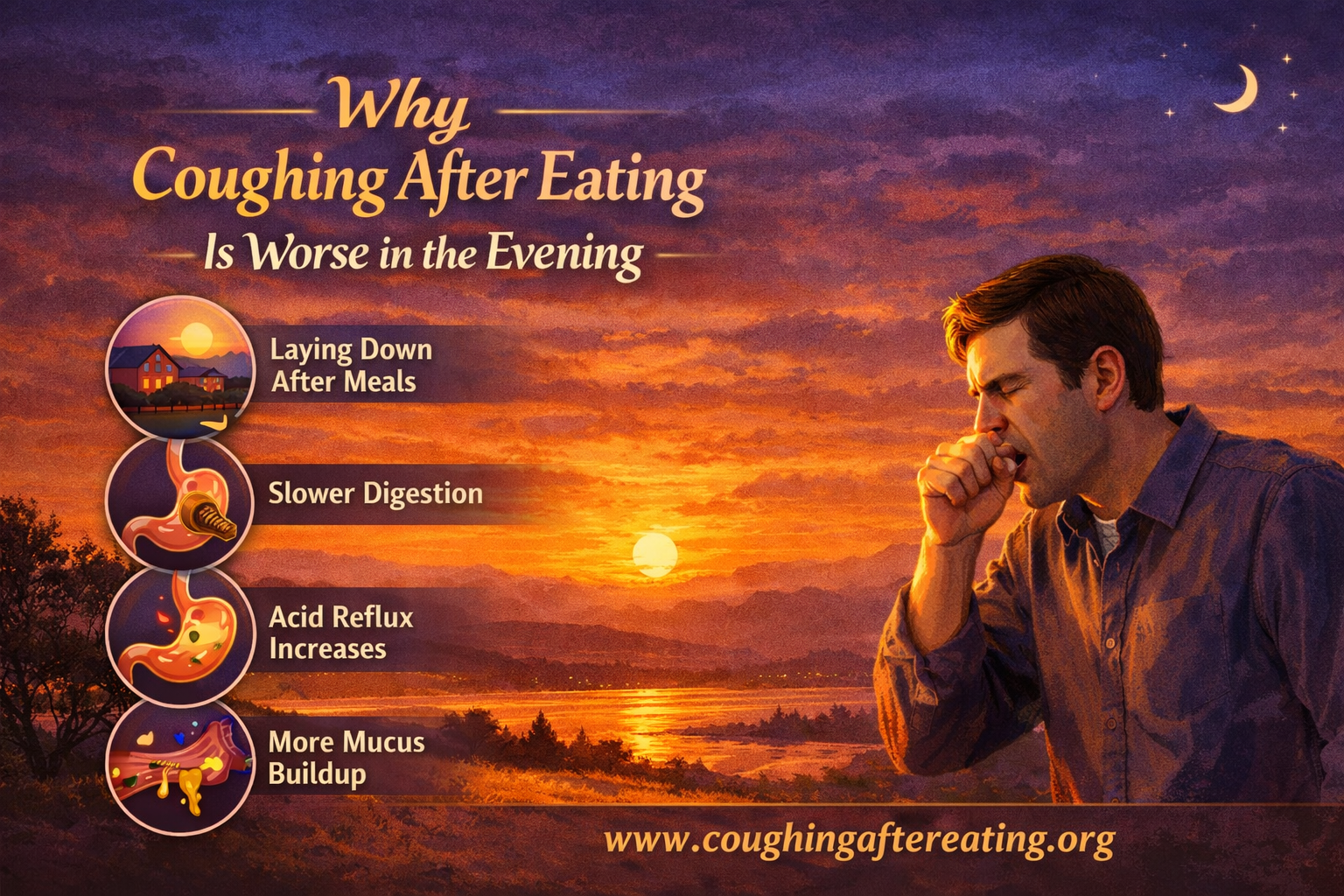
Why Coughing After Eating Is Worse in the Evening
Many people notice that coughing after eating feels milder during the day but becomes noticeably worse in the evening or at night. This pattern is not random. As the day progresses, natural body rhythms and daily habits begin to change how digestion and airway sensitivity behave.
In the evening, digestion may slow, people are more likely to recline after dinner, and reflux becomes easier to trigger. At the same time, the throat can become more sensitive to even mild irritation. Together, these factors make post-meal coughing more noticeable later in the day.
Common reasons coughing after eating worsens in the evening
Several normal evening changes in the body can increase the likelihood of coughing after meals. These factors are usually subtle on their own, but together they can make post-meal coughing more frequent or more noticeable later in the day.
1. Slower Digestion in the Evening
As the day progresses, digestion naturally slows. By evening:
- Stomach emptying takes longer
- Acid remains in the stomach for more time
- Food is more likely to reflux upward
This delayed digestion increases irritation of the throat and airways, triggering cough after meals.
2. Acid Reflux Is More Active at Night
Evening and nighttime are peak hours for acid reflux:
- Larger dinners
- Spicy or fatty foods
- Lying down too soon after eating
When acid reaches the throat (laryngopharyngeal reflux), it can cause throat clearing, coughing, or a choking sensation without classic heartburn.
3. Body Position After Dinner
After dinner, many people:
- Sit on the couch
- Recline in bed
- Lie down shortly after eating
Gravity no longer helps keep stomach contents down. Acid and food vapors can irritate the throat, especially in sensitive individuals.
4. Evening Meals Are Often Heavier
Compared to breakfast or lunch, dinner is often:
- Larger in portion
- Higher in fat
- Eaten faster
Heavy meals increase pressure inside the stomach, pushing contents upward and triggering cough.
5. Cold Drinks and Desserts
Cold beverages or desserts after dinner can:
- Trigger throat sensitivity
- Increase mucus production
- Slow digestion further
This combination can worsen coughing episodes in the evening.
What You Can Do (Simple Fixes)
- Eat dinner at least 2–3 hours before bedtime
- Keep evening meals lighter than lunch
- Avoid lying down immediately after eating
- Skip cold drinks, ice cream, and heavy desserts at night
- Sleep with the head slightly elevated
- Notice if dairy, fried food, or spicy food worsens symptoms
When to See a Doctor
-
If coughing after eating is:
- Persistent for weeks
- Accompanied by weight loss, chest pain, or difficulty swallowing
- Occurring even with small meals
medical evaluation is important to rule out reflux disease, allergies, or swallowing issues.
Key Takeaway
-
Coughing after eating is often worse in the evening because digestion slows, reflux increases, and body position changes. Small adjustments in meal timing and habits can make a big difference.