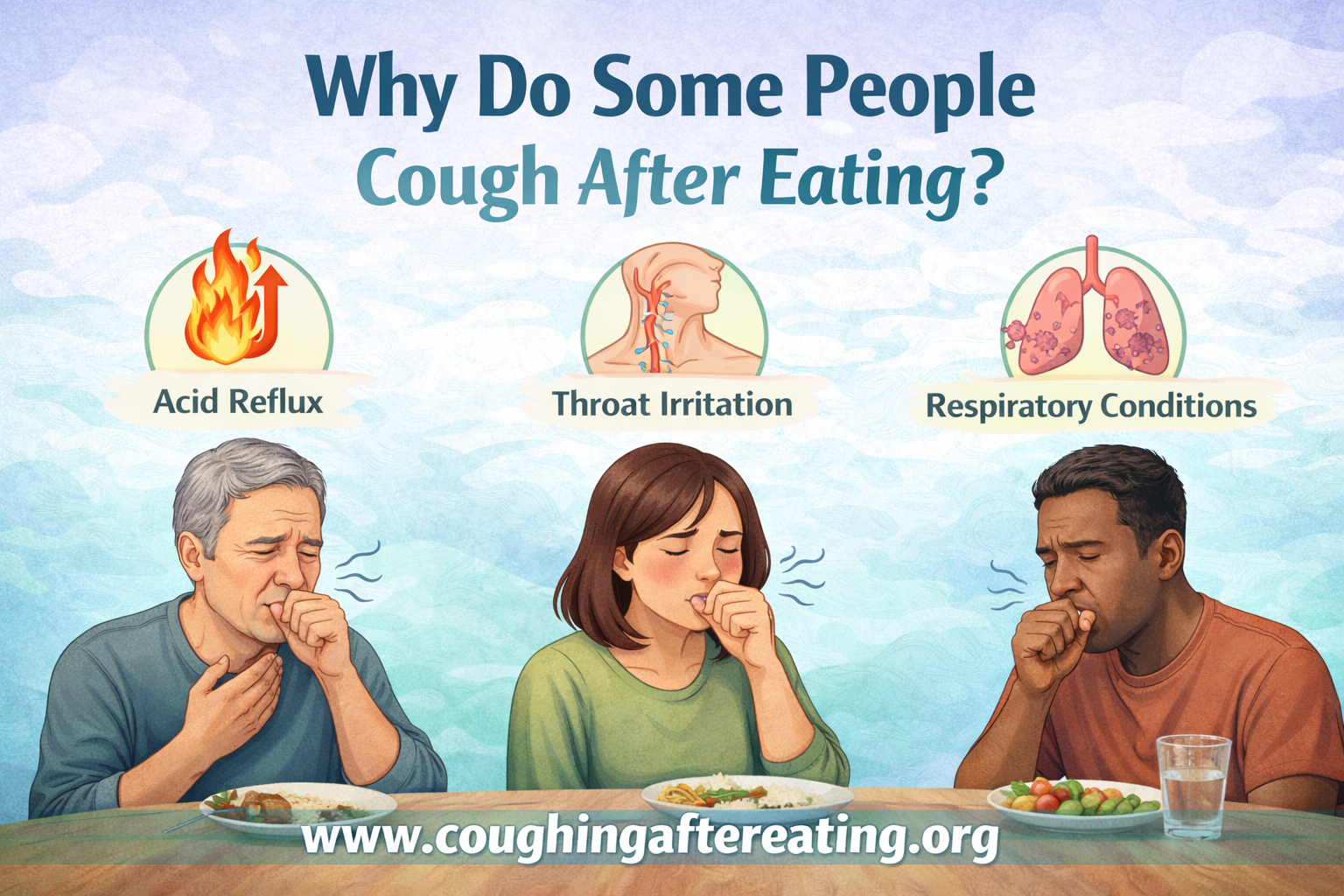
Why Do Some People Cough After Eating?
Coughing after eating is a surprisingly common experience. While an occasional cough may not be a cause for concern, frequent coughing after meals can signal an underlying issue related to digestion, swallowing, or airway sensitivity.
Understanding the possible reasons can help you decide when simple lifestyle changes are enough—and when medical attention is needed.
1. Acid Reflux (GERD or Silent Reflux)
One of the most common causes is acid reflux, where stomach acid flows back into the esophagus after meals.
This acid can irritate the throat and trigger a cough reflex, sometimes without heartburn (a condition often called silent reflux).
Typical clues:
- Coughing soon after meals
- Throat irritation or hoarseness
- Sensation of something stuck in the throat
2. Aspiration or Swallowing Difficulties
If food or liquid accidentally enters the airway instead of the esophagus, it can trigger coughing as a protective reflex.
This may occur due to:
- Eating too fast
- Poor chewing
- Neurological or muscle-coordination issues
Persistent coughing while eating or drinking should always be evaluated by a healthcare professional.
3. Postnasal Drip Triggered by Eating
Certain foods—especially dairy, spicy foods, or very cold items—may increase mucus production in some people.
This excess mucus can drip down the throat and provoke coughing after meals.
4. Food Sensitivities or Allergies
Some individuals may cough after eating due to mild food sensitivities or allergic reactions.
Possible signs include:
- Itchy throat
- Runny nose after eating
- Repeated coughing after specific foods
Severe reactions (such as breathing difficulty or swelling) require immediate medical attention.
5. Asthma or Airway Sensitivity
Eating can sometimes trigger coughing in people with asthma or sensitive airways, especially when meals are:
- Very large
- Very spicy
- Accompanied by reflux
Simple Steps That May Help Reduce Coughing After Meals
- Eat slowly and chew food thoroughly
- Avoid lying down immediately after eating
- Keep portion sizes moderate
- Identify and limit foods that trigger symptoms
- Maintain good hydration
These steps may reduce irritation and improve swallowing comfort for many people.
When to See a Doctor
You should seek medical advice if coughing after eating is:
- Frequent or worsening
- Accompanied by choking, weight loss, or voice changes
- Associated with chest pain or breathing difficulty
A healthcare professional can help determine the exact cause and suggest appropriate treatment.
Final Thoughts
Coughing after eating is often related to reflux, swallowing mechanics, or airway sensitivity. While occasional coughing may be harmless, persistent symptoms should not be ignored.
Listening to your body and seeking guidance when needed is the best way to protect both digestive and respiratory health.