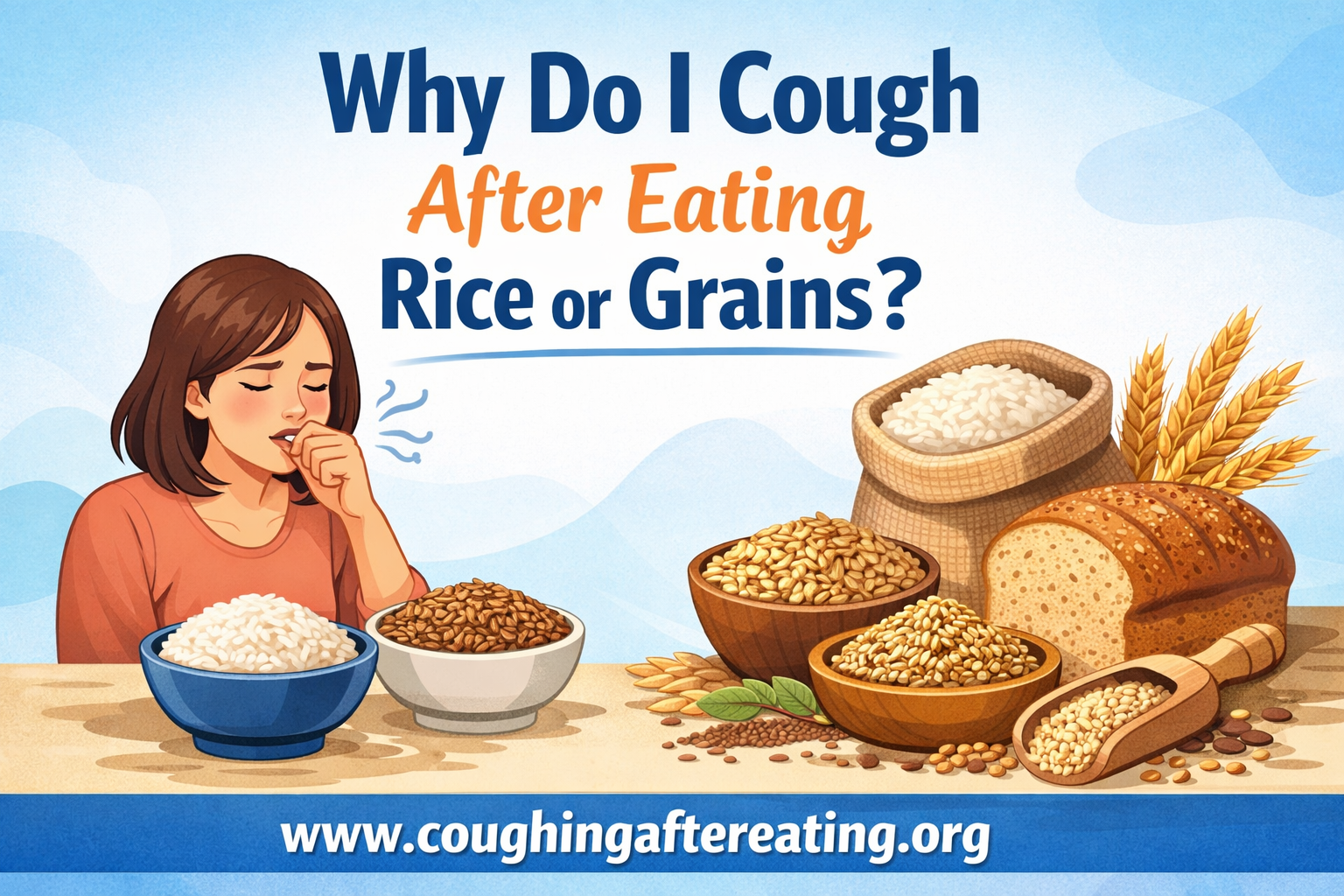
Why Do I Cough After Eating Rice or Grains?
Some people notice coughing specifically after eating rice, bread, or other grain-based foods, even when other meals cause no problem. This pattern is surprisingly common. In most cases, it relates to texture and dryness rather than a serious underlying disease.
Rice and grains can be dry, crumbly, or slightly powdery in the mouth. If food is not fully moistened or chewed thoroughly, tiny particles may briefly irritate the throat or enter the airway just enough to trigger a protective cough reflex. This is more likely if you eat quickly, take large bites, or talk while swallowing.
People with sensitive throats, mild reflux, post-nasal drip, or subtle swallowing weakness may be especially prone to this reaction. The good news is that in many cases, simple adjustments—such as eating more slowly, adding moisture (soups, yogurt, sauces), and sitting upright—significantly reduce symptoms.
Here are a few common reasons why people cough after eating grains.
1. Dry Texture and Throat Irritation
Rice and grains absorb moisture while being chewed.
If not enough saliva is present, small particles can irritate the throat and trigger a cough reflex.
This is more likely when:
- Food is eaten quickly
- Meals are low in moisture
- You are mildly dehydrated
2. Fine Particles Entering the Airway
Grains can break into tiny fragments.
These may briefly touch the airway entrance during swallowing, activating the body’s protective cough response — even without choking.
This explains why coughing may happen without food “going down the wrong way.”
3. Reflux Sensitivity Triggered by Starches
Starchy foods like rice can worsen reflux in some people by:
- Delaying stomach emptying
- Increasing pressure in the stomach
This may irritate the throat after eating, leading to coughing without heartburn.
4. Inadequate Chewing
Swallowing partially chewed grains increases throat irritation.
Chewing thoroughly allows saliva to coat the food properly, reducing coughing episodes.
5. Eating Posture and Speed
Eating while distracted, slouched, or rushed increases swallowing coordination issues — especially with dry foods like rice.
How to Reduce Coughing After Eating Rice
- Take smaller bites
- Chew slowly and thoroughly
- Sip water during meals
- Add moisture (soups, curries, yogurt)
- Sit upright while eating
- Avoid lying down right after meals
When to See a Doctor
Seek medical advice if coughing after eating grains:
Happens frequently or becomes more severe
Is associated with choking or difficulty swallowing
Leads to unexplained weight loss
Causes persistent voice changes
Occurs along with repeated chest infections
Final Thoughts
Coughing after eating rice or grains is usually mechanical and manageable, related to dryness and swallowing dynamics. Simple changes in eating habits often provide significant relief.