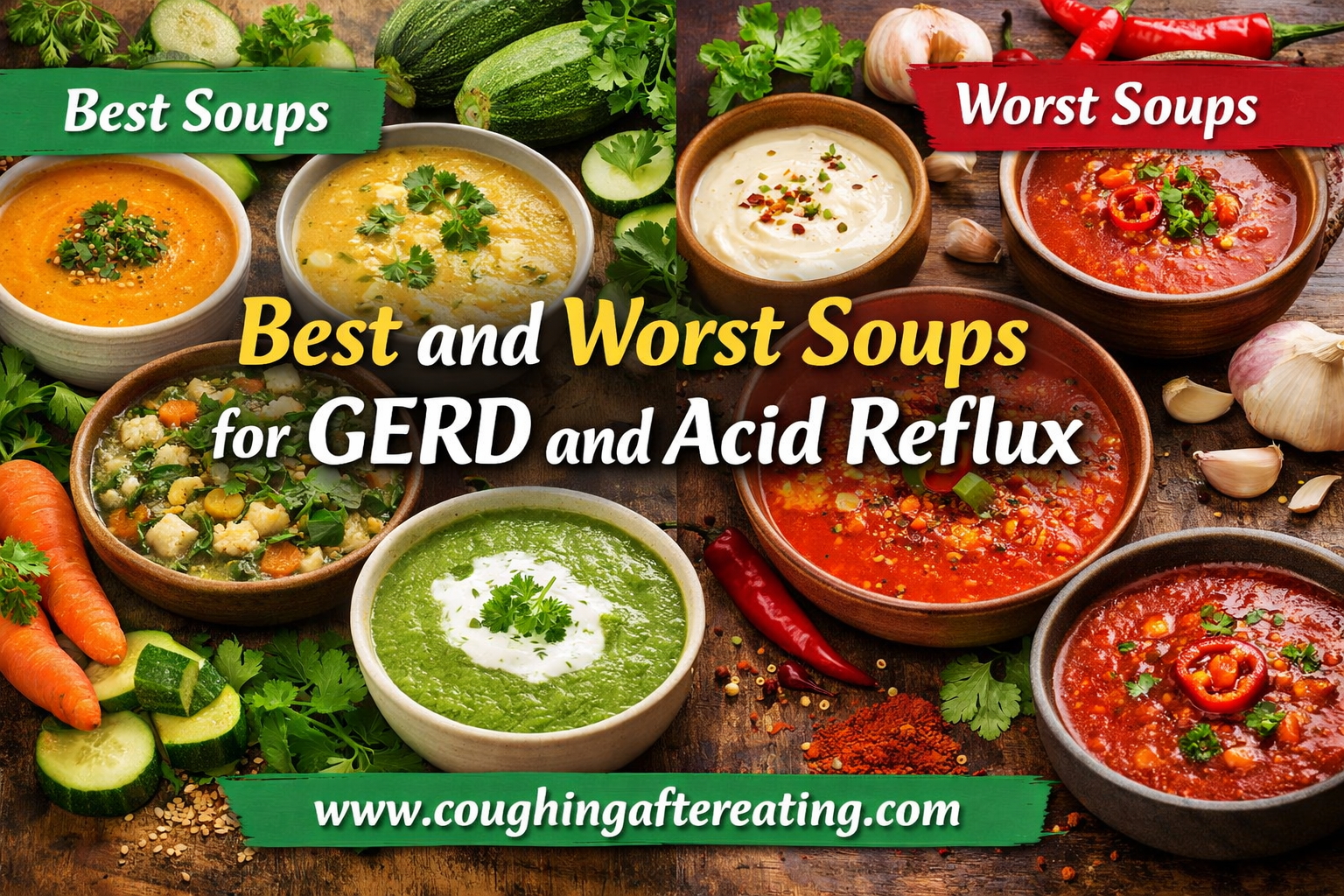
Best and Worst Soups for GERD and Acid Reflux
Are Soups Safe for GERD or Do They Trigger Acid Reflux?
Some soups are safe for GERD, while others are common reflux triggers. The best and worst soups for GERD differ mainly in acidity, fat content, spice level, and portion size. The best soups for GERD are low in acid, mildly seasoned, and moderate in fat. The worst soups for GERD often contain tomato, heavy cream, excess oil, strong spices, or sour ingredients that increase acid reflux symptoms.
Although soup feels light, certain recipes can worsen heartburn, regurgitation, throat irritation, and even acid reflux cough. Choosing the right ingredients is what determines whether soup soothes digestion or triggers symptoms.
If you regularly experience discomfort after meals, understanding the best and worst soups for GERD can help you reduce flare-ups without eliminating soup entirely from your diet.
What Makes Certain Soups Trigger GERD and Acid Reflux?
To understand the best and worst soups for GERD, it helps to recognize common reflux triggers.
GERD symptoms typically worsen when a meal:
- Is high in fat
- Contains acidic ingredients
- Includes strong spices
- Is eaten in large portions
- Increases abdominal pressure
Many popular soups combine two or more of these triggers. Creamy tomato soup includes both acidity and fat. Spicy lentil soups combine chili heat with oil. Sour vegetable broths may contain vinegar, tamarind, or citrus.
Fat slows stomach emptying. Acid irritates the esophagus. Strong spices can relax the lower esophageal sphincter. When these factors combine, reflux becomes more likely.
Some people also notice worsening symptoms in the evening. If reflux or coughing becomes more noticeable after dinner, you may relate to patterns discussed in coughing after eating at night, where posture and timing influence symptoms.
Best Soups for GERD: Low-Acid and Reflux-Friendly Options
The best soups for GERD are simple, mild, and easy to digest. Preparation style is often as important as ingredient choice when comparing the best and worst soups for GERD.
Pumpkin Soup
Pumpkin is naturally low in acid and gentle on digestion. A mild pumpkin soup prepared with minimal oil and simple seasoning can be soothing. Avoid heavy cream or excess butter.
Carrot Soup
Carrots are generally well tolerated by reflux-sensitive individuals. A blended carrot soup with mild herbs and limited oil is often one of the safer options.
Bottle Gourd or Zucchini Soup
Water-rich vegetables such as bottle gourd and zucchini are low in acidity and easy to digest. Light cooking and blending improve tolerance.
Moong Dal Soup
Yellow moong dal is usually easier to digest than heavier legumes. A thin, lightly seasoned preparation without spicy tempering works best.
Barley or Oat Vegetable Soup
Whole grains such as barley and oats provide a gentle texture and may reduce irritation for some individuals. Keep the broth mild and tomato-free.
Mild Yogurt-Based Soups
If dairy does not trigger symptoms, low-fat yogurt-based soups can sometimes feel cooling and soothing. Avoid very sour or heavily fermented versions.
A Simple Rule for Choosing GERD-Friendly Soups
When choosing among the best and worst soups for GERD, ingredient simplicity is often the safest approach.
Worst Soups for GERD: Common Acid Reflux Triggers to Avoid
Certain soups consistently appear on the list of worst soups for GERD because they combine multiple triggers.
Tomato Soup
Tomatoes are naturally acidic. Even cooked, they may increase heartburn. Creamy tomato soup combines acid with fat, making it one of the most common reflux triggers.
Spicy Soups
Soups containing red chili, black pepper, or strong spice blends frequently aggravate reflux by irritating the esophagus and relaxing the protective valve.
Cream-Heavy Soups
Cream-based soups are often high in fat. Fat delays stomach emptying and increases reflux risk.
Onion and Garlic-Dominant Soups
Many people sensitive to reflux report that onion and garlic worsen symptoms. Even vegetarian soups can trigger discomfort if heavily seasoned.
Sour or Vinegar-Based Soups
Soups containing vinegar, tamarind, citrus, or fermented bases can increase acidity and irritation.
The Common Pattern Behind the Worst Soups for GERD
Many of the worst soups for GERD combine acidity, fat, and spice in one bowl, significantly increasing the likelihood of symptoms.
Can Soup Cause Heartburn, Regurgitation, or Coughing After Eating?
Yes, it can.
Reflux does not always cause classic chest burning. In some individuals, acid travels upward into the throat and airway. This can cause coughing, throat clearing, hoarseness, or a sensation of mucus.
If you experience coughing after meals, it may help to learn more about acid reflux cough and how reflux affects the airway.
For broader trigger awareness, this guide on what foods to avoid with acid reflux cough may also help you identify dietary patterns contributing to symptoms.
Some individuals who notice persistent irritation may relate to patterns described in coughing after eating in adults, where reflux-related airway sensitivity becomes more noticeable.
How to Make Soup More GERD-Friendly at Home
If you enjoy soup but want to reduce reflux risk, small changes can make a significant difference.
- Choose low-acid vegetables
- Limit oil to small amounts
- Avoid strong chili heat
- Reduce onion and garlic if sensitive
- Use low-fat dairy when needed
- Avoid overeating
- Remain upright after meals
Cooking methods matter. Light simmering and blending are usually better tolerated than heavy frying or cream reductions.
With careful preparation, many soups can move from the worst soups for GERD category into safer options.
Quick Comparison of the Best and Worst Soups for GERD
When comparing the best and worst soups for GERD, look for consistent patterns.
Best soups for GERD are usually:
- Mild
- Low in acid
- Moderate in fat
- Simply seasoned
Worst soups for GERD often contain:
- Tomato or acidic bases
- Heavy cream
- Excess oil
- Strong spices
- Sour additives
This pattern applies across cuisines and cooking styles.
Frequently Asked Questions About the Best and Worst Soups for GERD
Is soup good for GERD?
Some soups are good for GERD if they are mild and low in acid. Vegetable-based soups prepared with minimal oil are often better tolerated than spicy or creamy soups.
Is tomato soup bad for GERD?
Tomato soup is commonly a trigger because tomatoes are naturally acidic. Creamy tomato soup may worsen symptoms further due to added fat.
Are creamy soups worse for acid reflux?
Cream-heavy soups may increase reflux risk because high fat slows stomach emptying and raises pressure inside the stomach.
Can soup cause coughing after eating?
Yes. In some individuals, reflux irritates the throat rather than causing heartburn. This irritation can lead to coughing, throat clearing, or hoarseness.
What is the safest soup for GERD?
Mild pumpkin, carrot, bottle gourd, zucchini, or lightly seasoned moong dal soups are often among the safest options. Individual tolerance varies.
Does hot soup make acid reflux worse?
Extremely hot soup may irritate the esophagus and throat, especially in individuals with active inflammation. Allowing soup to cool slightly before eating may reduce irritation.
Is vegetable soup always safe for GERD?
Not always. Even vegetable soups can trigger reflux if they contain tomato, strong spices, onion, garlic, vinegar, or excessive oil. Ingredient choice matters more than whether the soup is vegetarian.
Final Thoughts on the Best and Worst Soups for GERD
Understanding the best and worst soups for GERD helps you manage acid reflux without unnecessarily restricting your diet. Soup itself is not the problem. Acidity, fat content, spice level, portion size, and personal sensitivity determine how your body responds.
Many people discover they do not need to avoid soup entirely. Instead, choosing gentle ingredients and practicing moderate portions can significantly reduce symptoms.
If reflux continues despite dietary adjustments, monitor patterns related to timing, posture, and recurring triggers. Identifying which soups worsen symptoms allows you to enjoy nourishing, reflux-conscious meals with greater confidence and comfort.