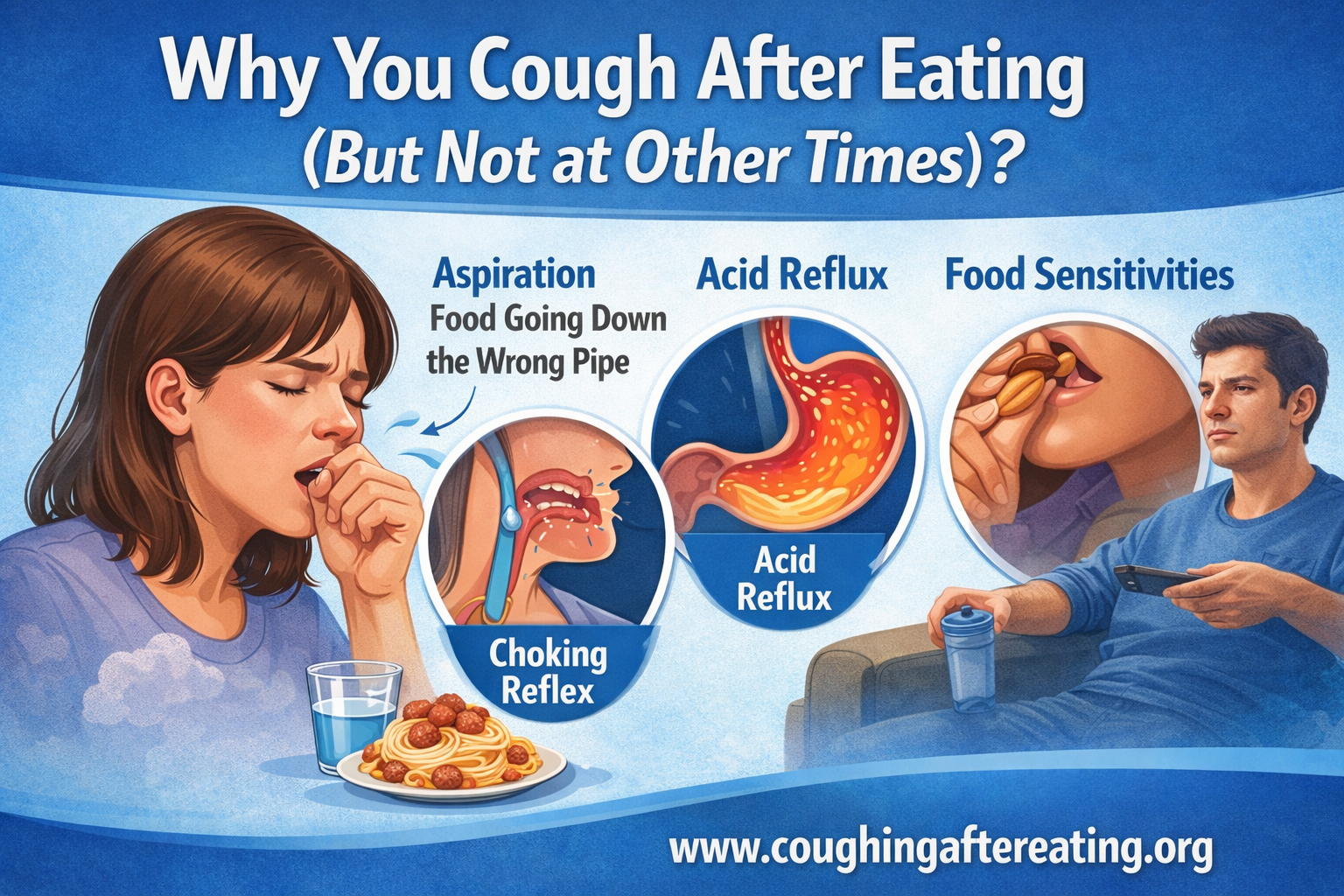
Why You Cough After Eating (But Not at Other Times)?
If you notice that you only cough after eating, and not during the rest of the day, the cause is usually not a chest infection or a common cold.
Meal-related coughing often follows clear patterns — and those patterns offer important clues about what’s actually happening.
This article explains why coughing happens specifically after meals, how timing matters, and what different cough patterns may indicate.
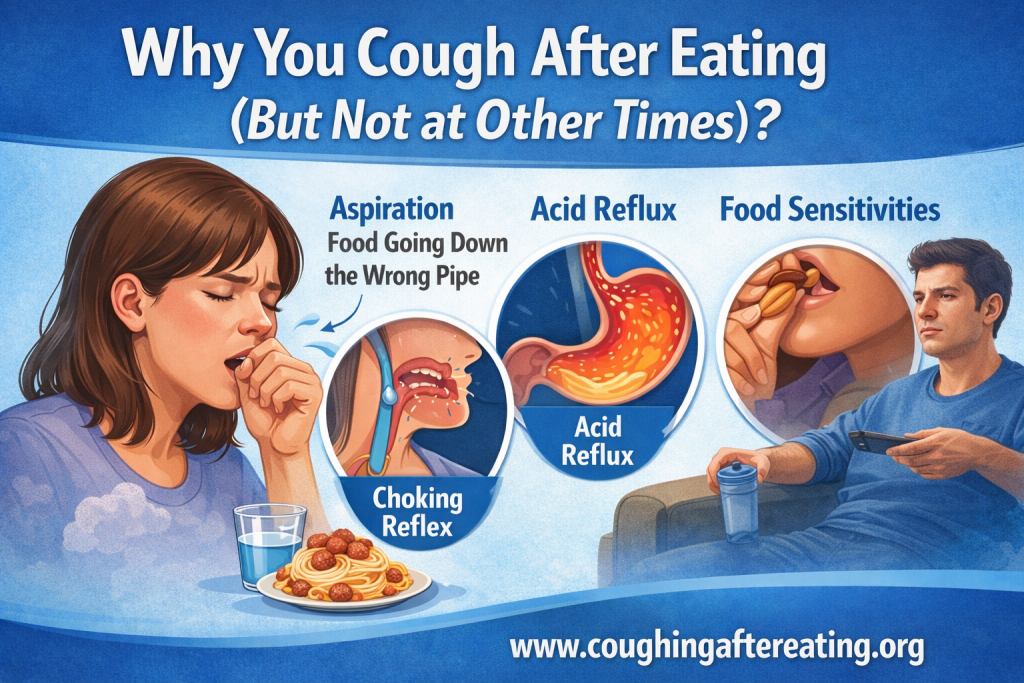
Coughing After Eating Is a Pattern, Not a Random Symptom
A cough that appears:
- during meals
- immediately after swallowing
- or within 30–60 minutes after eating
is usually triggered by swallowing, digestion, or reflux mechanisms, not the lungs themselves.
Understanding when you cough is often more helpful than focusing only on what you ate.
Pattern 1: Coughing Immediately After Swallowing
If you cough right after swallowing food or drink, the most likely explanation is airway irritation during swallowing.
This can happen when:
- Small amounts of food or liquid go the “wrong way”
- Swallowing muscles are slightly uncoordinated
- Liquids move too quickly through the throat
This type of cough is often more noticeable with:
- Thin liquids (water, tea)
- Large sips
- Eating too quickly
In many cases, it’s mild and occasional — but frequent episodes should be checked, especially if choking or voice changes occur.
Pattern 2: Coughing After Drinking Water but Not Solid Food
Some people cough only after drinking, not after eating solids.
This usually points to:
- Increased sensitivity of the throat
- Reflux-related irritation
- Subtle swallowing difficulty with liquids
Cold water, fizzy drinks, or large gulps can worsen this reflex.
Pattern 3: Coughing 10–60 Minutes After Eating
A delayed cough that starts after digestion has begun is often related to reflux, even if you don’t feel heartburn.
Stomach contents or acidic vapors can irritate the throat and voice box, triggering a dry, repetitive cough.
This type of cough:
- Often happens after large meals
- Is worse when lying down
- May come with throat clearing or hoarseness
Some people experience this without any chest burning at all.
Pattern 4: Coughing Triggered by Specific Foods
If coughing happens only with certain foods, possible triggers include:
- Spicy foods
- Acidic foods (tomato, citrus)
- Fried or very oily meals
- Alcohol or carbonated drinks
These foods don’t cause coughing directly — they irritate or relax protective mechanisms, making coughing more likely.
Pattern 5: Coughing After Eating With a Runny Nose or Mucus
In some cases, eating stimulates mucus production in the nose or throat.
This can create a sensation of mucus dripping down the back of the throat, which triggers coughing.
This is more common in:
- Chronic sinus issues
- Allergic rhinitis
- Cold or dry environments
When Coughing After Eating Needs Medical Attention
Occasional coughing is common.
However, you should seek medical advice if coughing after meals is:
- Frequent or worsening
- Associated with choking or food sticking
- Causing weight loss
- Accompanied by voice changes
- Leading to repeated chest infections
These signs suggest that evaluation is important.
Practical Steps That Often Help
Many people notice improvement with simple changes:
- Eat slowly and chew thoroughly
- Take smaller sips of liquids
- Stay upright after meals
- Avoid lying down soon after eating
- Identify and reduce personal trigger foods
If symptoms persist, professional evaluation helps identify the exact cause.
Key Takeaway
Coughing after eating is rarely random.
The timing of your cough, what triggers it, and whether it happens with liquids or solids provide valuable clues.
Understanding these patterns is the first step toward addressing the cause and improving comfort after meals.
Disclaimer
This content is for informational purposes only and does not replace professional medical advice. Always consult a healthcare provider for persistent or concerning symptoms.